Step by step
What not to do
- Don't correct or argue when they forget, saying 'Don't you remember?' causes hurt and the information rarely sticks anyway.
- Don't try to pull them back into your reality if they believe they're living in a different time, join where they are and gently redirect with comfort.
- Don't overload them with multiple instructions or details at once; one piece of information, simply stated, lands far better than several.
- Don't assume they can't learn anything new, when information connects to what they personally value, the brain can still take it in.
- Don't hand over a phone, tablet, or smart speaker without setting it up first, an unfamiliar device will cause more frustration than help.
Key points
- New information slips away because dementia damages the brain's ability to form new memories, it's not a choice.
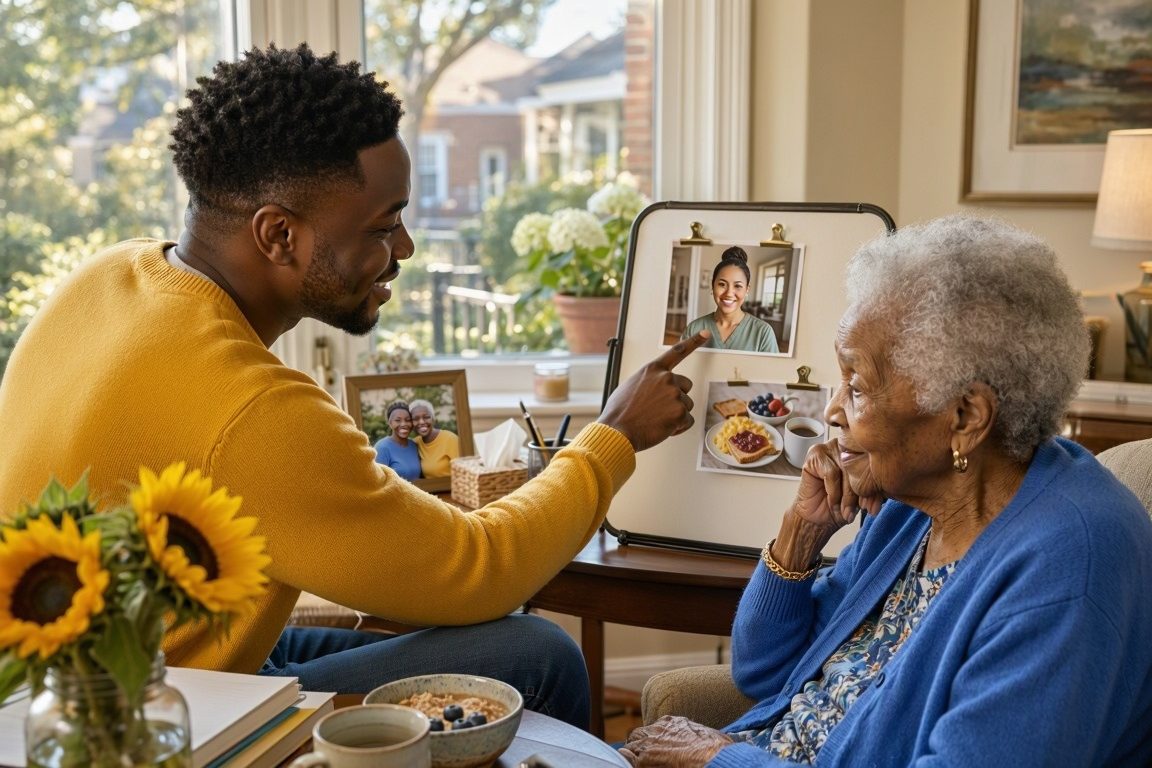
- Use visual cues like calendars, whiteboards, and sticky notes to turn information into something they can see and refer to.
- Repeat information calmly without correcting or saying 'I already told you', this preserves dignity and reduces conflict.
- Tap into their interests: they can still learn if the information is personally meaningful to them.
- Your role is to guide, not fix. Stand alongside them and use gentle redirection rather than argument.
- Technology like smart speakers and video calls with name labels can be powerful memory aids when set up properly.
Videos
 Caring for Someone with Alzheimer's - Family Caregiver Webinar SeriesThis webinar covers practical strategies for helping a loved one with memory loss, including the use of calendars and repetition.
 Grandpa, Do you Know who I am? (Dementia Tips)This video offers gentle tips for connecting with a loved one who may not recognize you, which is key when helping them register new information.
 Should you remind someone they have dementia?Explores why reminding someone of their diagnosis can backfire and offers alternative approaches that are more effective.
 THIS is why your loved one with dementia challenges you but is fine around othersHelps you understand why your loved one may seem more forgetful or difficult with you, and how to adjust your approach.
2 more videos
 Conscious Caregiving with L & L 'Dementia Influencers'Discusses conscious caregiving techniques that focus on validation and connection, which support memory registration.
 New to Dementia Caregiving? STOP Doing This!Highlights common mistakes new caregivers make, such as correcting or arguing, and offers better alternatives.
Background
Why New Information Slips Away
Dementia damages the brain areas responsible for forming new memories, especially recent ones. Your loved one may genuinely not remember hearing something a minute ago, even if they seem attentive in the moment. This isn't stubbornness or a choice, it's the disease at work. As one expert explains, when someone with dementia asks the same question repeatedly, they often don't realize they are forgetting; they simply experience the confusion of not knowing. This is why saying 'Don't you remember?' can feel hurtful, they are already trying to navigate that fog.
The Brain Can Still Learn: But Differently
Even with dementia, the brain can learn new things, but only if the information is highly valued by the person themselves, not just by the caregiver. For example, if your loved one loves gardening, they may still remember a new tip about watering plants. This ability to learn is often overlooked, leading to tension when caregivers expect the person to remember things they don't care about. The key is to tap into their interests and use methods that bypass the damaged memory centers, such as visual reminders and repetition.
Your Role: Guide, Don't Correct
Your job is not to fix the memory loss, you can't. Instead, stand alongside your loved one and guide them through the experience. Correcting them often makes things worse, leading to anger, resentment, and arguments. A better approach is to repeat the information calmly, or provide a visual cue like a note or a whiteboard. This shifts the focus from 'you forgot' to 'here's a helpful reminder,' which preserves their dignity and reduces conflict.
Practical tools
4
The 'Daily Visual Cue' Kit
Write one key reminder in big letters each morning, 'Tuesday: Lunch with Mary at noon' , so it becomes the place they naturally look when words fade.
The 'Repeat and Redirect' Phrase
When they ask the same question, respond warmly with, 'I know you're wondering about that, let me tell you again,' then smoothly transition to a comforting activity like offering a cup of tea or stepping outside together.
The 'Help Me' Invitation
Replace reminders of their limitations with a request that taps into their skills, like 'Can you help me fold these towels?' or 'Can you help me sort these magazines?' This preserves dignity, reinforces information through action, and honors the person they still are.
The Memory Aid Technology Setup
Different situations
Early-stage dementia (still aware of memory loss)
Your loved one may be more open to using memory aids like notebooks or calendars. Encourage them to write things down themselves, and let them choose the tools. Frame it as a way to stay independent: 'This will help you keep track of your own schedule.' Avoid any language that feels like you're taking over.
Middle-stage dementia (frequent confusion, repetition)
Focus on visual cues and repetition. Use a whiteboard with one or two key items. Repeat information calmly without adding 'I already told you.' If they ask the same question, answer as if it's the first time. Use the 'Help Me' invitation to engage them in simple tasks that reinforce information.
Late-stage dementia (limited verbal communication)
Non-verbal cues become essential. Use photos, familiar objects, and gentle touch. For example, show a photo of their daughter and say 'Your daughter loves you.' Repeat the same phrase each time. Avoid asking questions that require memory, instead, state facts gently. Focus on emotional connection rather than information retention.
Lewy body dementia (fluctuating attention, visual hallucinations)
Be aware that attention can vary greatly from hour to hour. Use short, simple sentences and repeat information when they seem more alert. Visual cues may be less effective if hallucinations are present, try using auditory reminders like a gentle chime or a recorded message. Avoid cluttered environments that can trigger confusion.
Spouse vs. adult child caregiver
If you are the spouse, you may have a deeper emotional history. Use that to your advantage by referencing shared memories: 'Remember how we used to take walks? Let's do that today.' If you are an adult child, avoid a parent-child dynamic that can feel demeaning. Instead, say, 'I need your help with this' to preserve their sense of authority.
For the doctor
5
- Ask your doctor if a neuropsychological evaluation could help clarify which memory areas are affected and guide your approach.
- Discuss whether any medications might help with memory or attention, and what side effects to watch for.
- If your loved one wanders, ask about a MedicAlert+Safe Return program or other safety measures.
- Inquire about a referral to an occupational therapist for a home safety evaluation and memory aid recommendations.
- If your loved one is in a facility, ask the staff how they help residents register new information and what you can do during visits.