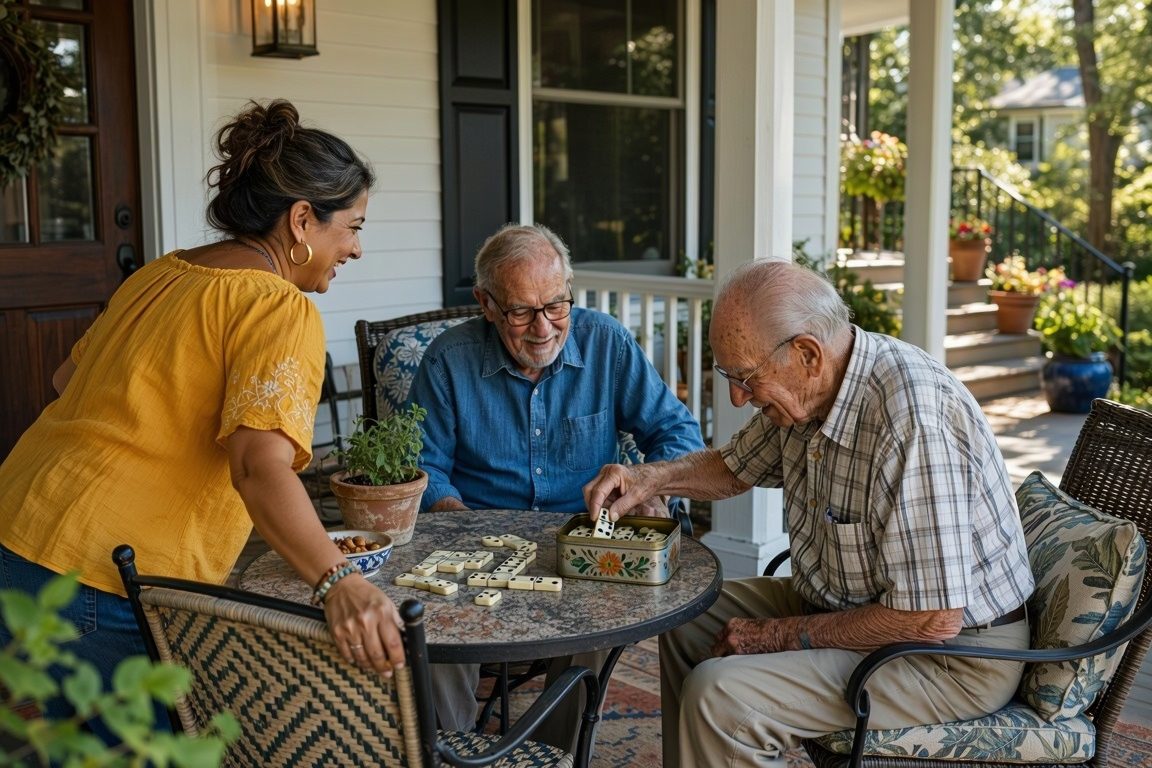
Step by step
What not to do
- Do not pressure the friend with guilt or long explanations about why they should visit. This can make them feel defensive and less likely to come.Instead, offer a simple, warm invitation with clear expectations.
- Do not expect the friend to know what to do or say without guidance. Leaving them to figure it out often leads to awkward silences or them talking too much.Instead, give them a role, like holding a photo album or offering a snack.
- Do not correct your loved one if they mistake the friend for someone else or don't remember them. This can upset both people.Instead, gently redirect: 'This is a friend who is happy to see you. Look, she brought you a pretty scarf.'
- Do not let the visit drag on if your loved one becomes tired, confused, or agitated. Forcing a longer visit can make things worse.Instead, have a polite exit plan: 'It looks like Mom is getting tired. Thank you so much for coming, let's plan another short visit soon.'
- Do not take it personally if the friend still doesn't visit after your invitation. They may have their own fears or limitations. Focus on building new connections through support groups or online communities where people understand your situation.
Key points
- Friends often stop visiting because they don't know what to do, not because they don't care.
- Reach out with a warm, low-pressure invitation and give clear guidance on what to expect.
- Keep visits short (15-30 minutes) and centered on a simple activity like looking at photos or sharing a snack.
- Don't correct your loved one if they don't recognize the friend; redirect to the present moment.
- Use video calls with the friend's name on the screen for long-distance connections.
- Create a 'visiting kit' with a fidget toy, snack, and conversation starters to hand to friends.
Videos
 Dementia Care Partner Talkshow: 102-Tips for Re-Introducing Old Friends to Someone Living w/DementiaTeepa Snow gives specific strategies for helping old friends reconnect, including how to prepare them and what to do during the visit.
 DON'T LET DEMENTIA BE A CONVERSATION HOGThis video offers tips on how to steer conversations away from dementia and toward shared interests, making visits more enjoyable for everyone.
 How To Convince A Person With Dementia To MoveWhile about moving, this video teaches gentle redirection and validation techniques that are useful when a friend visits and your loved one is confused.
 Avoid Loneliness in Old Age to Reduce Health RisksExplains the health risks of isolation and why reconnecting friends is important for your loved one's well-being.
2 more videos
 Dementia Communication Tips for strange behaviorProvides communication techniques that friends can use when your loved one behaves in unexpected ways during a visit.
 Long-Distance CaregivingOffers ideas for how long-distance friends can stay connected through video calls, care packages, and scheduled check-ins.
Background
Why Friends Drift Away
Friends often stop visiting because they feel helpless or afraid. They may not know how to act around someone with dementia, worry they will say the wrong thing, or feel the person they knew is 'gone.' This is not about you or your loved one being unlovable; it is about their own discomfort and lack of guidance. Many caregivers report that friends' eyes glaze over or they stop asking how things are going, not out of cruelty, but because they don't know how to help or what to talk about anymore.
The Emotional Toll on Caregivers and Loved Ones
When friends withdraw, it can feel like a double loss: you lose support for yourself, and your loved one loses social connection that can brighten their days. For the person with dementia, isolation can worsen confusion and sadness. For you, the caregiver, it adds to the burden of feeling alone. The good news is that many friends are waiting for a simple invitation or a clear way to help. They just need you to show them how.
The Power of Preparation and Low Expectations
Successful reconnection starts with preparing both the friend and your loved one. Friends need to know what to expect: your loved one may not remember their name, may repeat questions, or may seem withdrawn. They also need to know that the visit can be short and that their presence alone is enough. For your loved one, the visit should be structured around something they enjoy, like looking at photos, listening to music, or sharing a snack. The goal is not a long conversation but a moment of connection.
Practical tools
5
The 'Welcome Back' Script
A short message to send to a friend who has drifted away: 'Hi [Friend's Name], I know it has been a while, and I miss our chats. [Loved one's name] would love to see you, even for 15 minutes. I will have some photos out and a snack ready. No pressure, just your presence would mean the world. Let me know what day works for you.'
The 15-Minute Visit Checklist
Before the friend arrives:
The 'Friend's Role' Card
A small card you can hand to a visiting friend that says: 'Thank you for coming. Here is how you can help:
Your presence is enough.'
The Video Call Setup
For long-distance friends: Use a tablet or computer with the friend's name displayed on the screen. Before the call, tell your loved one: 'We are going to see [Friend's Name] on the computer. She wants to say hi.' Keep the call to 10 minutes and have a prop, like a stuffed animal or a photo, to talk about. End with: 'Thank you for calling. We love you.'
The 'Small Ask' Strategy
Instead of asking a friend to visit for a long time, ask for something very specific and easy: 'Could you stop by for 10 minutes on your way to work? Just to say hello and show her a flower from your garden.' Small, concrete asks are much easier for friends to say yes to.
Different situations
Late-stage dementia or when the person is withdrawn
Focus on sensory connection rather than conversation. Have the friend bring a scented item (like lavender) or a soft fabric to hold. The friend can sit quietly, hold the person's hand, and hum a familiar tune. No words needed. The goal is comfort, not recognition.
Lewy body dementia (with hallucinations or fluctuating alertness)
Warn the friend that your loved one may see things that aren't there or seem confused. Advise the friend not to argue or correct. Instead, say: 'That must be unsettling. Let's look at this photo together.' Keep visits very short (10 minutes) and at a time when your loved one is most alert, usually mid-morning.
Adult child caregiver vs. spouse caregiver
If you are an adult child, you may have more authority to set boundaries with family friends. You can say: 'Dad would love a 15-minute visit. I will be here to help.' If you are a spouse, you may feel more protective. It's okay to say: 'I need a break. Could you sit with her for 20 minutes while I take a walk?' This turns the visit into help for you, too.
Loved one lives in a facility (assisted living or memory care)
Coordinate with the facility staff. Ask them to help your loved one get ready and to be present during the visit if needed. You can also ask a friendly staff member to 'drop by' and say hello, which can make the visit feel more natural. Bring a small gift for the staff, like a Starbucks card, to thank them for their support.
Medicaid or low-income situation
If you cannot afford paid respite or activities, lean on free community resources. Many senior centers offer free social events. Ask friends to accompany your loved one to a free concert or a park bench visit. Use public library story times or church coffee hours as low-cost, low-pressure meeting spots.
For the doctor
3
- If your loved one becomes very agitated or aggressive during visits, ask the doctor about possible causes like pain, infection, or medication side effects.
- If your loved one has trouble swallowing or chokes on snacks during visits, discuss safe food textures with a speech therapist or dietitian.
- If you notice a sudden change in your loved one's ability to recognize familiar faces, discuss this with the doctor to rule out delirium or other medical issues.