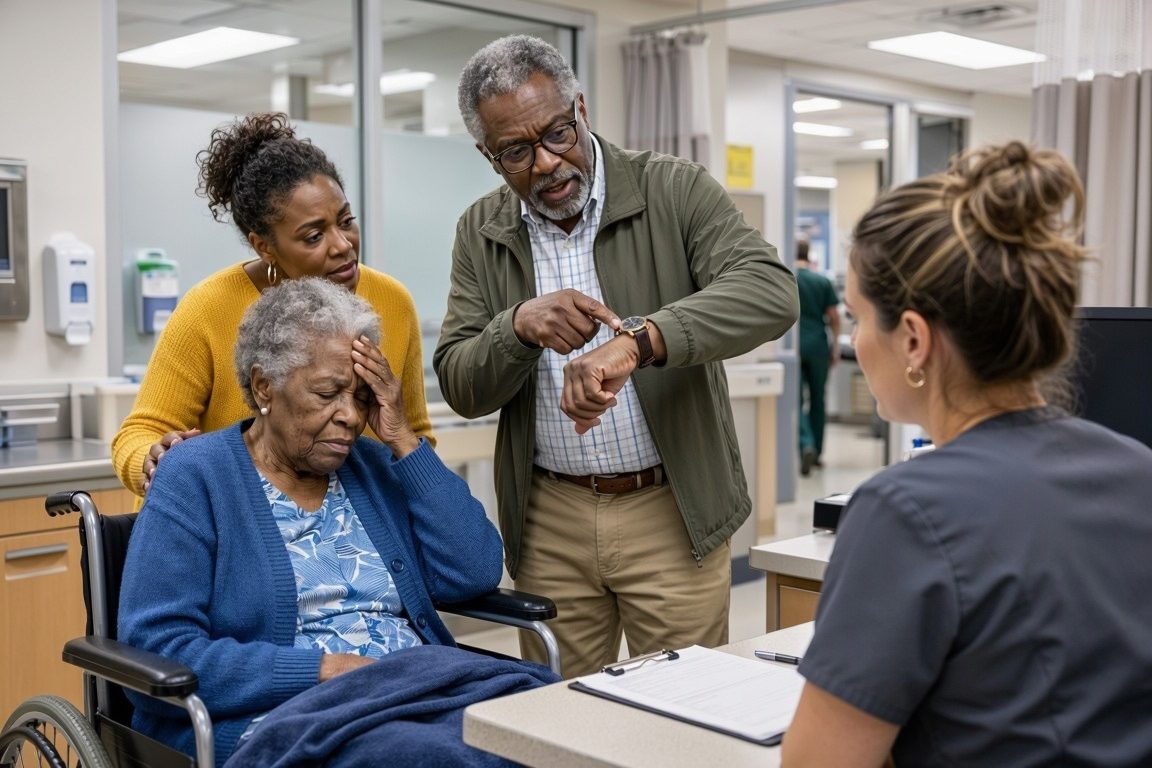
Step by step
What not to do
- Do not give aspirin, ibuprofen, naproxen, or acetaminophen before a doctor evaluates.
- Do not wait to see if it improves. Call 911 at the first red flag.
- Do not drive them yourself if they are confused, weak, seizing, or difficult to rouse.
- Do not ignore a headache that wakes them from sleep, causes repeated vomiting, or is distinctly different from their usual pattern.
Key points
- A thunderclap headache (peak pain within 60 seconds) is always an emergency, call 911.
- Use the SNNOOP10 mnemonic as a quick checklist: fever, neurologic symptoms, sudden onset, age over 50, first or worst headache.
- Never give aspirin or ibuprofen for a sudden severe headache, they can worsen a brain bleed.
- If your loved one has dementia and cannot speak, use the PAINAD scale to assess pain and check for red flags like fever or stiff neck.
- Headache after head trauma, especially on blood thinners, requires immediate evaluation even if symptoms seem mild.
- Bring a medication list to the ER, including all blood thinners and supplements.
Videos
 Is Sundowning A Sign Dementia Is Getting WorseThis video helps you distinguish between typical sundowning (agitation in the evening) and a sudden change that could indicate a medical emergency like a headache or infection. A sudden extreme change in behavior, such as new agitation or confusion, can be a red flag for a headache or other underlying issue.
 Terminal Agitation: Empowering Caregivers in End-of-Life SupportIn late-stage dementia or cancer, a sudden headache with agitation could be terminal agitation or hypercalcemia. This video explains how to recognize and respond to these end-of-life symptoms, including when to call hospice instead of 911.
 Medications Used in Dementia: What Caregivers Should Know | Sarah Mourra MD | UCLAMDChatThis video covers medication side effects that can cause headaches or mimic stroke symptoms, such as donepezil side effects (muscle weakness, yellowing skin) or medication-overuse headaches. It helps you know when a headache might be drug-related.
 How To Tell What Stage Of Alzheimer's Someone Is In?Knowing the stage of dementia helps you interpret headache symptoms. In early stages, the person can describe their pain. In later stages, you must rely on non-verbal signs. This video helps you assess the stage so you can apply the right red flag checklist.
Background
Why Some Headaches Are Dangerous
Most headaches your loved one experiences are 'primary' headaches, like tension-type headaches or migraines. These are not caused by an underlying disease and are usually benign. However, a small number of headaches are 'secondary' headaches, they are a symptom of a serious underlying condition such as a subarachnoid hemorrhage (bleeding around the brain), meningitis (infection of the brain lining), a brain tumor, or a stroke. The key is to distinguish between a familiar headache pattern and a sudden, severe, or unusual headache that demands emergency evaluation.
The SNNOOP10 Mnemonic: Your Red Flag Checklist
Doctors use the SNNOOP10 mnemonic to quickly identify red flags. It stands for: Systemic symptoms (fever, weight loss), Neurologic symptoms (confusion, weakness, vision changes), Onset (sudden or thunderclap), Older age (over 50), Previous headache history (first or worst), and other features like positional change, papilledema (swelling of the optic nerve), and progressive worsening. If your loved one has any of these, it is a sign that the headache may be caused by something dangerous and needs immediate medical evaluation.
What Is a Thunderclap Headache?
A thunderclap headache is a severe headache that reaches its peak intensity within 60 seconds, like a clap of thunder. It is often described as the 'worst headache of my life.' This type of headache is uncommon, but it can be a warning sign of bleeding in or around the brain, such as a subarachnoid hemorrhage. If your loved one suddenly cries out with a headache that is instantly severe, do not wait. Call 911 or go to the emergency room immediately.
Practical tools
4
SNNOOP10 Red Flag Card
A small card listing the SNNOOP10 mnemonic (Systemic symptoms, Neurologic symptoms, sudden Onset, Older age >50, Previous headache history of first/worst, plus 10 other signs). Keep on fridge and a photo on your phone.
Current Medication List
Headache Diary for Baseline
Record date, time, pain level (1-10), trigger, and symptoms for non-emergency headaches to establish a usual pattern for comparison.
911 Script Card
Pre-written sentences on your phone: 'Loved one is [age], sudden severe headache started [time], showing [confusion/weakness/fever/stiff neck]. Takes [blood thinner].' Read verbatim to dispatcher.
Different situations
For someone with dementia who cannot describe their pain
Use the PAINAD scale (Pain Assessment in Advanced Dementia) to look for non-verbal signs: facial expressions (grimacing, frowning), vocalizations (moaning, calling out), body language (guarding head, rocking), and changes in behavior (agitation, withdrawal). If they are moaning or guarding their head, assume they have a severe headache and check for other red flags like fever or confusion.
For someone with a history of migraines
Migraines can be severe, but they usually have a known pattern (e.g., sensitivity to light/sound, nausea, aura). A thunderclap headache is different, it peaks instantly. If your loved one says 'This is not like my usual migraine,' or if they have a fever, stiff neck, or new weakness, treat it as an emergency even if they have migraines.
For someone on blood thinners (anticoagulants)
If your loved one is on warfarin, apixaban, rivaroxaban, or clopidogrel, any head trauma, even a minor bump, can cause a brain bleed. A headache after a fall or bump, even if mild, requires immediate evaluation. Call 911 and tell them about the blood thinner. Do not wait for symptoms to worsen.
For someone with a cancer diagnosis or brain tumor history
A new or worsening headache in someone with cancer can be a sign of brain metastasis or increased intracranial pressure. If the headache is worse in the morning, wakes them from sleep, or is accompanied by vomiting or vision changes, seek emergency care. Also, if they have a cancer diagnosis and are in later stages, a sudden headache with confusion could be terminal agitation or hypercalcemia, discuss with their oncologist.
For a spouse caregiver vs. an adult child
Spouse caregivers may hesitate to call 911 because they feel they can 'handle it' or do not want to alarm their partner. Adult children may be more proactive. Remind yourself: calling 911 is not overreacting, it is advocating. If you are unsure, call 911 and let the paramedics decide. It is better to be safe than sorry.
For the doctor
5
- Ask your doctor: 'My loved one has a history of migraines. How do I tell the difference between a severe migraine and a thunderclap headache?'
- Ask your pharmacist: 'Are any of my loved one's medications known to cause severe headaches or medication-overuse headaches?'
- If your loved one has a brain tumor or cancer, ask their oncologist: 'What headache symptoms should I consider an emergency for them?'
- Ask your neurologist: 'Should we have an emergency plan in place for a possible brain bleed, given their age and medications?'
- If your loved one is on donepezil or other dementia meds, ask: 'What side effects should I watch for that could cause a headache or mimic a stroke?'