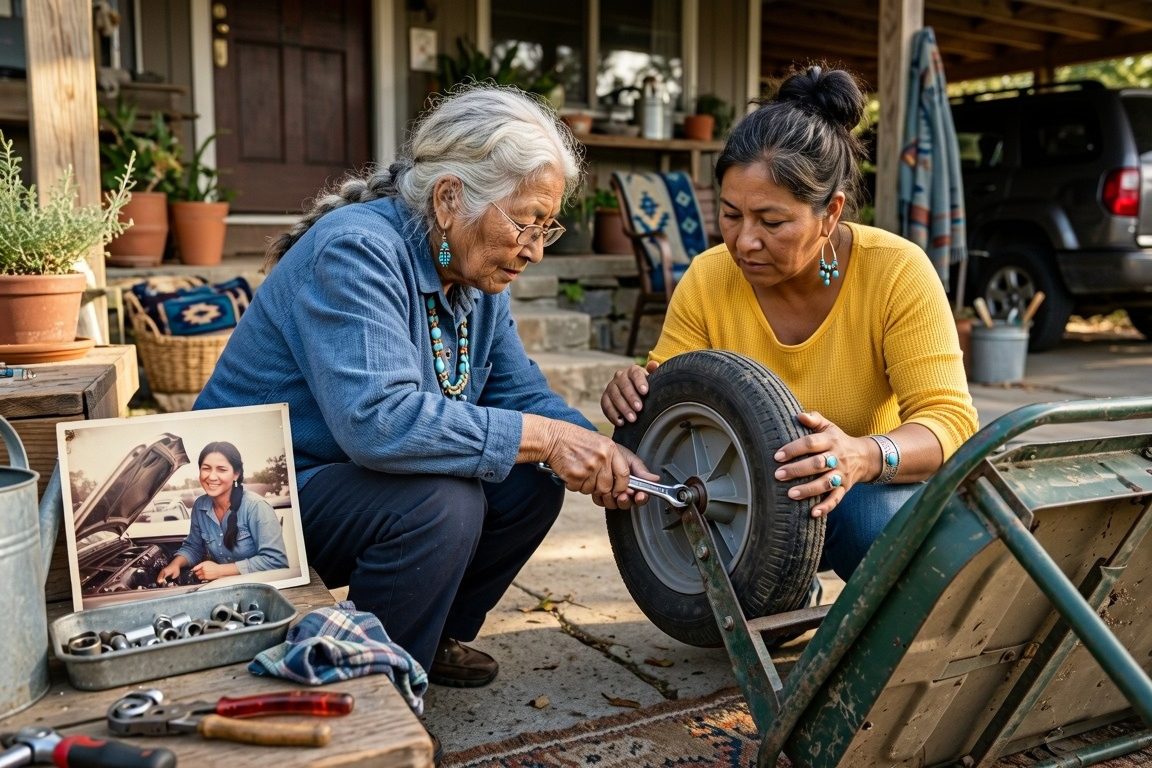
Step by step
What not to do
- Do not assume that all men like 'manly' activities or all women like 'domestic' tasks. This can feel disrespectful if it does not match their actual history.Instead, ask or observe what they actually did. For example, a man who was a stay-at-home dad may enjoy folding baby clothes, while a woman who was a truck driver may prefer sorting maps.
- Do not correct the person if they think they are in a different time or role. If they say, 'I need to go pick up the kids,' do not say, 'The kids are grown.' Instead, say, 'The kids are safe. Let's finish this first, and then we can check on them.' This avoids upset and keeps them engaged in the present moment.
- Do not force an activity that the person clearly dislikes, even if it matches their history. Just because they were a nurse does not mean they want to fold bandages now. Respect their current preferences. If they push something away, try something else. The goal is joy, not productivity.
- Do not ignore signs of discomfort or pain. If the person becomes agitated during an activity, stop and check for physical needs: Are they hungry? Thirsty? Do they need to use the bathroom? Are they too hot or cold? Pain can look like aggression or withdrawal. Address the body first, then try the activity again later.
- Do not use activities that are too complex or too childish. A person with dementia is still an adult with a lifetime of experience. Avoid baby talk or tasks that feel demeaning.Instead, adapt adult activities to their current level. For example, instead of giving them a children's puzzle, give them a simple adult task like sorting coins or folding napkins.
- Do not forget to care for yourself. Engaging someone with dementia can be exhausting. If you are stressed, your loved one will feel it. Take breaks, ask for help, and join a support group. Your well-being directly affects the quality of care you can provide.
Key points
- Gender and life history are not just background details, they are the key to meaningful engagement because they tap into long-term memories that remain intact.
- Use a 'life history map' to identify past roles, jobs, and hobbies, then simplify those activities to match current abilities.
- Always validate the person's identity with phrases like 'You're the expert' or 'I need your help' to make them feel important and valued.
- Observe the person's current behavior for clues about their internal world, they may be trying to fulfill a role from their past.
- Do not force activities; if they resist, try a different time, a different approach, or a different task. Respect their current preferences.
- Caregiver self-care is essential, your stress affects the person with dementia. Join a support group and take breaks.
Videos
 How To Entertain Someone With Dementia At Home?This video offers practical ideas for home-based activities that can be adapted to a person's life history, such as folding laundry or sorting items.
 Exploring Sexuality, Intimacy, and Dementia | Teepa's ClipsThis video addresses how gender and life history affect expressions of intimacy and sexuality in dementia, helping caregivers respond with understanding.
 How Long Does Dementia Last?Understanding the disease trajectory helps you plan meaningful engagement that matches the person's current stage and abilities.
 What Is The Life Expectancy Of A Person With Dementia?Knowing life expectancy can help you prioritize activities that bring joy and connection in the time that remains.
2 more videos
 Refusals in Dementia Care: How to Start and Maintain a Positive Approach with Our Visual CuesThis video teaches how to use visual cues to introduce activities without triggering refusal, which is especially useful when the person's history-based activity is unfamiliar to them.
 How Does Dementia Assistance Help Relieve Caregiver Stress? | TestThis video discusses how using meaningful engagement reduces caregiver stress by creating positive interactions instead of battles.
Background
Why Gender and Life History Matter in Dementia Engagement
People with dementia often lose their sense of value and importance as the disease progresses. Their ability to remember recent events fades, but their long-term memories, especially from childhood, adolescence, and early adulthood, remain accessible much longer. This means that the activities and roles that defined them decades ago can still feel deeply relevant. Gender and life history are not just background details; they are the core of a person's identity. For example, a man who spent 40 years as a carpenter may find deep satisfaction in sanding a piece of wood, while a woman who was a nurse may feel purposeful when folding clean towels. These activities tap into a lifetime of skills and emotions that dementia has not erased.
Gender also influences how people express needs and preferences. A person who was socialized to be a provider may resist help with tasks they see as 'their job,' like paying bills or fixing things. Conversely, someone who was a homemaker may feel anxious if they cannot participate in meal preparation. The key is to look beyond the diagnosis and see the whole person, their past work, hobbies, family roles, and even their sense of humor. When you engage someone in an activity that connects to their life story, you are not just passing time; you are affirming their identity and giving them a moment of control and purpose. This approach can reduce agitation and increase cooperation because the person feels seen and respected.
The challenge is that as dementia progresses, the person may not be able to tell you what they want. That is where your knowledge of their history becomes a powerful tool. If you know they loved gardening, you can set up a small tray of soil and seeds. If they were a teacher, you can ask them to 'help' you sort papers. The goal is not to recreate the past perfectly but to evoke the feelings of competence and belonging that those roles once provided. Even if the activity is simplified, the emotional connection remains. This is why understanding gender and life history is not a luxury, it is a practical, evidence-informed strategy for improving quality of life for both the person with dementia and the caregiver.
How Dementia Changes the Meaning of Gender and Roles
As dementia advances, a person's sense of time and identity becomes fragmented. They may no longer recognize their spouse of 50 years because the spouse now looks 'old,' while their internal image of their partner is still young. This can lead to confusion or rejection, not because of a lack of love, but because the brain is stuck in an earlier time. Similarly, a woman who was always the primary caregiver for her children may become distressed if she cannot find her 'babies' (who are now adults). This is not a delusion, it is her brain trying to make sense of the world using the memories that remain. Understanding this helps you respond with compassion rather than argument.
Gender also affects how people with dementia express sexuality and intimacy. A man who was always physically affectionate may become more openly sexual, while a woman who was taught to be reserved may become embarrassed by her own needs. These behaviors are not 'inappropriate' in the context of the person's history, they are expressions of a lifelong need for connection. The challenge is to balance respect for the person's past with safety and dignity in the present. For example, if a person with dementia touches themselves in public, it may be a sign of discomfort or a need for sensory input, not a sexual act. By understanding their life history, you can redirect the behavior in a way that honors their feelings without causing distress.
The key is to remember that the person's emotions and feelings remain intact, even if their filters are gone. They still feel pride, shame, and embarrassment. They still want to feel important and valued. When you choose an activity based on their gender and life history, you are not just keeping them busy, you are giving them a moment to feel like themselves again. This can reduce the grief they feel over losing their identity and help them engage with the world in a way that makes sense to them. For caregivers, this approach also reduces stress because it replaces conflict with connection.
Practical tools
6
Life History Interview Questions
A short list of questions to ask the person or family:
Write down the answers and keep them visible. Use these to brainstorm activities.
The 'Job Jar' Activity Kit
Create a jar filled with slips of paper, each describing a simple task based on the person's life history. For example: 'Sort the screws by size' (for a handyman), 'Fold the hand towels' (for a homemaker), 'Water the plant' (for a gardener). Each day, let the person pick one slip. This gives them choice and structure.
Sensory Memory Box
A box filled with objects that connect to their past: a wooden spoon for a cook, a small wrench for a mechanic, a soft scarf for someone who loved fashion, a leather wallet for a businessman. Let them hold and explore these items. Talk about what each object reminds them of. This can spark conversation and calm anxiety.
The 'You're the Expert' Script
A set of phrases to use when introducing an activity: 'I need your help with this, you're the expert.' 'Can you show me how to do this? I've never done it before.' 'You always did this so well. Can you teach me?' These phrases validate the person's identity and make them feel important.
Visual Cue Cards for Gender-Neutral Tasks
Simple picture cards showing tasks like 'sweep,' 'fold,' 'sort,' 'water,' 'wipe.' Use these to communicate without words. For example, hold up the 'fold' card and then place a towel in their hands. This reduces confusion and gives them a clear, non-verbal instruction.
Daily Engagement Log Template
A simple chart with columns: Date, Time, Activity, Person's Response (smile, neutral, agitated), Notes. Fill it out after each engagement. Over time, you will see patterns, what time of day works best, which activities bring joy, and which to avoid. This helps you plan better and reduces guesswork.
Different situations
For a person with Lewy body dementia (LBD)
LBD often involves visual hallucinations and fluctuating cognition. Activities should be simple and avoid complex instructions. Use the sensory memory box but avoid objects that might be misinterpreted (e.g., a scarf might look like a snake). Stick to familiar, safe items. Also, be aware that LBD can cause extreme fatigue; keep engagement sessions short (5-10 minutes) and stop at the first sign of confusion or agitation.
For a person in late-stage dementia
Focus on sensory engagement rather than task completion. Use the sensory memory box with soft textures, calming scents (like lavender), and gentle music from their youth. Speak in a calm, low voice. If they cannot hold objects, place a soft cloth in their hand and guide their hand gently. The goal is comfort and connection, not activity. Watch for signs of pleasure like a relaxed face or a slight smile.
For a spouse caregiver vs. an adult child caregiver
A spouse may have deep knowledge of the person's history but also carries grief and emotional attachment. Use the life history map together, but also take breaks to process your own feelings. An adult child may have a different perspective, they remember their parent as a caregiver, not as a worker. Ask siblings or other family members for stories about their parent's early life. If the person is your parent, avoid activities that make you feel like you are 'parenting' them; instead, frame tasks as 'helping' or 'working together.'
For a person living in a facility
Share the life history map with staff. Write a one-page 'This Is Me' document that includes the person's preferred name, past jobs, hobbies, and favorite activities. Post it in their room. Request that staff use the 'You're the Expert' script during care routines. For example, a CNA can say, 'I need your help folding these towels,' to make bathing or dressing feel like a shared task rather than an invasion.
For a person with a history of trauma or discrimination
Be extra cautious with activities that might trigger painful memories. For example, a person who experienced war may not want to handle anything that looks like a weapon. A person who faced discrimination may not feel safe with certain authority figures. Ask family members about any triggers. Always prioritize emotional safety over engagement. If the person becomes distressed, stop immediately and offer comfort. Discuss with a clinician or social worker for guidance on trauma-informed care.
For the doctor
4
- If the person with dementia shows sudden or intense sexual behaviors that are out of character, discuss with a doctor to rule out infection, pain, or medication side effects.
- If the person becomes aggressive or agitated during an activity that seems to match their history, consult a clinician to assess for underlying depression, anxiety, or unmet medical needs.
- If you are unsure whether an activity is safe (e.g., handling small objects that could be swallowed, or using tools), ask the person's doctor or an occupational therapist for guidance.
- If the person has a history of trauma or abuse, discuss with a mental health professional before introducing activities that might trigger memories.