Step by step
What not to do
- Do not assume focused ultrasound is a cure. It is a delivery method, not a treatment itself. Expecting it to reverse Alzheimer's will lead to disappointment.Instead, focus on the potential to slow decline.
- Do not skip genetic testing. The APOE4 gene significantly increases the risk of brain swelling (ARIA) with these treatments. Without testing, you cannot make an informed decision about risk.
- Do not ignore mild side effects like headache. While common, they can be a sign of more serious issues. Always report them to the trial team, especially if they persist or worsen.
- Do not pursue focused ultrasound outside of a clinical trial. There are no FDA-approved devices for this use in Alzheimer's, and unregulated providers may offer unsafe or ineffective treatments. Stick to registered trials listed on ClinicalTrials.gov.
- Do not stop your loved one's current Alzheimer's medications without consulting their doctor. Focused ultrasound is typically added to existing treatments like donepezil or memantine, not a replacement.
- Do not assume insurance will cover travel or lodging for a trial. Many trials do not reimburse these costs. Check with the study coordinator and explore local resources like the Alzheimer's Association for financial assistance.
Key points
- Focused ultrasound temporarily opens the blood-brain barrier, allowing about 50% more Alzheimer's drug to reach the brain.
- It is only available through clinical trials in the US; it is not FDA-approved for routine use.
- Risks include mild headache, discomfort, and rare but serious side effects like seizure or brain swelling (ARIA).
- Genetic testing for APOE4 is essential before considering this treatment due to increased risk of ARIA.
- Costs are typically covered by the trial sponsor, but travel and time off may not be.
- This is not a cure; it aims to slow progression by improving drug delivery to break up amyloid plaques.
Videos
 Neurosurgeon Pioneers Alzheimer's, Addiction Treatments Using Ultrasound | 60 MinutesThis video provides a clear, visual explanation of how focused ultrasound works, including interviews with the pioneering neurosurgeon and patients. It helps caregivers understand the procedure and its potential.
 APOE Gene & Alzheimer's: Are You at Risk? | Dr. Khushboo VermaDr. Verma explains the APOE gene and its role in Alzheimer's risk and treatment side effects. This is critical for understanding the genetic testing required before focused ultrasound.
 The Co-Director of the Penn Memory Center Dr. Jason KarlawishDr. Karlawish discusses the new anti-amyloid drugs and their use in clinical practice. This context helps caregivers see how focused ultrasound fits into the broader treatment landscape.
 Are We Actually Making Progress in Dementia Research? (NIH 2025 Update)This NIH update covers recent advances in dementia research, including focused ultrasound. It provides a big-picture view of where the field is heading.
2 more videos
 How Memory Medications Like Donepezil & Memantine WorkUnderstanding standard Alzheimer's medications helps caregivers see how focused ultrasound is an add-on, not a replacement. This video explains the basics of these drugs.
 Do You Qualify for Lecanemab or Donanemab? Alzheimer's Breakthroughs | Dr. Khushboo VermaDr. Verma outlines eligibility criteria for the anti-amyloid drugs that focused ultrasound helps deliver. This is essential for determining if your loved one might be a candidate for a trial.
Background
What Is Focused Ultrasound and How Does It Help?
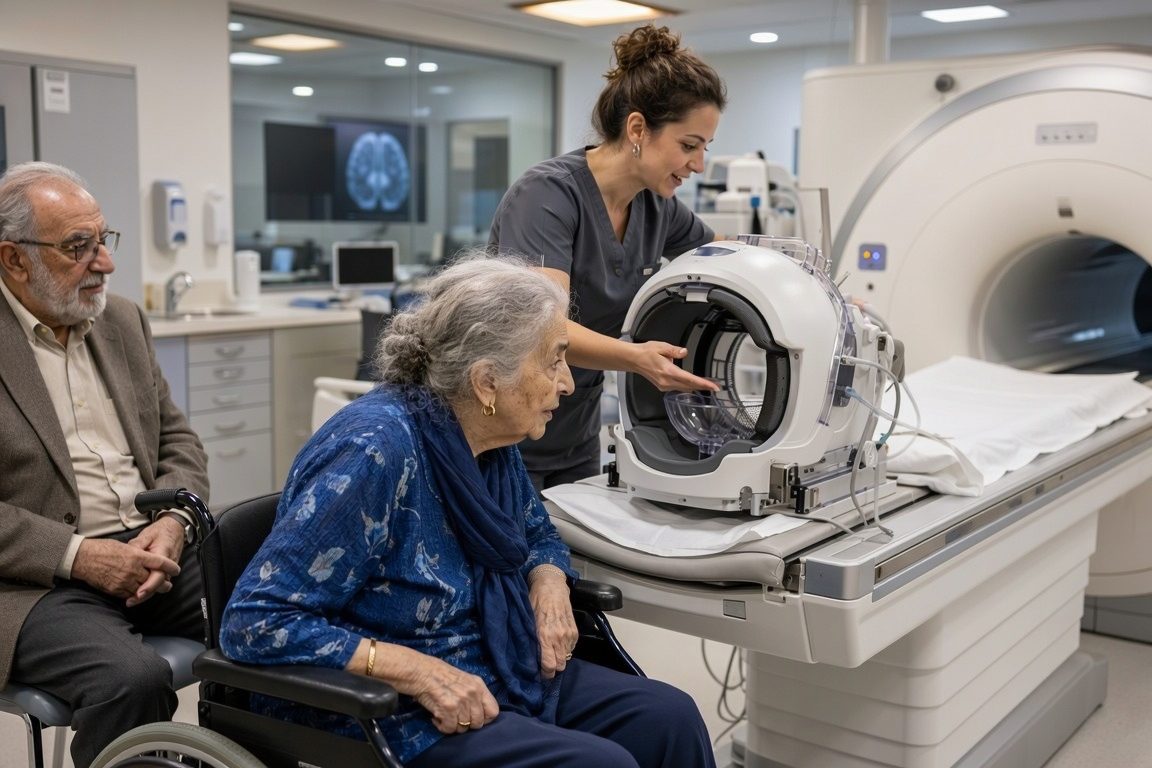
Focused ultrasound uses sound waves directed at a specific area of the brain to temporarily open the blood-brain barrier. The blood-brain barrier is a protective lining that normally keeps harmful substances out of the brain, but it also blocks many medications, including the newer anti-amyloid drugs like lecanemab and donanemab. By opening this barrier, focused ultrasound allows more of the drug to reach the brain tissue where it can work on breaking up amyloid plaques. In one clinical trial, researchers found that using focused ultrasound allowed about 50% more of the drug to enter the brain compared to standard intravenous infusion alone. This means that for people already receiving these infusions, the treatment could potentially be more effective at clearing the plaques that are a hallmark of Alzheimer's disease.
What Are the Risks and Side Effects?
Focused ultrasound is generally considered safe, but it does carry some risks. The most common side effects are mild and temporary, such as discomfort under the ultrasound transducer or a headache that lasts a few hours after treatment. More serious but rare risks include the possibility of seizure, which occurs in about 1 in 30,000 treatments. There is also a risk of small brain bleeds or swelling, particularly in people with certain genetic factors like the APOE4 gene. Because of this, doctors strongly recommend genetic testing before starting any treatment that involves opening the blood-brain barrier, as it affects the risk-benefit discussion. The procedure itself is non-invasive, meaning no incisions or needles are involved, but it does require multiple sessions over a prolonged period, often weekly for several months.
What Is the Cost and Availability?
Focused ultrasound for Alzheimer's is currently only available through clinical trials in the United States. It is not yet approved by the FDA for routine use, so it is not covered by Medicare or private insurance. The cost of participating in a trial is typically covered by the research sponsor, but travel and time off work may not be. If the treatment eventually becomes approved, the cost could be significant. For comparison, the newer anti-amyloid drugs alone can cost tens of thousands of dollars per year, and adding focused ultrasound would likely increase that. However, early studies suggest it could make the drugs more effective, potentially reducing the number of infusions needed or improving outcomes, which might offset some costs over time. Caregivers should discuss with the clinical trial coordinator what expenses might be involved and whether any financial assistance is available.
Practical tools
6
Clinical Trial Search Checklist
Use this checklist when looking for a focused ultrasound trial:
Keep this checklist in a notebook or on your phone.
Symptom Diary Template
Create a simple diary with columns: Date, Time, Treatment Session Number, Symptoms (headache, dizziness, confusion, etc.), Severity (mild/moderate/severe), Duration, and Any Action Taken. Share this with the trial team at each visit. This helps them monitor for ARIA (brain swelling) early.
Questions to Ask the Trial Coordinator
Print these questions:
Having these written down ensures you don't forget.
Genetic Testing Discussion Guide
Before APOE testing, discuss with the doctor:
Write down the answers.
Video Resource: 'Neurosurgeon Pioneers Alzheimer's, Addiction Treatments Using Ultrasound'
Watch this 60 Minutes segment to see the procedure in action and hear firsthand from the neurosurgeon who developed it. It provides a clear visual understanding of how ultrasound opens the blood-brain barrier. Use it to explain the treatment to other family members.
Support Group for Trial Participants
Ask the trial coordinator if there is a support group for caregivers of participants. If not, consider joining an online group like the Alzheimer's Association ALZConnected, where you can connect with others going through similar experiences. Sharing tips and emotional support can be invaluable.
Different situations
Early-stage Alzheimer's (MMSE 21-26)
Focused ultrasound trials typically enroll people in early stages because the anti-amyloid drugs are most effective then. If your loved one is in this stage, you have the best chance of being eligible. Focus on finding a trial quickly, as progression can happen. The goal is to slow decline, so even modest benefits can be meaningful.
Moderate Alzheimer's (MMSE 10-20)
Some trials may include moderate stages, but the benefits may be smaller because more brain damage has already occurred. Discuss with the doctor whether the risks (like brain swelling) outweigh the potential benefits. If your loved one has significant behavioral symptoms, the procedure may be harder to tolerate without sedation.
APOE4 gene carrier
If your loved one carries one or two copies of the APOE4 gene, the risk of ARIA (brain swelling or bleeding) is higher. The doctor may recommend a lower dose of the drug or more frequent MRI monitoring. You may need to weigh this risk carefully. Some trials exclude APOE4 homozygotes (two copies) due to high risk.
Family caregiver vs. adult child
If you are a spouse who is also older and may have health issues, the travel and time commitment of a trial (often weekly for months) can be exhausting. Consider asking other family members to share driving duties. If you are an adult child, you may have more flexibility but also work and family obligations. Plan ahead for time off.
Living in a rural area
Focused ultrasound trials are usually at large academic medical centers in cities. If you live far away, ask if the trial offers telemedicine for some visits or if there is a local partner site. You may need to arrange lodging. Some organizations like the Alzheimer's Association have travel assistance programs.
For the doctor
6
- Ask your doctor: 'Is my loved one eligible for any focused ultrasound clinical trials? If not, why?'
- Discuss: 'What is the risk of brain swelling or bleeding (ARIA) given my loved one's APOE status and overall health?'
- Ask: 'How will we monitor for side effects during the trial? Will there be regular MRI scans?'
- Discuss: 'If my loved one has a seizure during treatment, what is the emergency plan?'
- Ask: 'Can my loved one continue their current Alzheimer's medications (like donepezil or memantine) during the trial?'
- Discuss: 'What are the long-term effects of repeated blood-brain barrier opening? Is there any risk of infection or damage?'