Step by step
What not to do
- Do not assume focused ultrasound is a cure. It helps medications work better, but Alzheimer's continues to progress.
- Do not skip the APOE genetic testing discussion if it's offered, as it helps gauge the risk of brain swelling or bleeding.
- Do not stop your loved one's current medications, especially blood thinners, without first talking to the trial team; some drugs may need to be paused only under medical supervision.
- Do not ignore new symptoms after the procedure; even mild changes like a persistent headache or slight confusion deserve a call to the trial team.
- Do not expect insurance to cover the procedure; focused ultrasound for Alzheimer's is experimental and only available in clinical trials, costs are usually covered by the study sponsor, but travel and lodging often are not.
- Do not overlook what happens when the trial ends; ask upfront whether your loved one can continue treatment, will transition to standard care, or needs a long-term monitoring plan.
Key points
- Focused ultrasound temporarily opens the blood-brain barrier, allowing about 50% more Alzheimer’s drug to reach the brain.
- It is still experimental and only available in clinical trials, not a standard treatment.
- Risks include microhemorrhages, stroke, and temporary headaches; genetic testing (APOE) helps assess risk.
- The procedure does not cure Alzheimer’s but may help slow plaque buildup.
- Use TrialMatch to find studies, and always bring a list of questions to the consultation.
- Keep a symptom journal and report any new changes immediately to the trial team.
Videos
 Neurosurgeon Pioneers Alzheimer's, Addiction Treatments Using Ultrasound | 60 MinutesThis video provides a clear, real-world explanation of how focused ultrasound works and shows actual patients undergoing the procedure. It helps you visualize the process and understand the potential.
 APOE Gene & Alzheimer’s: Are You at Risk? | Dr. Khushboo VermaUnderstanding the APOE gene is critical before considering focused ultrasound. This video explains what the gene is, how it affects risk, and why testing matters for treatment decisions.
 Blood Test For Early Alzheimer's Detection!Early detection is key for trial eligibility. This video covers the new blood tests that can identify Alzheimer’s biomarkers, helping you know if your loved one might qualify for focused ultrasound studies.
Background
What Is the Blood-Brain Barrier and Why Does It Matter?
Your brain is protected by a natural filter called the blood-brain barrier. This barrier keeps harmful substances in your blood from entering the brain, but it also blocks many medications, including those used for Alzheimer’s. For years, this has been a major hurdle: even when a drug is injected into your veins, only a tiny fraction actually reaches the brain tissue where it’s needed. Focused ultrasound is a way to gently and temporarily open this barrier, allowing more of the drug to get through.
How Does Focused Ultrasound Work?
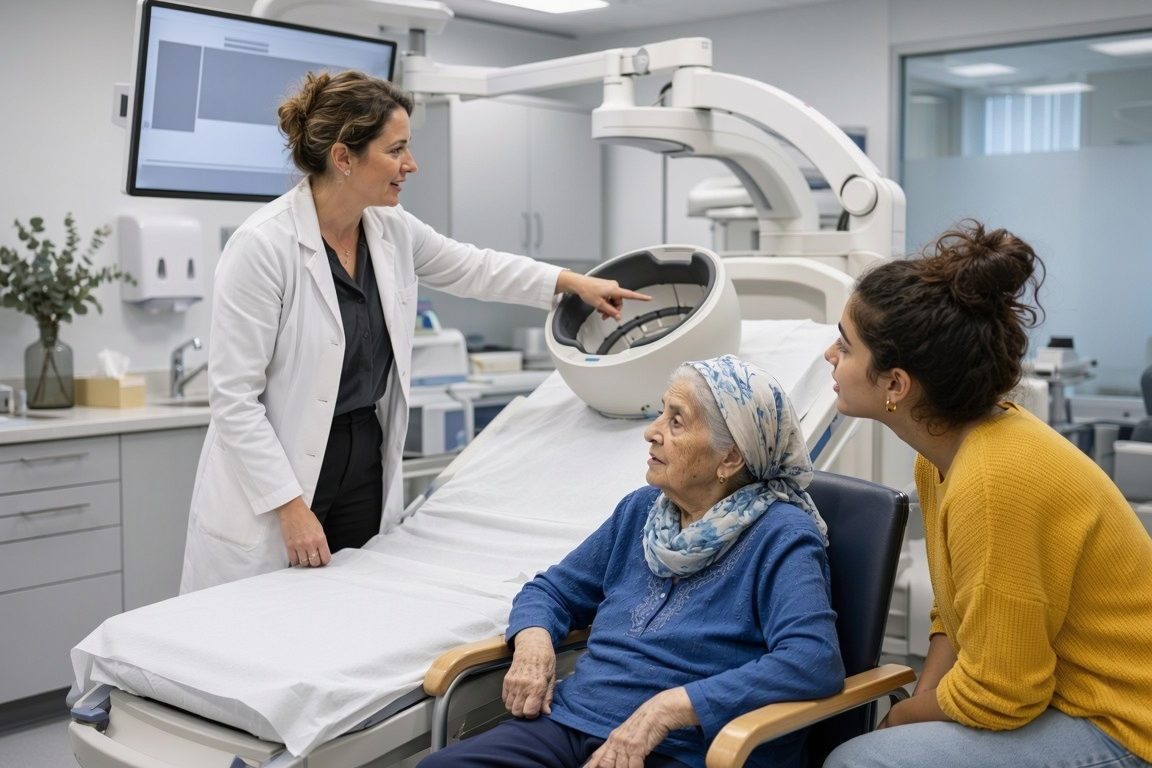
During the procedure, you lie inside an MRI scanner that guides a helmet-like device. The device sends hundreds of low-intensity ultrasound beams to a precise spot in your brain. These beams are focused like a magnifying glass concentrates sunlight. At the target, the ultrasound energy causes tiny bubbles in your bloodstream to vibrate, gently pushing apart the cells of the blood-brain barrier. This opening lasts for a few hours, during which the Alzheimer’s drug is given intravenously. The barrier then closes back up on its own. Early studies show that this method can get about 50% more of the drug into the brain compared to IV alone.
What Are the Potential Benefits and Risks?
The main benefit is that more medication reaches the brain, which may help break up amyloid plaques more effectively. However, it’s important to understand that this does not reverse Alzheimer’s, the disease process continues. The procedure itself is noninvasive and typically done as an outpatient. Risks include small microhemorrhages (tiny bleeds visible on scans) and, in rare cases, larger strokes. Some participants have experienced temporary headaches or dizziness. Because this is still experimental, all risks must be discussed thoroughly with the clinical trial team.
Practical tools
5
TrialMatch Search Tool
Use the Alzheimer's Association's free TrialMatch service (alz.org/trialmatch) to find focused ultrasound studies. Filter by location, disease stage, and treatment type, and connect directly with study coordinators.
Questions to Ask the Trial Team
Print this list and bring it to your consultation:
Symptom Tracking Journal
Keep a simple daily log of mood, energy, appetite, and any new physical symptoms, noting the date and time. This helps the trial team spot early warning signs and gives you a clear record to reference at each visit.
Medical Power of Attorney Document
Before enrolling, ensure your loved one has a medical power of attorney in place so you can make decisions if they're unable; have it drafted or reviewed by an elder law attorney.
Caregiver Support Group
Connect with other caregivers of people in Alzheimer's clinical trials, the Alzheimer's Association's 24/7 helpline (800-272-3900) and local chapters can help you find one; sharing experiences can reduce anxiety and surface practical tips.
Different situations
Early-stage Alzheimer’s (MMSE 21–26)
Eligibility for focused ultrasound trials is often limited to early-stage patients because the brain has less damage and the treatment may be more effective. Focus on maintaining independence and engaging in cognitive activities. The procedure may feel less overwhelming if your loved one is still able to understand and consent.
Moderate-stage Alzheimer’s (MMSE 10–20)
Some trials include moderate-stage patients, but the risks may be higher because the brain is more fragile. Your loved one may need more assistance during the procedure and recovery. Prepare for possible confusion or agitation after the MRI. Have a familiar object or music to comfort them.
Spouse vs. adult child caregiver
If you are the spouse, you may be more focused on preserving quality of life and less willing to take risks. If you are an adult child, you might be more hopeful about experimental treatments. Talk openly about your goals and fears. Consider a joint appointment with the trial team to ensure you both understand the trade-offs.
Living in a rural area
Clinical trials are usually at major medical centers. You may need to travel and stay overnight. Ask the trial team if they offer travel assistance or lodging. Plan for someone to stay with your loved one during the trip to reduce stress.
For the doctor
5
- Ask your neurologist: Is my loved one’s APOE gene status known, and how would it affect the risk of brain swelling or bleeding from focused ultrasound?
- Ask the trial team: What is the specific protocol for managing microhemorrhages or larger strokes if they occur?
- Ask the pharmacist: Will the Alzheimer’s drug used in the trial interact with any of my loved one’s current medications, especially blood thinners or antidepressants?
- Ask the primary care doctor: Should we pause any medications before the procedure, and if so, for how long?
- Ask the trial coordinator: Are there any out-of-pocket costs for travel, lodging, or follow-up scans that we should expect?