Step by step
What not to do
- Do not force yourself to write a perfect, polished journal entry. The goal is not a beautiful essay; it is emotional release. If you worry about grammar or structure, you will stop before you start. Just write messy, honest fragments.
- Do not compare your story to others’ and think yours is not 'bad enough' to share. Every caregiver’s journey is valid. Your feelings of exhaustion, guilt, or love are real regardless of the stage or disease. Comparison only deepens isolation.
- Do not read stories right before bed if they stir up anxiety. Many caregivers have trouble sleeping, and reading an intense account can keep your mind racing.Instead, read during a quiet afternoon or after a relaxing activity.
- Do not share your writing with someone who might judge or minimize your feelings. If a family member says 'you should be grateful,' that can undo the healing. Keep your writing private or share only with trusted, empathetic listeners.
- Do not expect reading or writing to 'fix' everything. These tools help you cope and process, but they do not erase the hard realities of caregiving. Use them as part of a broader self-care toolkit that includes rest, respite, and professional support.
Key points
- Reading other caregivers' stories reduces isolation and normalizes complicated emotions like guilt, anger, and relief.
- Writing for just five minutes using simple prompts (I am, I wonder, I miss) can help you process grief and reclaim your own identity.
- You do not need to be a writer, voice memos, bullet points, or even a single sentence count.
- Create a small ritual around reading or writing to signal to your brain that this time is for you, not for caregiving.
- Share your story only when and with whom you feel safe; you control the narrative.
- These tools are part of a larger self-care plan, they help, but they do not replace rest, respite, or professional support.
Videos
 Dementia Caregiver Compassion Fatigue and ways to copeThis video addresses the emotional exhaustion that makes reading or writing feel impossible, and offers practical ways to reconnect with yourself.
 Are You a Caregiver?A gentle reminder that you are not alone; hearing another caregiver's story can be the first step toward finding solace.
 Elizabeth Miller Founder and Owner of Happy Healthy CaregiverElizabeth shares her own journey and the power of journaling and storytelling to find happiness amid caregiving challenges.
 Alfredo Botello Author of Spin Cycle Notes from a Reluctant CaregiverAlfredo's raw, honest account of reluctant caregiving shows that even messy, imperfect stories can heal.
2 more videos
 Anticipatory Grieving When Your Loved One has DementiaThis video explains the grief that stories help you name, and why writing can be a powerful tool for anticipatory loss.
 How to Rebuild Life After CaregivingFor when you are ready to look forward, this video shows how the skills and stories from caregiving can help you rebuild.
Background
Why Stories Heal the Caregiver’s Heart
Caregiving for someone with dementia often brings a hidden layer of loss: the loss of your former self. You may feel like a different person now, and that is a kind of grief few people outside caregiving understand. Reading another caregiver’s raw, honest account, whether it’s a blog post, a book, or a podcast transcript, can be profoundly healing. As one expert put it, there is something healing in knowing that a stranger across the world is offering you support right now. That connection reminds you that your challenges are shared, and that you are not broken or alone.
Writing as a Way to Reclaim Your Voice
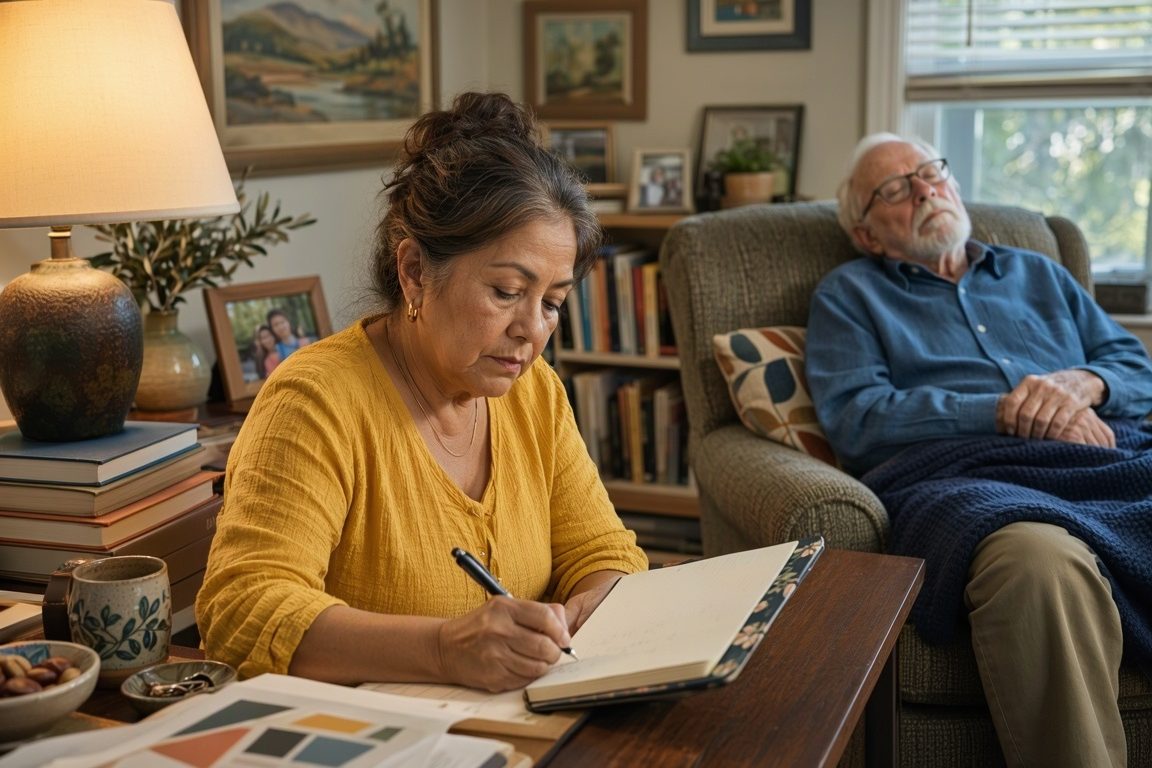
Journaling during caregiving is therapeutic because it gives you a private space to process what is happening. You do not need to be a professional writer. You can start with simple prompts like 'I am…', 'I wonder…', 'I miss…', or 'I fear…' and write for just five minutes. This practice helps you untangle the knot of guilt, resentment, and love that often coexists. One caregiver described how she would go to Starbucks before work a couple mornings a week just to write, and it helped her process what was going on and gave her a sense of her own future. Writing is not about producing something perfect; it is about letting your own voice be heard, even if only by yourself.
The Fellowship Among the Afflicted
There is a fellowship among those who have walked this path, and it is often marked by silence, a shared understanding that does not need words. But when you read or write stories, you break that silence. You give yourself permission to admit the complicated emotions: the relief you might feel at the thought of your loved one’s passing, the anger at a parent who cannot help their behavior, the shame of feeling irritated. These are normal. By naming them in a story or journal, you reduce their power over you. As one source noted, you have the power to choose when to lean into your grief and when to let life distract you from it. Stories give you that choice.
Practical tools
6
The Five-Minute Prompt List
Write these prompts on a sticky note or in your phone: 'I am… I wonder… I see… I miss… I dream… I worry… I fear…' Set a timer for five minutes. Pick one prompt and write without stopping. If you get stuck, repeat the prompt. This low-pressure structure helps you bypass the inner critic and access deeper feelings.
The 'Both/And' Journal Entry
Write two columns. In the left column, list what you have lost or grieve (e.g., 'I lost my free time,' 'I miss our old conversations'). In the right column, write what you have gained or learned (e.g., 'I became a crisis manager,' 'I learned patience'). This exercise, inspired by the concept of being both a caregiver and a person with a life, helps you hold the complexity without denying either side.
The 'Letter to My Future Self' Template
Take a piece of paper and write: 'Dear Future Me, I am writing this on [date]. Right now, I am feeling…' Then describe your current challenges, fears, and small victories. Seal it in an envelope and write 'Open in one year' on the front. This tool helps you see your own growth over time and reminds you that this moment is not permanent.
The 'Story Swap' with a Trusted Friend
Find another caregiver (online or in person) and agree to exchange one short story or journal entry per week. You can do this via email or a private message. The act of writing for someone else can motivate you, and receiving their story reinforces that you are not alone. Keep it simple: no editing, no pressure.
The 'Gratitude and Grief' List
Each day, write one thing you are grateful for and one thing you are grieving. For example: 'Grateful that Mom smiled today. Grieving that she did not recognize me.' This practice, recommended by grief experts, honors both the joy and the loss without forcing false positivity.
A Physical Story Collection Box
Get a small box or folder. Whenever you read a quote, a blog post, or a poem that moves you, print it or write it down and put it in the box. On hard days, open the box and read one or two. This tangible collection becomes your personal 'fellowship of the afflicted' that you can hold in your hands.
Different situations
For spousal caregivers (especially in early-stage dementia)
Your grief is layered: you are losing your partner while they are still physically present. Writing can help you name the 'double loss' of the person and the relationship. Use prompts like 'I miss when we used to…' or 'I am still…' to honor what was and what remains. Reading stories from other spouses can normalize the guilt of feeling relief or anger.
For adult children caregivers (especially for a parent with Alzheimer's)
You may struggle with role reversal and unresolved childhood issues. Writing can help you separate the parent you had from the person they are now. Try prompts like 'I am both a daughter/son and a caregiver…' or 'I wonder what my parent would say if they could…' Reading stories from other adult children can reduce shame about feeling irritated or resentful.
For caregivers of someone with Lewy body dementia or frontotemporal dementia
These diseases often involve behavioral changes (aggression, paranoia, apathy) that are especially hard to witness. Your story may include raw, painful moments. Do not censor yourself. Writing about the specific behaviors can help you see them as symptoms, not personal attacks. Seek out stories from others caring for someone with the same diagnosis, they will understand the unique challenges.
For caregivers in late-stage dementia or hospice
Your grief is anticipatory and acute. Writing can be a way to say goodbye. Try writing a letter to your loved one, even if they cannot respond. Read stories about the end-of-life journey to prepare yourself emotionally. You may also want to write about your own hopes for life after caregiving, as this can be a time of rebuilding.
For caregivers who are not 'writers' or feel intimidated
You do not have to write sentences. Use bullet points, drawings, or voice memos. The goal is expression, not art. If reading feels easier, start with short blog posts or podcast transcripts. The key is to engage with stories in whatever form feels accessible. Even a single sentence a day can be a lifeline.
For the doctor
3
- If writing or reading stories stirs up intense feelings of hopelessness, suicidal thoughts, or overwhelming anxiety, please talk to your doctor or a mental health professional. Caregiver suicide risk is real, and these tools are not a substitute for professional help.
- If you find that journaling is not helping and you feel more distressed after writing, discuss this with a therapist. Some people need guided support to process trauma, and a professional can help you find the right approach.
- If you are considering sharing your story publicly (e.g., on a blog or social media), talk to a counselor about potential risks, especially if your loved one is still alive and might be identifiable. Privacy and consent matter.