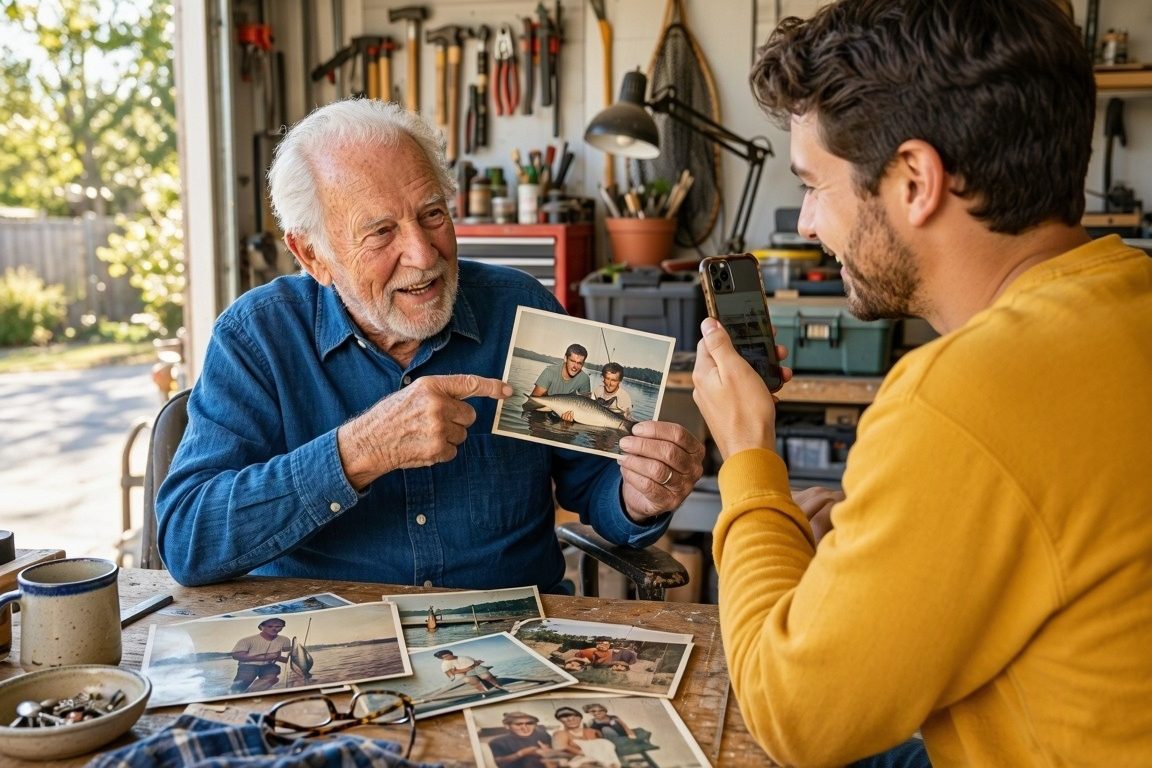
Step by step
What not to do
- Don't wait until your loved one can no longer speak or recognize you. The earlier you start, the more you can capture while they can still contribute their own words and stories. Waiting too long means you lose the chance to hear their voice and perspective.
- Don't overwhelm them with too many photos or questions at once. Dementia brains process information slowly. A single image with one short audio clip is plenty for one session. Pushing too much can cause anxiety, frustration, or withdrawal.
- Don't correct them if they misremember a detail. If they say the wedding was in 1960 but you know it was 1965, let it go. The goal is emotional connection, not factual accuracy. Correcting them can damage trust and increase agitation.
- Don't use the memory bank as a test. Avoid asking 'Do you remember this?' in a way that feels like a quiz.Instead, say 'Look at this picture, isn't it lovely?' or 'Listen to this story: I love how you tell it.' This keeps the experience positive and pressure-free.
- Don't leave the memory bank in a drawer or on a high shelf. If it's out of sight, it won't be used. Keep it in a visible, reachable spot so your loved one can engage with it spontaneously, especially during times of boredom or restlessness.
- Don't assume digital is always better. Some people with dementia find screens confusing or overwhelming. A physical photo album with printed transcripts may work better. Test both and see what your loved one responds to most comfortably.
Key points
- Start early, capture memories while your loved one can still contribute their own words and stories.
- Combine photos with audio recordings for a richer, more engaging experience that taps into multiple senses.
- Keep sessions short, simple, and pressure-free, no testing, no correcting.
- Make the memory bank accessible and visible so it can be used spontaneously throughout the day.
- Involve family members to build a collaborative, intergenerational project.
- Adapt the format and content as your loved one's condition changes, what works today may need adjustment tomorrow.
Videos
 Kristin Nelson Founder & CEO of Audivi Memory BanksThis video directly explains the concept of a memory bank, combining photos and audio, and how it can be used as a tool for both the person with dementia and the caregiver. It includes practical tips on how to start and what to include.
 What are Dementia Friendly Gift ideas? Top 10 gift guide for someone with dementiaThis video offers ideas for creating simple, dementia-friendly activities that can double as memory-building tools, including using index cards with questions and creating a memory book with photos from the past.
 dementia gift guide 2018Provides additional ideas for gifts that support memory and engagement, such as fidget boxes and simple puzzles, which can complement a memory bank.
 How to Make a Routine That Keeps Dementia Patients Busy (in 30 minutes or less)Explains how to incorporate memory-based activities into a daily routine, including using a memory bank as a regular anchor activity.
2 more videos
 How to Deal With Dementia in a ParentCovers the importance of early planning and practical steps for caregivers, including creating a care plan that incorporates memory preservation.
 Caring for Someone with Alzheimer's - Family Caregiver Webinar SeriesProvides broader context on caregiving strategies, including how to use reminiscence and memory tools to reduce caregiver stress and improve quality of life.
Background
What Is a Memory Bank and Why Does It Matter?
A memory bank goes beyond a simple photo album. It combines images with audio recordings of your loved one's own voice telling stories, answering questions, or sharing favorite memories. This dual sensory approach, visual and auditory, engages multiple parts of the brain, making the experience more immersive and emotionally grounding. For someone with dementia, hearing their own voice recount a happy memory can be deeply reassuring, especially when they struggle to recall recent events.
How Dementia Affects Memory and Why This Helps
Dementia typically attacks short-term memory first, while long-term memories from decades ago often remain intact longer. A memory bank taps into those preserved older memories, childhood homes, first jobs, wedding days, that can still bring joy and connection. When your loved one is feeling confused, agitated, or withdrawn, revisiting these stable, positive memories can calm them and reduce distress. It also gives you, the caregiver, a shared activity that doesn't rely on them remembering what happened five minutes ago.
The Role of Repetition and Routine
Repetition is key for dementia-affected brains. Hearing the same story or looking at the same photo multiple times is not a failure, it's a comfort. A memory bank allows you to replay the same audio or flip through the same images without frustration. Over time, your loved one may begin to anticipate the story or even finish a sentence, which builds confidence and a sense of mastery. This is not about teaching new things; it's about reinforcing what still brings meaning.
Practical tools
6
Brightly Colored Index Cards with Simple Questions
Write one question per card using large, clear print and bright colors. Examples: 'What's your favorite animal?', 'What food do you hate?', 'Who is your favorite singer?', 'When do you feel happy?' Keep the deck on the coffee table. Pick a card together and both of you answer it. This turns memory-building into a low-pressure, shared activity.
Voice Memo App on Your Smartphone
Use the built-in voice recorder on your phone to capture short audio clips of your loved one telling a story or answering a question. Label each file with a date and a keyword (e.g., '2024-03-15_favorite_vacation'). You can later pair these with photos in a digital album or print transcripts to add to a physical book.
Three-Ring Binder with Clear Sleeves
A simple, low-tech solution. Insert photos into the sleeves and print or write short captions on separate pages. Add a pocket for index cards or small mementos. This is easy to flip through, durable, and can be updated as you go. Keep it on the coffee table or bedside table.
Digital Photo Frame with Audio Capability
Some digital frames allow you to upload photos and attach audio recordings. Set it to shuffle through images while playing the corresponding audio. This can run on a loop during the day, providing gentle, passive engagement without requiring active participation.
Rummage Box or Fidget Box
A small box or basket filled with tactile objects that relate to the memories in the bank, a smooth stone from a favorite beach, a soft scarf from their youth, a set of keys. When your loved one seems restless, offer the box alongside the memory bank. The physical objects can trigger memories and provide sensory comfort.
Printable Memory Bank Template
Create or download a simple template with spaces for a photo, a short caption, and a few lines for the story. Print multiple copies and fill them in together. This gives structure to the process and makes it easy for other family members to contribute.
Different situations
Early-stage dementia (mild cognitive impairment)
Your loved one can actively participate in choosing photos and recording their own stories. Let them lead the process as much as possible. Ask them what memories they want to save. This gives them a sense of control and purpose. Use the memory bank as a way to practice recalling recent events too, but keep it light.
Middle-stage dementia (moderate decline)
Your loved one may have difficulty initiating conversation or following complex instructions. Keep sessions very short, 5 to 10 minutes. Use simple, direct language. Point to a photo and say, 'Look, it's you at the beach.' Play the audio and let them listen. Don't expect them to answer questions; just enjoy the moment together.
Late-stage dementia (severe decline)
Your loved one may no longer speak or recognize faces. The memory bank still has value. Play the audio recordings softly in the background. Hold the photos where they can see them, even if they don't seem to react. The familiar voices and images can provide comfort and reduce agitation, even if they can't express it.
Lewy body dementia or Parkinson's disease dementia
These conditions often involve visual hallucinations and fluctuating attention. Use high-contrast, simple images without busy backgrounds. Avoid audio that is too loud or has multiple voices. Keep sessions very short and be prepared to stop if your loved one becomes confused or frightened. The memory bank should be calming, not overstimulating.
Spouse vs. adult child caregiver
As a spouse, you have a shared history that can make the memory bank deeply personal. Use inside jokes, pet names, and shared experiences. As an adult child, you may need to rely more on family stories and photos from before your time. Ask siblings or older relatives to contribute. Either way, the goal is to honor the person's identity, not your own memories.
For the doctor
3
- If your loved one becomes agitated or distressed when looking at old photos or listening to recordings, discuss with their doctor whether this is a sign of a mood disorder or if the activity needs to be modified.
- If you are using a digital device (tablet, smartphone, digital frame) and your loved one has a history of seizures or photosensitivity, ask their neurologist if screen-based activities are safe.
- If your loved one has a history of trauma or difficult memories, ask a therapist or social worker how to approach memory work without triggering distress.