Step by step
What not to do
- Do not stop going altogether because of one difficult experience. Withdrawal accelerates decline.Instead, try a smaller group or a shorter visit first.
- Do not ask 'Do you want to go to church?' expecting a yes. The person may say no because they cannot initiate or feel anxious.Instead, use a direct invitation like 'Let’s go to the early service together.'
- Do not scold or correct your loved one if they behave in a way that seems inappropriate (e.g., talking loudly, wandering). This can cause shame and resistance.Instead, redirect gently and empathize: 'I see you are feeling restless. Let’s take a walk.'
- Do not expect the person to remember the routine or the purpose of the activity. They may not recall why they are there, but they can still feel the warmth of the community and the music. Focus on the emotional experience, not the cognitive understanding.
- Do not assume the congregation will know how to help. Many people want to help but do not know how. Take the lead by educating them and asking for specific, small supports.
- Do not force your loved one to stay if they are clearly distressed. It is better to leave early and try again another time than to create a negative association with the activity.
Key points
- Do not stop community activities prematurely, withdrawal accelerates decline. Adapt, do not abandon.
- Focus on participation, not perfection. The goal is emotional connection, not task completion.
- Prepare your loved one with a direct invitation, not a question. Use phrases like 'Let’s go together.'
- Educate the congregation or group leaders so they can support you and your loved one.
- Have an early exit plan and a 'church kit' to manage distress quickly and calmly.
- If in-person attendance becomes impossible, use virtual options or one-on-one visits to maintain spiritual connection.
Videos
 An Interview with Tim England Australia Dementia Expert and ChampionTim England discusses how communities can become more dementia-inclusive, including practical advice for churches and group activities.
 The Baffled Brain: Demystifying Dementia Episode 21 April 17 ,2021This episode explores why people with dementia may withdraw from community activities and how to re-engage them with empathy.
 Dementia friendly activities someone would actually enjoy!Offers creative ideas for activities that are genuinely enjoyable for people with dementia, including adaptations for group settings.
 Is lying to someone with dementia bad?Discusses the ethics of therapeutic communication, which is relevant when redirecting a loved one during a community activity.
2 more videos
 289. How To Change Caregiver Burden To Christian Stewardship In DementiaProvides a spiritual perspective on caregiving, helping caregivers reframe their role as a form of stewardship rather than burden.
 SUP! Straight Up PositiveTeepa Snow’s Positive Approach to Care is featured, offering practical techniques for engaging people with dementia in community settings.
Background
Why community activities become challenging
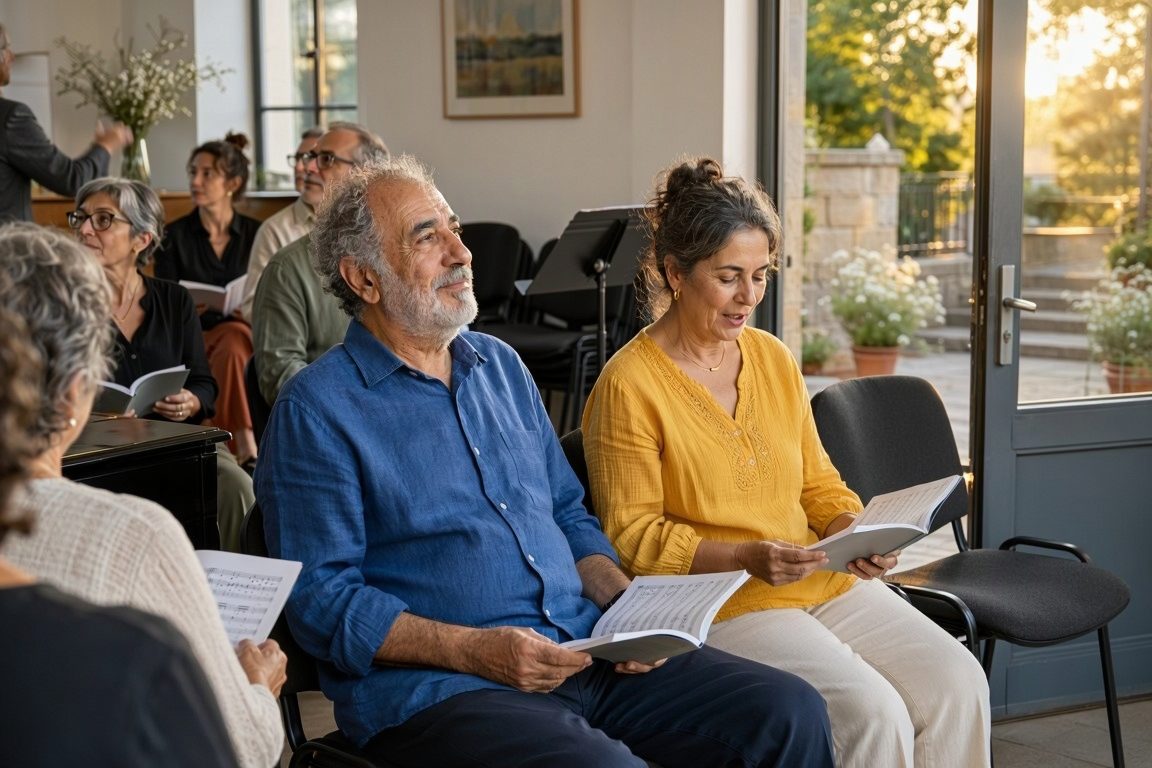
As dementia progresses, the brain’s ability to process complex environments, follow rapid conversations, and remember social cues declines. A crowded church service or a bustling group activity can become overwhelming: too many people, too much noise, unfamiliar faces, and unpredictable sequences of events. The person may feel anxious, confused, or agitated, and may withdraw or act out. This is not a sign that they no longer value the activity, it is a sign that the environment no longer fits their current abilities. As one expert notes, when we see someone with dementia showing distress in the community, we often assume they cannot participate, but the real problem is that the environment has not been adapted to their needs.
The cost of stopping too soon
When we stop taking a person with dementia to church or group activities because they seem distressed, we inadvertently accelerate their decline. Engagement, social, spiritual, physical, and occupational, keeps the brain active and slows the progression of dementia. Without it, the person loses not only the activity but also the sense of purpose, belonging, and joy that comes from being part of a community. As one caregiver put it, 'by doing something is the right thing; doing nothing is the wrong thing.' The goal is not a perfect performance but participation: the person feels they are still part of the world, even if the t-shirt is folded wrong or the hymn is sung off-key.
The role of the community and the caregiver
Many congregations and group leaders are simply not prepared for dementia. They may not know how to engage, what to say, or how to adapt activities. This lack of preparation can lead to the person being inadvertently excluded or ignored. As a caregiver, you can become the bridge: you can educate the community, prepare your loved one, and modify the experience so that it works for everyone. The key is to shift from expecting the person to fit the activity to adapting the activity to fit the person. This is not about lowering standards, it is about honoring the person’s dignity and continuing to include them in the life they love.
Practical tools
6
Phrases to say to your loved one before and during the activity
Before: 'I have a special plan for us today, we are going to the early service and sitting in our favorite spot.' During: 'Let’s listen to this song together. I love this one.' If they seem confused: 'We are at church. It’s okay. I am right here with you.'
Phrases to say to church leaders or volunteers
To the pastor: 'My loved one has dementia. They love coming to church, but large crowds can be overwhelming. Could we sit near a door and leave early if needed?' To a volunteer: 'If you see us looking confused, please just smile and say hello. That helps a lot.'
A simple 'church kit' to bring
Pack a small bag with:
These can provide comfort and focus during the service.
The 'early exit' plan
Before the service, decide with your loved one (or on your own) that you will leave after the music or the sermon, no matter what. This prevents the stress of staying too long. You can say, 'We are going to leave after the last song. Let’s enjoy it together.'
A checklist for evaluating the activity
After each visit, ask yourself:
Write down one small change to try.
Virtual connection tool
If in-person attendance becomes impossible, set up a simple video call with a church friend or the pastor. Use a tablet or smartphone. Play a familiar hymn in the background. Keep the call short (5–10 minutes) and focused on a single topic, like a shared memory or a prayer.
Different situations
Early-stage dementia (mild cognitive changes)
The person can still participate in most activities with minimal adjustments. Focus on reducing sensory overload: choose a quieter service, sit near the front, and avoid large social hours. Encourage them to continue a familiar role, like ushering or reading a scripture, but have a backup plan if they forget their lines.
Middle-stage dementia (moderate cognitive decline)
The person may need more direct support. Use the 'church kit' and the 'early exit' plan. They may not remember the service afterward, but the emotional experience is still valuable. Consider a small group like a Bible study or a prayer circle instead of the main service. If they become agitated, redirect to a quiet space immediately.
Late-stage dementia (severe cognitive decline)
In-person attendance may no longer be possible or comfortable. Focus on virtual or one-on-one spiritual connection. Play recorded hymns, watch a streamed service, or have a volunteer visit for a short prayer. The goal is sensory comfort and emotional connection, not cognitive engagement.
Lewy body dementia (fluctuating cognition, visual hallucinations)
Be extra cautious about overstimulation. The person may have good days and bad days. On bad days, skip the activity entirely. On good days, keep it very short (10–15 minutes). Avoid dim lighting or complex visual patterns that might trigger hallucinations. A quiet, well-lit room is best.
Spouse vs. adult child as caregiver
A spouse may feel a deep emotional loss and may need support to continue attending church themselves. Consider alternating: one week the spouse goes alone, the next week they attend together with adaptations. An adult child may need to coordinate with siblings or hire a respite worker to accompany the parent to church, allowing the child to attend their own service separately.
For the doctor
3
- If your loved one becomes extremely agitated or aggressive during community activities, ask the doctor if there might be an underlying medical issue (e.g., pain, infection, medication side effect) that is making participation harder.
- If your loved one has a history of falls, ask the doctor or physical therapist about safe seating and mobility aids for church or group settings.
- If your loved one is on medications that cause drowsiness or confusion, ask the doctor if the timing of doses can be adjusted to allow for clearer periods during community activities.