Step by step
What not to do
- Do not argue or correct factual errors, forcing them to relive grief is harmful.
- Do not correct them in front of others; lingering embarrassment can distress them even after they forget the incident.
- Do not use fibs that can backfire, e.g., saying a loved one is 'in the hospital' may spur a need to visit, keep fibs neutral and reassuring.
- Do not fib about safety-critical matters like driving; instead, seek professional evaluation and validate their feelings.
- Do not say something they can easily disprove in the moment (e.g., claiming sunshine when it rains), as this can erode trust.
Key points
- A compassionate lie is a tool to reduce your spouse's distress, not to deceive for personal gain. It is an act of love in a brain that can no longer process painful truths.
- Your spouse's feelings store normally, even when facts do not. A gentle fib protects them from repeated grief and anxiety.
- Never argue or correct. Instead, enter their reality with a simple, positive fib and redirect to a comforting activity.
- Consistency is key, use the same fib each time, especially if they cycle through questions quickly.
- Coordinate with care staff or family to ensure everyone uses the same approach.
- It is normal to feel guilt. Remind yourself that you are offering comfort, not betrayal. Seek support if needed.
Videos
 Is lying to someone with dementia bad?This video directly addresses the emotional conflict caregivers feel about lying and reframes it as a compassionate tool.
 Avoid the argument: Find answers that make sense to the person with dementiaOffers practical phrases and techniques to avoid arguments and meet your spouse in their reality.
 Therapeutic Lies in Dementia CareExplains the concept of therapeutic lying with examples, reinforcing that it is about reducing distress.
 Why it's okay to lie to your loved one with dementiaProvides reassurance for caregivers who struggle with guilt, emphasizing the loving intent behind fibs.
2 more videos
 When is it OK to Lie or Fib to a Person with Alzheimer's or Dementia?Covers specific scenarios and when to use fibs, with a focus on safety and emotional well-being.
 Communication & Dementia: Connecting with a Person living with Memory LossTeaches general communication strategies that complement therapeutic fibs, such as validation and redirection.
Background
What Is a Compassionate Lie or Therapeutic Fib?
A compassionate lie is a small, harmless untruth told solely to relieve your spouse's distress or prevent a painful emotional reaction. In dementia care, this is often called a 'therapeutic fib' because its purpose is healing, not harm. Your spouse's brain, especially in late-stage Lewy body dementia, can no longer use logic to self-soothe, see another perspective, or understand that their confusion is due to a disease. When you tell a gentle fib, you are not manipulating; you are offering a lifeline out of confusion and fear. The goal is to reduce anxiety, validate their feelings, and keep them out of harm's way, emotionally and physically.
Why This Happens in Late-Stage Lewy Body Dementia
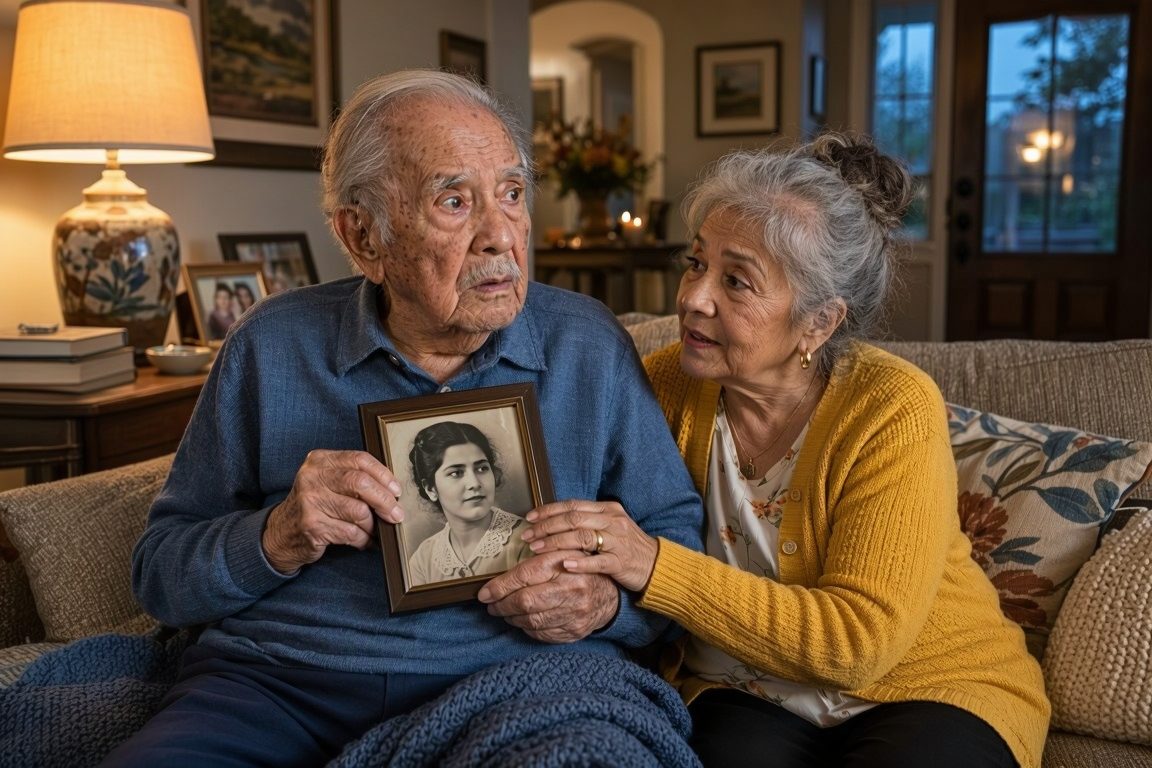
In late-stage Lewy body dementia, your spouse's ability to store and retrieve recent facts is severely impaired, but their feelings store normally. This means they may not remember that their mother died 30 years ago, but they will feel the deep grief of that loss if you remind them. Their brain links details in unusual ways, leading to paranoia, delusions, or repeated questions. They cannot reason their way out of distress, they cannot say 'I have dementia, that's why I'm confused.' Arguing or correcting only increases their agitation and yours. A compassionate lie meets them in their reality, where they feel safe, and spares them the agony of a truth they cannot process.
The Spouse Caregiver's Unique Challenge
As a spouse, your relationship was built on honesty and trust. It feels deeply wrong to lie to the person you have shared your life with. But remember: your spouse's brain has changed. They are no longer the same logical partner. Telling them the truth about something they disagree with or cannot understand will only upset them and lead to repeated arguments that drain you both. A therapeutic fib is not a betrayal, it is an act of love that prioritizes their emotional well-being over factual accuracy. You are not losing their trust because they do not know it is a lie; they experience your words as comfort and validation.
Practical tools
5
The 'Gone for a Walk' Fib
For questions about a deceased or absent loved one: 'They just stepped out for a walk, they'll be back soon.' Immediately redirect: 'Let's have tea while we wait.'
The 'Yes, And' Redirect Script
Keep ready phrases: 'Yes, and you've done such a good job today.' or 'Yes, and we'll head out after a rest.' The 'yes' validates; the 'and' guides to calm.
The 'Feelings First' Phrase Card
A short list on phone or index card: 'I can see you're worried. I'm right here.' 'That sounds hard. I'm sorry.' 'You're safe. I love you.' Use before responding in tough moments.
The Comfort & Redirect Kit
A small bag with
After the fib, pull one item and say 'Feel this' or 'Listen, this is your song.'
The Care Team Consistency Note
Post in the room and share with staff: 'When [spouse] asks about [topic], respond with [exact fib]. This keeps them calm, thank you.'
Different situations
Late-stage Lewy body dementia with visual hallucinations
Your spouse may see people or animals that are not there. Do not argue about the hallucination. Instead, say 'I see you're looking at something. Is it a friendly cat?' If they are scared, use a fib: 'That's just a shadow, let's move to the other room.' Never say 'That's not real.'
Spouse caregiver at home vs. in memory care facility
At home, you have more control over the environment and can use consistent fibs. In a facility, coordinate with staff to ensure everyone uses the same approach. If staff are not trained, gently educate them: 'When he asks about his mother, please say she's out for a walk. It keeps him calm.'
Spouse caregiver vs. adult child caregiver
As a spouse, you may feel more guilt because of your lifelong commitment to honesty. Remind yourself that your role has shifted to protector. Adult children may find it easier because they have less history of shared truth-telling. Both roles benefit from support groups to process the emotional weight.
Lewy body dementia with severe paranoia or delusions
If your spouse accuses you of stealing or lying, do not defend yourself. Use a validating fib: 'I'm sorry you feel that way. Let me help you find it.' Then redirect to a calming activity. Arguing will escalate paranoia. If delusions are dangerous, discuss with a clinician (see below).
Late-stage with rapid cycling (questions every few minutes)
Use a consistent, short fib each time, like 'She's fine, she'll be back later.' Do not vary the answer. Pair it with a sensory redirect (e.g., hand massage, music). This prevents repeated grief and keeps your spouse calm. You may need to repeat the same fib 10 times in an hour, that is okay.
For the doctor
4
- If your spouse's paranoia or delusions become dangerous (e.g., they believe someone is poisoning them), discuss with a doctor whether medication adjustments or a psychiatric consult are needed. Do not rely solely on fibs for safety threats.
- If your spouse asks about driving and you are concerned about safety, ask the doctor to order an occupational therapy driving evaluation. This allows a professional to make the decision, and you can validate your spouse's frustration without lying about their ability.
- If your spouse is in significant distress despite compassionate lies, discuss with a clinician whether there is an underlying medical issue (e.g., infection, pain, medication side effect) that needs treatment.
- If you feel overwhelmed by guilt or conflict about using fibs, seek a counselor or support group. This is a common struggle, and professional guidance can help you find peace with your approach.