
Step by step
What not to do
- Do not overwhelm listeners with a list of grievances or try to win an argument about whether long-term care is 'good' or 'bad', share one specific scene that contradicts the old story.
- Do not use vague, general praise like 'the staff is wonderful', anchor your praise in a specific action such as 'the aide noticed my mom was cold and brought her a blanket without being asked.'
- Do not share identifying details or medical information (HIPAA), you can tell a powerful story without using a resident's full name or diagnosis.
- Do not wait for a perfect story; a small, everyday moment like a shared laugh over a photo is powerful precisely because it feels real.
- Do not strip out your own emotion, when you say 'I felt so relieved when I saw that,' you invite the listener to feel something too.
Key points
- One specific, emotionally anchored story is more powerful than a dozen general complaints or praises.
- Use the 'one scene' rule: paint a single, vivid moment, not the whole script of your struggles.
- Frontline caregivers are like 'Navy Seals' doing invisible, heroic work, tell their stories to give them recognition.
- When someone repeats an old myth, don't argue, offer a counter-story from your own experience.
- Small, everyday moments (a shared breath, a redirected story) are the most relatable and memorable.
- Your story can change the norm and the standard for how long-term care is perceived.
Videos
 Dr. Buffy Lloyd-Krejci, Founder and President of IPCWell, & Author of 'Broken'This video provides expert insight into the systemic challenges in long-term care and how storytelling can be a tool for change, especially for frontline caregivers.
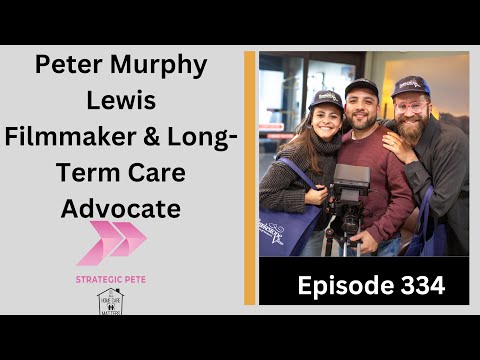 Peter Murphy Lewis Filmmaker & Long-Term Care AdvocatePeter Murphy Lewis uses film to tell the real stories of long-term care. This video shows how visual storytelling can shift public perception.
 Liza Berger and Diane Eastabrook of McKnights Home CareThis discussion covers how media and journalism can help change the narrative around long-term care, offering practical tips for caregivers who want to share their stories.
 Responding to Repetition: How to Support Residents Who Ask the Same QuestionsThis video gives concrete techniques for turning repetitive questions into moments of connection, perfect material for a positive story to share.
2 more videos
 What to Say When Friends & Family Don’t Understand Dementia CaregivingThis video provides scripts and strategies for handling the 'it looks easy' comments, directly supporting the storytelling approach in this article.
 How Dementia Caregivers Can Feel Better in 2025This video focuses on caregiver well-being and the power of reframing your experience, a key part of telling a story that is honest but not despairing.
Background
The Old, Heavy Story: Why Misconceptions Stick
For decades, long-term care has carried a powerful stigma. The media and our own cultural memories often paint a picture of places where 'care is horrible, nobody cares, and it's a place where we just dump our loved ones' (Source 1). These images are so strong that even when a facility provides excellent, compassionate care, many people still assume the worst. This isn't just a public relations problem, it hurts everyone. It makes families feel guilty and scared, it makes frontline caregivers feel like 'Navy Seals' doing a hard, invisible job with no recognition (Source 2), and it can even taint the workforce, making good caregivers hesitant to enter or stay in the field (Source 3).
The New, True Story: Why Your Voice Matters
The truth is, many long-term care facilities are filled with dedicated people doing extraordinary work. But that story isn't being told loudly enough. As one expert notes, 'those are only going to change if we start helping people see there are places that is not the case... we need to change the norm and then we need to change the standard' (Source 15). Your personal story, as a family member who visits, or as a caregiver who works there, is the most powerful tool for change. A specific, emotionally anchored story can break through the old, inaccurate memories people carry (Source 15). When you share a concrete moment, like the time a caregiver gently redirected a resident who was panicked at 2 a.m. you give the listener a new picture to hold onto (Source 19).
The Barrier: Why People Don't Listen (Yet)
One reason misconceptions persist is that people don't know how to hear the real story. Family and friends may minimize your experience, saying things like 'it looks easy when you're here' or questioning your decisions (Source 7). Frontline caregivers often can't share the full picture due to privacy rules (HIPAA), leaving their hard work invisible (Source 2). This silence creates a vacuum that the old, negative stories fill. Your job is not to dump every hardship on someone, but to 'paint one scene, not hand them the whole script' (Source 19). A single, vivid moment, like a resident who repeats the same story and how you gently redirected them by asking 'tell me more about that' (Source 5), is far more powerful than a general complaint.
Practical tools
5
The 'One Scene' Script
A simple template: 'Last [time of day], [person] was [emotion/action]. [Caregiver] did [specific action]. It made me feel [your emotion].' Example: 'Last night, my dad was panicked, thinking he had to go to work. The nurse took his hands, breathed with him, and walked him to look at a photo album. It made me feel so grateful.'
The 'Tell Me More' Redirect
When a resident repeats a story, instead of showing frustration, say: 'That's a wonderful memory. Tell me more about that part where you met your husband.' This deepens the conversation and creates a warm moment you can later share.
The 'Breathe Together' Technique
When a resident is agitated, gently say: 'Hold that thought. Can I have your hands? Let's breathe together,' then take a few slow breaths with them to calm the moment and create a concrete story about how care is provided.
The 'Curiosity Over Anger' Mindset
When a resident asks the same question repeatedly, ask yourself: '
' This turns frustration into a solvable care puzzle.
The 'Comparison' Boundary Script
When a friend says 'it looks easy when you're here,' respond with: 'It may look easy when you're here, but it's not like this the rest of the time. Let's not compare your short visits to my everyday reality,' then share your one scene.
Different situations
For a family caregiver who feels guilty about placing a loved one
Your story should focus on the relief and safety you felt. Use phrases like: 'I was so grateful because they needed that level of care... there was nobody who could care for their needs at home' (Source 1). This helps others understand that placement was an act of love, not abandonment.
For a frontline caregiver who feels invisible
Your story should highlight the skill and dedication of the work. Compare it to a demanding but respected profession: 'We don't get the same recognition as a Navy Seal, but we work double shifts on holidays and we do it because we care' (Source 2). This reframes the work as heroic.
When the resident has dementia and repeats stories
Instead of telling a story about frustration, tell a story about connection. Use the 'tell me more' technique (Source 5) and share how you helped the resident go deeper into a memory. This shows that care is not just about tasks, but about honoring a person's history.
When talking to someone who had a bad experience with long-term care decades ago
Acknowledge their old memory first: 'I know there are places that still aren't good. But things have changed in many facilities.' Then offer your specific, positive scene. This validates their experience while opening the door to a new one (Source 15).
For a caregiver in a facility with limited resources or staffing challenges
Your story can be about small, human moments that don't require extra money. For example: 'Even though we're short-staffed, the aide took two minutes to hold my dad's hand and breathe with him when he was scared.' This shows that good care is about presence, not just resources (Source 9).
For the doctor
3
- If you are considering telling a story that involves a resident's medical condition or a specific diagnosis, discuss with the facility's privacy officer or the resident's clinician what details are safe to share without violating HIPAA.
- If your story involves a situation where a resident was in distress (e.g., trying to leave at night), discuss with the care team whether there are underlying medical issues (like infection or pain) that need to be addressed, and how to frame the story without causing alarm.
- If you are a family member and your story involves a medication or treatment decision, discuss with the clinician how to accurately represent that decision without giving medical advice to others.