Step by step
What not to do
- Do NOT argue or reason. Saying 'You already took a shower yesterday' or 'The doctor said you have to' will only increase their agitation.Instead, enter their reality: 'I know you don't feel like it. Let's just wash your hands.'
- Do NOT use commands like 'You need to shower now.' This triggers a fight-or-flight response.Instead, use a collaborative phrase: 'Let's get ready together. I'll help you.'
- Do NOT physically force them into the shower. This can cause trauma and make future attempts much harder.Instead, try a sponge bath or a 'top-to-toe' wash with a warm cloth while they are sitting in a chair.
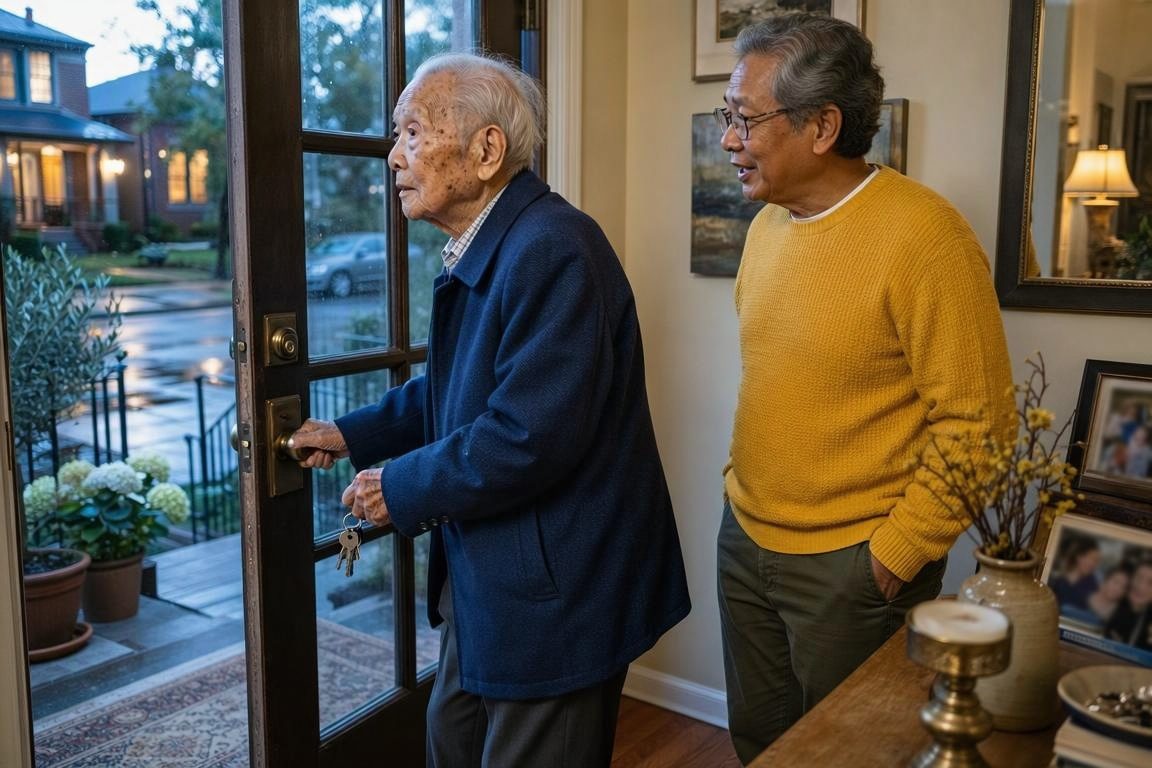
- Do NOT lock doors or hide keys to prevent exit-seeking. This can make them feel trapped and increase panic.Instead, use a childproof doorknob cover or a door alarm that alerts you, while you redirect with a calm script.
- Do NOT take exit-seeking personally. They are not rejecting you, they are responding to an internal need. Your job is to meet that need with compassion, not to correct their reality.
- Do NOT try the same failed script over and over. If one approach does not work, switch to a different one. As one expert says, 'If the first one doesn't work, you've got more to try.'
Key points
- Scripts work because they enter the person's reality instead of fighting it.
- Always validate the feeling first, 'I know you want to go home', before redirecting.
- Offer choices that do not change the outcome: 'Shower now or after coffee?'
- Use a warm, slow voice and your loved one's name to reduce anxiety.
- If one script fails, try another. There is no single perfect approach.
- Write down what works and build your own personal script library over time.
Videos
 3 Steps to Get Someone with Dementia to Stop Refusing CareThis video gives a clear three-step method that directly applies to showering and other care refusals. It shows how to use validation and redirection in real time.
 Understanding Sundowning Syndrome: Supporting Those With Dementia Through the NightExit-seeking often worsens in the late afternoon or evening (sundowning). This video explains why and offers scripts for calming the person during those hours.
 Manage dementia caregiver stress: 4 tips to cope with difficult dementia behaviorsYour own stress makes scripts harder to deliver. This video teaches coping statements and breathing techniques to help you stay calm before you speak.
 How To Cope With Caregiver StressA broader look at caregiver self-care, which is essential for having the patience to use scripts consistently over time.
2 more videos
 149. Caregiver Tips: How To Prioritize Dementia Caregiver WellnessPractical advice on habit stacking and creating routines that reduce your own stress, making it easier to respond with scripts instead of reacting.
 Discover the Dementia Care Family Support ProgramThis program offers ongoing coaching and support, which can help you refine your scripts and get personalized advice for your specific situation.
Background
Why Scripts Work for Dementia Behaviors
A person with dementia lives in a different reality from yours. When you say 'Time for a shower,' they may hear a threat, cold water, a stranger touching them, a loss of control. Their brain cannot process your logical reasons. A script is not about tricking them; it is about entering their world and offering a path they can accept. As one expert explains, you 'join your parents on that next great adventure' and 'embrace their world.' Scripts give you a calm, consistent set of words that reduce your stress and their resistance.
What Is Really Happening During Shower Refusal
Bathing involves many sensory triggers: the sound of running water, the feel of air on bare skin, the loss of familiar clothing. For someone with dementia, these can feel like an attack. They may not recognize the bathroom or remember why they need to undress. The resistance is not stubbornness, it is a protective response to confusion and fear. The goal is to make the experience feel safe, familiar, and even pleasant. One caregiver found that by thinking through the strategy together with a coach, she was able to give her husband a shower after weeks of struggle.
What Is Really Happening During Exit-Seeking
When a person says 'I want to go home' or packs a suitcase, they are not trying to escape you. They are feeling a deep, unmet need, often for security, for a familiar place, or for a role they once had (like caring for their own children). Their brain tells them they must go now. Arguing or locking doors only increases their anxiety. The script redirects that energy into a comforting activity while acknowledging their feeling. As one source notes, you can say 'Before you go, it is a really long trip, why don't we make lunch first?' and often they forget the original urge.
Practical tools
6
The 'Before You Go' Script for Exit-Seeking
Keep this script on your phone or a note card: 'I know you want to go home. That is a long trip. Let's first have a snack and pack a bag. Can you help me fold these towels for the trip?' Then guide them to a comfortable chair with a familiar activity. This script validates their feeling, delays the action, and redirects to a calming task.
The 'Choice Without a Fight' Script for Showering
Say: 'We need to get you clean. Would you rather use the big shower or the hand sprayer? Do you want to wash your hair first or last? Should I put a towel in the dryer so it is warm?' Each choice gives them a sense of control while the outcome (bathing) is already decided.
The 'Comfort Item' Kit
Assemble a small basket with
Before the shower, let them smell the soap and feel the warm cloth. This creates a sensory bridge to a positive experience.
The 'Suitcase' Distraction
If they are packing a bag to 'go home,' hand them a small duffel bag and say: 'Let's pack together. What do you need? Socks? A sweater?' Then guide them to pack items that are safe and familiar. After a few minutes, suggest a cup of tea. Often the urge passes.
The 'Two-Minute Warning' Timer
Use a visual timer (like a Time Timer) to show how long an activity will last. Say: 'We are going to wash your back and arms. When this red circle is gone, we are done.' This reduces anxiety about an unknown duration.
The 'After-Shower' Reward
Plan a small treat immediately after bathing, a favorite cookie, a short walk, or a few minutes of a calming video. Say: 'After we finish, we can have that chocolate you like.' This creates a positive association with the task.
Different situations
Lewy body dementia
People with Lewy body dementia are often very sensitive to temperature and may have visual hallucinations. Keep the bathroom warm (use a space heater) and avoid sudden movements. Use a hand-held shower head so they can sit. If they see something scary, do not argue, say 'I see you are upset. Let's move to another room.'
Late-stage dementia (bedbound or very frail)
Focus on comfort and safety. Use a bed bath with no-rinse soap and warm, damp washcloths. Do not try to move them to a shower. Say: 'Let me freshen you up with a warm cloth. It will feel nice.' Keep the room warm and use gentle, slow movements.
Spouse vs. adult child caregiver
A spouse may have more emotional history and the person may resist more because they feel embarrassed. Use a gentle, familiar tone: 'Honey, let me help you get cleaned up, like we used to.' An adult child may need to be more directive but still warm: 'Dad, I am going to help you wash up now. Let's do it together.'
In a facility (assisted living or nursing home)
Coordinate with staff. Use the same script each time so the person feels consistency. Say: 'It is time for your shower. Maria will help you. She is very gentle.' If they resist, ask staff to try again in 30 minutes. Do not force it.
Medicaid or limited resources
You can still use these scripts without buying special products. Use a basin, a washcloth, and warm water from the tap. A towel warmed in the dryer or on a radiator works just as well as a commercial towel warmer. The key is your calm voice and the script.
For the doctor
4
- If your loved one becomes aggressive during bathing (hitting, kicking, biting), ask the doctor about possible causes like a urinary tract infection or pain, and whether a medication adjustment might help.
- If they are exit-seeking and you live near traffic or water, ask the clinician about safety devices like GPS trackers or door alarms that are appropriate for their stage.
- If they refuse all care for more than two days, discuss with the doctor whether there is an underlying medical issue (infection, dehydration, constipation) that needs treatment.
- If you are feeling overwhelmed, hopeless, or having thoughts of harming yourself or your loved one, tell your doctor immediately. You are not alone, and help is available.