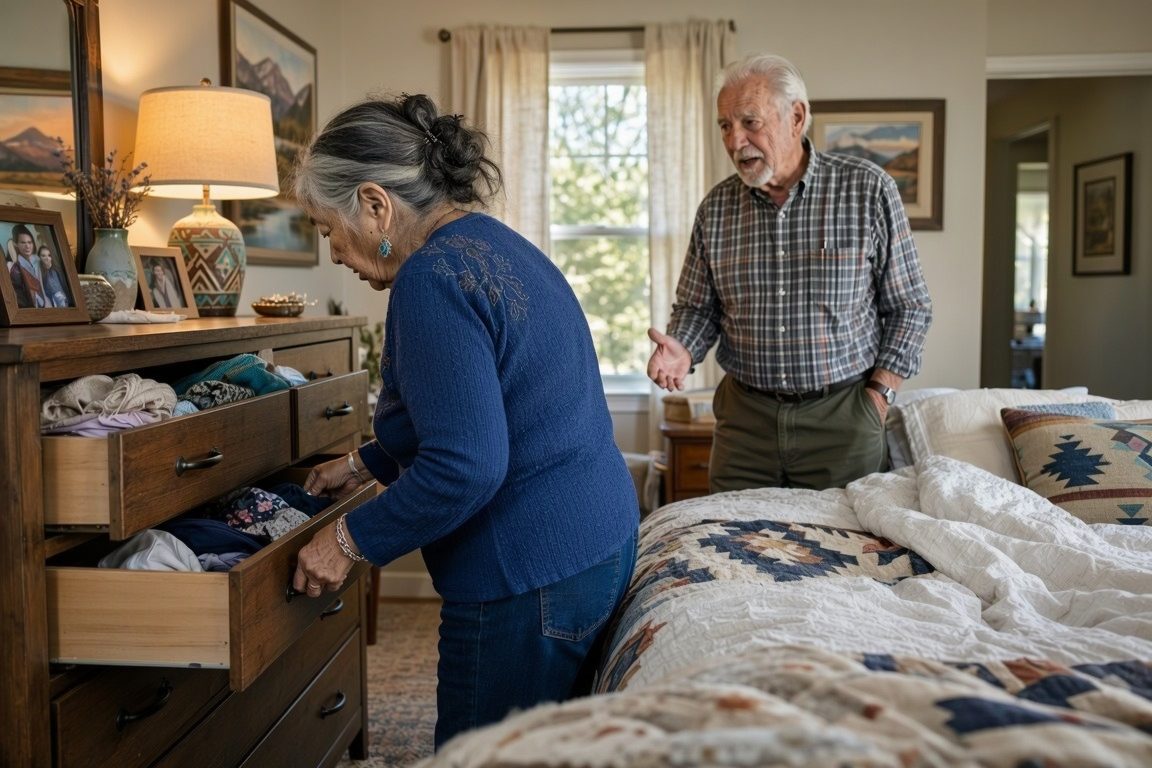
Step by step
What not to do
- Don't argue or correct the person.
- Don't raise your voice, speak softly even if they yell.
- Don't ask 'Why?', observe and offer help instead.
- Don't take behavior personally; remind yourself it's the disease.
- Don't use physical force unless there is immediate danger.
- Don't ignore the behavior; acknowledge it and offer a positive alternative.
- Don't rush or make sudden movements, approach slowly from the front.
Key points
- Behaviors are communication: always look for unmet needs (pain, hunger, boredom, fear) before reacting.
- Validate feelings first, then redirect. Never argue or correct.
- Use a calm, low tone and simple, positive phrases. Practice scripts until they feel natural.
- Offer choices between two options to give a sense of control.
- Non-drug approaches are the first line of management. Medications are a last resort and require careful monitoring.
- Take care of yourself: caregiver stress worsens behaviors. Use respite, support groups, and self-care strategies.
Videos
 How Do You Redirect An Agitated Dementia Patient?Demonstrates specific redirection techniques and phrases for agitation, a common behavior.
 How To Talk To A Person With Alzheimer's Or DementiaCovers general communication scripts and tone adjustments for everyday interactions.
 What To Do With A Violent Dementia PatientProvides safety-focused scripts and steps for aggressive or violent behaviors.
 Simple Approach to Difficult Dementia BehaviorsOffers a straightforward, step-by-step method for responding to any difficult behavior.
2 more videos
 Aggressive Behavior in People with Dementia | Linda Ercoli, PhD | UCLAMDChatExpert explains the brain changes behind aggression and gives practical scripts for de-escalation.
 Caregiver Strategies How to Deal with Dementia Care Challenges Sundowning, Anxiety, and RestlessnessFocuses on sundowning and anxiety, with scripts and environmental adjustments for late-day agitation.
Background
Why Dementia Behaviors Happen
Dementia damages brain regions that normally inhibit impulsive reactions and help us regulate emotions. As a result, a person may react strongly to minor triggers, like a change in routine, a loud noise, or even hunger, because their brain's 'brakes' are gone. Behaviors like yelling, hitting, or wandering are not personal attacks; they are expressions of distress, confusion, or unmet needs. The person may be in pain, frightened, or unable to communicate what they need. Understanding this reframes the behavior as a symptom, not a choice, and guides us toward compassionate responses.
The Role of Scripts in De-escalation
Using consistent, calm scripts helps both you and the person with dementia. For the caregiver, a script reduces anxiety because you know what to say, even when you're tired or frustrated. For the person with dementia, familiar phrases can feel safe and predictable, lowering their stress. Scripts are not about manipulation; they are tools to connect, validate feelings, and redirect attention to something positive. They work best when paired with a gentle tone, slow speech, and a relaxed body posture.
When to Use Scripts, and When to Pause
Scripts are most effective early in a behavior, before it escalates. If the person is already very agitated or aggressive, your first step is to ensure safety, yours and theirs. Back away, give space, and speak softly. Do not try to reason or argue. Once the person is calmer, you can use a script to redirect or offer comfort. If the behavior involves violence or risk of harm, call for help or step away until the situation is safe. Non-drug approaches are the first line, but if behaviors persist and cause significant distress, talk to a clinician about medication options.
Practical tools
7
Validation and Redirect Script
Two-part phrase: validate ('You seem worried'), then redirect ('Let's look at this photo album'). Works for agitation, repetitive questions, paranoia.
The 'Help Me' Script
When restless or anxious, ask: 'I could use your help folding these towels, can you show me how?' Gives purpose and shifts focus from distress.
The 'Let's Check' Script for Hallucinations
Say 'I don't see it, but I believe you're seeing something. Let's look out the window together.' Validates without confirming, redirects to a real stimulus.
Comfort Menu Checklist
List of 5–7 calming options (soft music, warm drink, hand massage, short walk, familiar object). When behavior arises, offer one: 'Would you like music or tea?'
The One-Step Script for Care Tasks
For bathing, dressing, eating: 'Let's just put on your shirt, that's all.' Use warm tone, then offer a reward: 'After, we'll have a cookie.'
Safe Space Setup
Design a quiet corner with
. When agitation starts: 'Let's sit in your cozy chair for a minute.'
Personal Comfort Profile
One-page card with favorite music, foods, comforting objects, names they respond to, engaging topics, and known triggers. Keep copies with every caregiver.
Different situations
Lewy body dementia
Be extra cautious with hallucinations and paranoia. Validate their experience without arguing. Avoid sudden movements or loud noises, as these can trigger severe reactions. Use a very calm, slow approach. Discuss with a clinician about medications, as some antipsychotics can worsen symptoms in Lewy body dementia.
Late-stage dementia
Focus on comfort and sensory soothing. Use touch (hand holding, gentle back rub) and soft music. Scripts should be very short: 'You're safe. I'm here.' Do not expect verbal responses. Watch for non-verbal cues like facial tension or moaning, which may indicate pain.
Spouse vs. adult child caregiver
Spouses may need to adjust from a partner role to a caregiver role. Use scripts that maintain dignity: 'Honey, let me help you with this.' Adult children may need to set boundaries: 'Dad, I love you, but I need you to sit down so I can keep you safe.' Both should practice self-care to avoid burnout.
In a memory care facility
Coordinate with staff to ensure consistent approaches. Use the same scripts as at home to reduce confusion. Ask staff to document triggers and effective responses. Advocate for non-drug approaches first, and discuss any medication changes with the facility's medical director.
Medicaid or limited resources
Focus on low-cost tools: free music playlists (e.g., from the Music & Memory program), household items for redirection (folding towels, sorting socks), and free online caregiver support groups. Many communities offer free respite care or training through the local Area Agency on Aging.
For the doctor
4
- If behaviors (aggression, severe agitation) do not improve with non-drug approaches after several weeks, ask the doctor about medication options like antidepressants (e.g., citalopram) or dementia drugs (e.g., donepezil, memantine). These may help but require monitoring.
- If the person has sudden, severe behavior changes (e.g., new hallucinations, extreme aggression), rule out medical causes like infection, pain, or medication side effects. Discuss with a clinician immediately.
- Before using any antipsychotic medication, ask about risks (e.g., increased mortality in older adults) and ensure it is prescribed only for acute symptoms unresponsive to other approaches. Request the lowest effective dose and a plan to discontinue if no improvement.
- If the person has Lewy body dementia, discuss the risks of antipsychotics, which can cause severe side effects. Ask about alternative medications or non-drug strategies first.