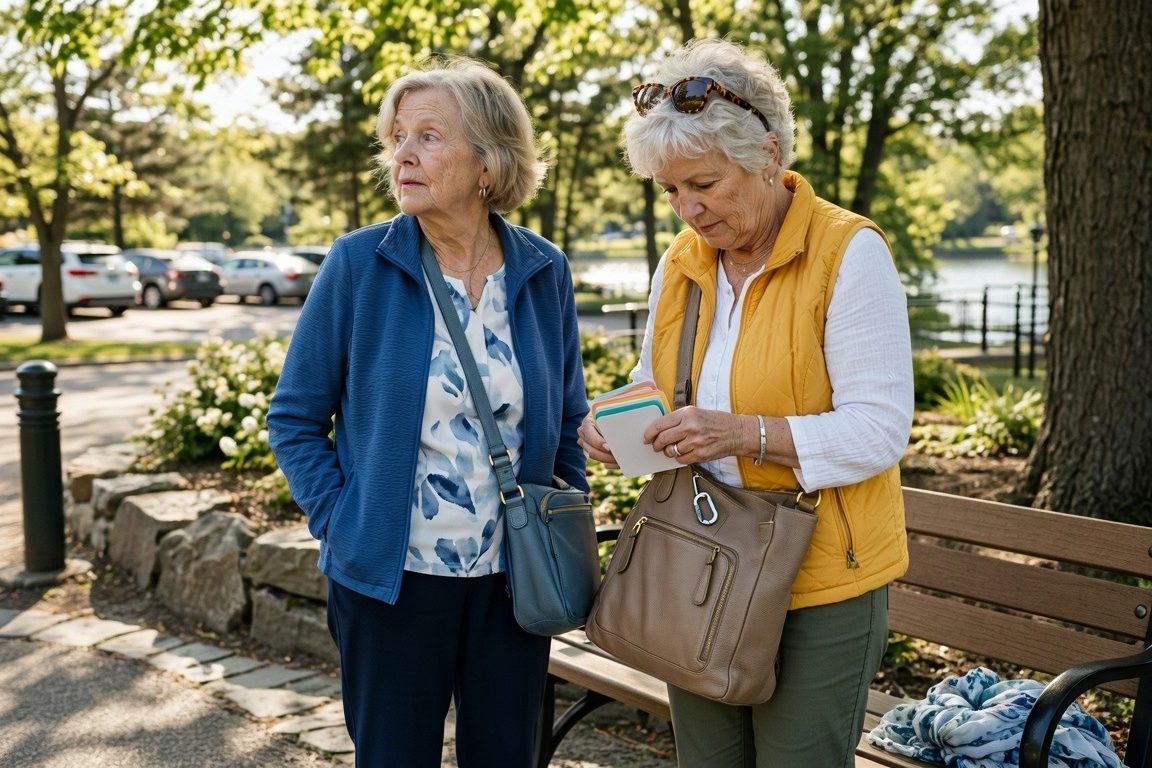
Step by step
What not to do
- Do NOT hand the cards to the person with dementia or expect them to read or follow them, the cards are for you, the care partner, to change your own behavior.
- Do NOT try to use all the cards at once; pick one or two that address your biggest current challenge, or you'll end up more overwhelmed.
- Do NOT dismiss the cards because you think you 'should know this already', even experienced caregivers forget basics under stress.
- Do NOT read the cards aloud in front of the person with dementia, the instructions are for your eyes, and reading aloud can confuse or upset them.
Key points
- The Care Partner Skill Cards are a portable, snap-together set of reminders for handling dementia-related behaviors, designed by Teepa Snow.
- They work best when worn on a lanyard or clip so they are always within reach during stressful moments.
- Each card gives a specific, actionable tip, like a phrase to say or a step to follow, based on the Positive Approach to Care philosophy.
- Use the cards proactively, not just in crisis. Preview them when calm, and practice with other care partners for consistency.
- Customize your set: remove cards that don't apply, add your own, and create a personal card with your loved one's preferences.
- The cards are a tool for you, the caregiver, to change your own behavior. They are not for the person with dementia to read or follow.
Videos
 An Introduction to: Care Partner Skill CardsThis is the direct introduction from Teepa Snow herself. She shows you exactly what the cards look like, how they snap together, and how to wear them. Watching this will make the cards feel familiar and less intimidating.
 Time with Teepa - Dementia SimulationsThis video lets you experience what dementia might feel like from the inside. It builds empathy and helps you understand why the card's advice (like slowing down or using a gentle touch) is so important. It will motivate you to use the cards more consistently.
 Ep. 150: Adult Day Center Care vs Respite CareThis video helps you think about when and how to take breaks. The cards are a great in-the-moment tool, but you also need a bigger plan for your own rest. This video explains the difference between adult day centers and respite care, so you can build a sustainable caregiving schedule.
 Conscious Caregiving with L & L 'Seniors and Travel'If you travel with your loved one, this video offers tips. You can use the cards in airports, hotels, or restaurants. The video also discusses how to prepare for unexpected behaviors in public, which is exactly when a card in your pocket can save the day.
2 more videos
 32. Navigating the Caregiver Hiring Process: Five Essential Tips / Alzheimer's and Other DementiasIf you hire a paid caregiver, this video helps you choose someone who will actually use the Skill Cards. It covers what to look for in a candidate and how to train them. The cards are only useful if the people using them are committed to the approach.
 The Care Advocates with Lance A. Slatton & Sharon's Son, George 'Aspects of Aging'This video covers the emotional and practical aspects of caregiving from a family perspective. It reinforces that you are not alone and that tools like the Skill Cards are part of a larger support system. It will encourage you to reach out for help when you need it.
Background
What Are the Care Partner Skill Cards?
These cards are a physical, visual aid created by Teepa Snow's Positive Approach to Care. They are small, durable cards that snap together on a ring, so you can easily add, remove, or rearrange them as your situation changes. You can wear them on a lanyard around your neck or clip them to a bag or belt loop with the springy device, making them always within reach. The idea is simple: when you're in the middle of a difficult moment, like a refusal to bathe, agitation, or confusion, you can glance at a card for a quick, evidence-based reminder of what to do next.
Why They Work: The Science of 'Positive Approach to Care'
The cards are built on Teepa Snow's Positive Approach to Care (PAC) philosophy, which emphasizes that dementia changes a person's abilities, not their worth. The approach focuses on awareness, skill-building, and adapting your own communication and body language. The cards translate that science into bite-sized actions: for example, a card might remind you to lower your voice, slow your movements, or offer a choice between two options instead of asking an open-ended question. This is not about 'fixing' the person with dementia, it's about changing your own approach to reduce their distress and your own frustration.
How They Fit Into Your Caregiving Toolkit
The Skill Cards are one part of a larger set of resources. Teepa Snow also offers videos (like 'Positive Approach to Care Pack Skills Make the Difference'), Champion courses, and mentoring hours to deepen your skills. The cards are a starting point, a way to practice in the moment. They are especially useful for new caregivers who feel overwhelmed, or for experienced caregivers who need a quick refresher during a tough day. They also work well as a teaching tool for other family members, friends, or even paid aides who may not have formal dementia training.
Practical tools
7
Approach Card: First Words and Body Language
Approach from the front, at eye level, with a warm smile. Say: 'Hi, Mom. I'm going to help you with your sweater now. Let's do it together.' Avoid commands like 'We need to get dressed' which trigger resistance.
Redirection Card: Shifting the Focus
When the person is fixated on a repeated question: 1) Name the feeling, 'I hear you're worried about going home.' 2) Offer a sensory distraction, 'Let's look at this photo album.' 3) Use a gentle hand touch to guide them toward the new activity.
Bathing Card: Setting Up the Room
Narrate: 'I'm going to wash your back now. It will feel warm.' Keep water temperature consistent and never rush.
Wandering Card: Check Needs, Then Walk With
First check for
Then offer a purposeful activity like folding towels. If they insist on leaving, validate and walk alongside: 'You want to go for a walk. Let's walk together to the kitchen and have a snack first.'
Mealtime Card: Offer, Don't Ask
Offer one food at a time on a small plate. Say: 'Here is a piece of chicken. It's soft.' Avoid open questions like 'What do you want to eat?', hold up two options: 'Do you want the peas or the carrots?' Use a calm, sing-song voice.
Emergency Card: Custom Quick-Reference
A card you make yourself reading: 'In case of emergency, call [name and number]. Person has dementia. Do not leave them alone. Use a calm voice. Do not argue.' Helpful for new aides or when in public.
Hand-Under-Hand Card: Helping Without Grabbing
Slide your hand palm-up under the person's hand, rather than reaching over the top to grab. This keeps their wrist free, signals partnership, and reduces startle or resistance, useful for guiding a comb, fork, toothbrush, or step.
Different situations
For Lewy Body Dementia (LBD) or Parkinson's Dementia
People with LBD often have visual hallucinations and fluctuating alertness. The cards should emphasize: 'Do not argue about the hallucination. Acknowledge it: 'I see you are looking at something. Is it scary or interesting?' Then redirect to a familiar object. Also, avoid cards that suggest sudden movements or loud noises, as these can trigger severe reactions. Focus on cards that remind you to move slowly and speak softly.
For Frontotemporal Dementia (FTD)
FTD often involves loss of inhibition, impulsivity, and language changes. Cards should focus on: 'Do not take behavior personally. Use short, direct statements. Avoid reasoning or lengthy explanations. If they say something hurtful, say 'I hear you are upset. Let's take a walk.' The 'restaurant card' idea from All Home Care Matters is especially useful: give a pre-printed card to waitstaff explaining that your loved one has a brain condition and may say unexpected things.
For Late-Stage Dementia (bedbound, minimal verbal communication)
In late stages, the cards should focus on comfort and sensory connection. Use cards that remind you to: 'Speak in a soft, low voice. Use gentle touch on the hand or shoulder. Play familiar music. Offer small sips of water. Watch for non-verbal signs of pain (grimacing, moaning).' The cards become less about managing behavior and more about providing presence and comfort.
For Spouse vs. Adult Child Caregiver
Spouse caregivers often struggle with role reversal and grief. The cards can include a personal reminder: 'This is not your spouse's fault. You are not their parent. You are their partner in a new way.' Adult children may need cards that help with boundary-setting: 'It's okay to take a break. You cannot do this alone. Ask siblings for specific help (e.g., 'Can you pick up Mom's prescription on Tuesdays?').'
For In a Facility or with Paid Aides
If your loved one is in a care home, give a set of cards to every staff member who interacts with them. Include a custom card with your loved one's preferences: 'Likes to be called 'Mrs. Jones.' Prefers a warm washcloth over a shower. Favorite song is 'Amazing Grace.' This helps staff provide consistent, person-centered care even when you are not there.
For the doctor
4
- If your loved one's behavior includes aggression that puts you or them at risk of injury, discuss with a doctor whether medication adjustments or a psychiatric referral is needed. The cards are not a substitute for medical intervention in dangerous situations.
- If your loved one has difficulty swallowing (dysphagia), ask a speech therapist or doctor for safe swallowing techniques before using any mealtime card suggestions. Choking is a serious risk.
- If your loved one is on medications that affect mood or behavior (e.g., antipsychotics, antidepressants), review any changes in behavior with the prescribing clinician before assuming the cards will work. Medication side effects can mimic dementia symptoms.
- If you are feeling overwhelmed, depressed, or have thoughts of harming yourself or your loved one, tell your doctor immediately. Caregiver burnout is a medical emergency. The cards are a support tool, not a replacement for professional mental health care.