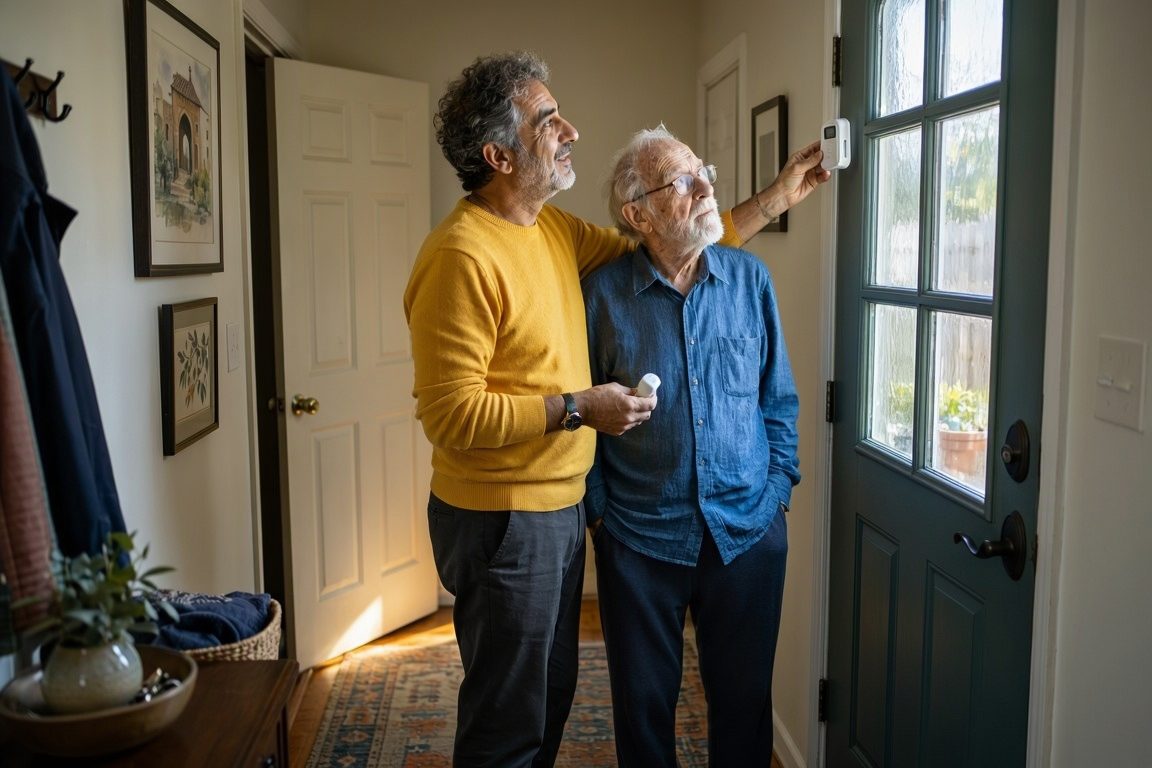
Step by step
What not to do
- Do not install hidden cameras without telling your loved one. This can feel like a betrayal if discovered and damage trust.Instead, be transparent: 'I'm putting a camera in the kitchen so I can see if you need help.'
- Do not use constant live video monitoring. It can become exhausting for you and feel invasive for them. Choose systems that alert you only to unusual events (like a fall or door opening) rather than streaming every moment.
- Do not rely solely on technology. A GPS tracker can fail, a camera can lose connection, or your loved one may remove a device. Always have a backup plan: a neighbor who checks in, a phone tree, or a simple daily check-in call.
- Do not ignore their verbal or non-verbal cues. If your loved one seems anxious, hides from the camera, or tries to remove a tracker, pause and reassess. Their discomfort is a signal that the approach may need adjustment, perhaps a different device or less frequent monitoring.
- Do not use monitoring as a substitute for human connection. Technology can alert you to a fall, but it cannot replace the comfort of a hand on the shoulder or a calm voice. Use monitoring to free up your energy for quality time, not to replace it.
Key points
- Start with passive monitoring (motion sensors) before active monitoring (cameras).
- Involve your loved one in the decision whenever possible, use 'we' language.
- Choose discrete devices that blend into daily life (shoe soles, lockets, keychains).
- Have a backup plan that does not rely on technology (phone tree, daily photo, neighbor check-ins).
- Regularly reassess what is needed, scale back when possible to preserve dignity.
- Monitoring is an extension of care, not a replacement for human connection.
Videos
 Dementia Proofing Your HomeShows practical home modifications that reduce the need for constant monitoring.
 Safety In the Home When Dementia is in the PictureDiscusses balancing safety with dignity, including low-tech solutions.
 An Interview with Dr. Richard Caro Co-Founder of Tech-Enhanced LifeExplores how technology can be used respectfully in dementia care.
 How Do GPS Tracking Devices Improve Dementia Safety? - Dementia Help HubExplains GPS trackers and how to introduce them without compromising privacy.

Background
Why This Tension Exists
Dementia affects a person's ability to recognize danger, remember instructions, or find their way home. This creates a real need for safety monitoring, whether to prevent wandering, falls, or unsafe use of appliances. At the same time, the person you care for is still an adult with a lifetime of habits and preferences. They may feel embarrassed, infantilized, or even frightened if they realize they are being watched. The goal is not to eliminate all risk, but to find a system that respects their personhood while keeping them safe.
The Core Principle: Monitoring as an Extension of Care, Not Control
Think of monitoring technologies as you would a neighbor checking in or a mail carrier noticing piled-up mail. These tools are simply an extension of the caring network you've built. The key is to choose passive systems (like motion sensors that alert you to unusual activity) over active ones (like cameras that stream live video into your phone). Passive systems gather data without constant intrusion, while active systems can feel like a breach of privacy. As one expert noted, there are technologies that 'accomplish the same thing but maybe raise less issues of privacy', these are the ones to prioritize.
Involving Your Loved One in the Decision
Whenever possible, include the person with dementia in the conversation about monitoring. Explain in simple, reassuring terms: 'I want to make sure you're safe, especially at night, so I can sleep better too.' If they resist, consider introducing the device as a tool for their own benefit, like a 'safety button' or 'help find you' gadget. For some, a GPS tracker hidden in a shoe or a locket is less confronting than a camera. The goal is to preserve their sense of control and dignity, even as you take steps to protect them.
Practical tools
6
Motion Sensor System (e.g., SimpliSafe or Wyze)
Place sensors in the bedroom, kitchen, and front door. Set up alerts for unusual activity, like movement at 2 a.m. or no movement for 4 hours. Review motion history to see patterns. This is passive and less intrusive than cameras.
Discrete GPS Tracker (e.g., Jiobit or AngelSense)
Sew into a shoe sole, attach to a locket, or place in a pocket. Test the range and battery life. Explain: 'This is just in case you ever get turned around: I can find you quickly.' Avoid devices that look like ankle monitors.
Door Alarm with Chime (e.g., Ring or simple magnetic alarm)
Install on the front and back doors. Set it to chime (not a loud siren) so you know when the door opens. This is less alarming than a lock and gives you a chance to redirect without confrontation.
Alexa Show or Similar Smart Display
Use the 'drop in' feature to check in visually, but teach your loved one how to turn off the camera if they want privacy. Place it in a common area only. Say: 'This helps me see if you need anything, you can turn it off anytime.'
Daily Photo of Your Loved One
Take a photo every morning showing what they are wearing. Store it on your phone. If they wander, you have an immediate, accurate description for police and neighbors. This is a low-tech, high-impact tool.
Phone Tree Template
Write down names and numbers of
Post it near the phone. Practice the plan: 'If Mom leaves, I call you, you call the neighbors, and we all search.'
Different situations
Early-stage dementia (mild cognitive impairment)
Focus on involving your loved one in decisions. They may still be able to use a smartphone app or wear a smartwatch with fall detection. Use language like 'This helps me feel less worried so we can enjoy our time together.' Avoid any device that feels like a 'tracker', frame it as a 'safety tool.'
Late-stage dementia (significant cognitive decline)
Your loved one may not understand or remember the monitoring. Prioritize safety over privacy, but still use the least intrusive option. A simple door alarm and a GPS tracker in their shoe may be enough. You may need to accept that they will not consent, focus on keeping them safe while minimizing distress.
Lewy body dementia (fluctuating cognition, hallucinations)
Be extra cautious with cameras or audio devices. Visual or auditory cues from technology can trigger hallucinations or paranoia. Use motion sensors instead of cameras. If you must use a camera, test it during a calm time and watch for signs of agitation. Have a plan to remove it quickly if it causes distress.
Spouse vs. adult child caregiver
As a spouse, you may feel more comfortable with less monitoring because you share a home and know their habits. An adult child may need more frequent check-ins. Both should discuss the plan openly. A spouse might say, 'I just want to know you're safe when I'm in the other room.' An adult child might say, 'I worry about you when I'm not here, can we try this?'
Living alone with family nearby
Use a combination of motion sensors and a GPS tracker. Set up a daily check-in call or visit. Consider a monitored security system that alerts you to falls or door openings. Explain: 'This lets me know you're okay without me having to call every hour.'
For the doctor
6
- Ask your loved one's doctor: 'Given their stage and type of dementia, what level of monitoring is appropriate for their safety and well-being?'
- If your loved one has a history of wandering or falls, ask: 'Are there any medical or medication reasons for this behavior that we should address first?'
- If you are considering a GPS tracker with geofencing, ask: 'Is this device safe for their skin (if worn) and will it interfere with any medical implants?'
- If your loved one becomes agitated by monitoring devices, ask: 'Could this be a sign of paranoia or a side effect of medication? Should we adjust their treatment?'
- Ask your doctor: 'Are there any medications or dosing changes that could reduce wandering or fall risk before we consider physical barriers like high latches?'
- If you are considering a high latch or other restrictive measure, ask: 'What are the legal and safety considerations for using such a device in our home, and are there less restrictive alternatives you recommend?'