Step by step
What not to do
- Do not assume staff understand dementia or will catch mistakes. Educate them on your person's needs and speak up immediately if anything seems off, you are a safety net.
- Do not leave the person alone, even briefly. In that minute they can fall, become frightened, or receive a medication you didn't consent to. Always arrange a backup or ask a nurse to stay.
- Do not argue with your person's reality or try to correct confusion. Meet them where they are to avoid increasing agitation and eroding trust.
- Do not leave the hospital without a written, dementia-aware discharge plan listing new medications (and which to stop), warning signs of delirium, and follow-up appointments. Ensure you understand it before leaving.
Key points
- Your person with dementia becomes an invisible entity in the hospital without you, you are their voice, their interpreter, and their safety net.
- Medications, pain, and unfamiliar environments can dramatically worsen confusion and behavior; your presence is the most effective intervention.
- Create a one-page communication sheet and hand it to every new staff member, it saves time and prevents errors.
- Use calm, slow, reassuring language and do not argue with their reality, redirect instead.
- Keep a written log of everything and hand it off at shift change to ensure continuity.
- You are the expert on your person, do not be afraid to speak up, ask questions, and take the lead in care conversations.
Videos
 Ask Teepa Anything! Live on YouTubeTeepa Snow directly addresses how people with dementia become invisible in medical settings and why a skilled advocate is essential.
 5 Things I Learned about Dementia As an Open Heart Patient (+ My Hallucinations!)A firsthand account of how hospital medications and procedures can wipe out cognition, even in someone without dementia, a powerful reminder of why you must be there.
 Compassion & Choices with CEO Kim Callinan & Jessica Empeño National Director of EducationDiscusses how to advocate for your person's wishes, especially around end-of-life care and treatment decisions in the hospital.
 Interview with Don Kent, Part 2: His New Career and PurposeDon Kent, a person living with dementia, shares his perspective on being heard and the importance of having an advocate who knows you.
2 more videos


Background
The Hospital Is a Danger Zone for Dementia: Not a Safe Haven
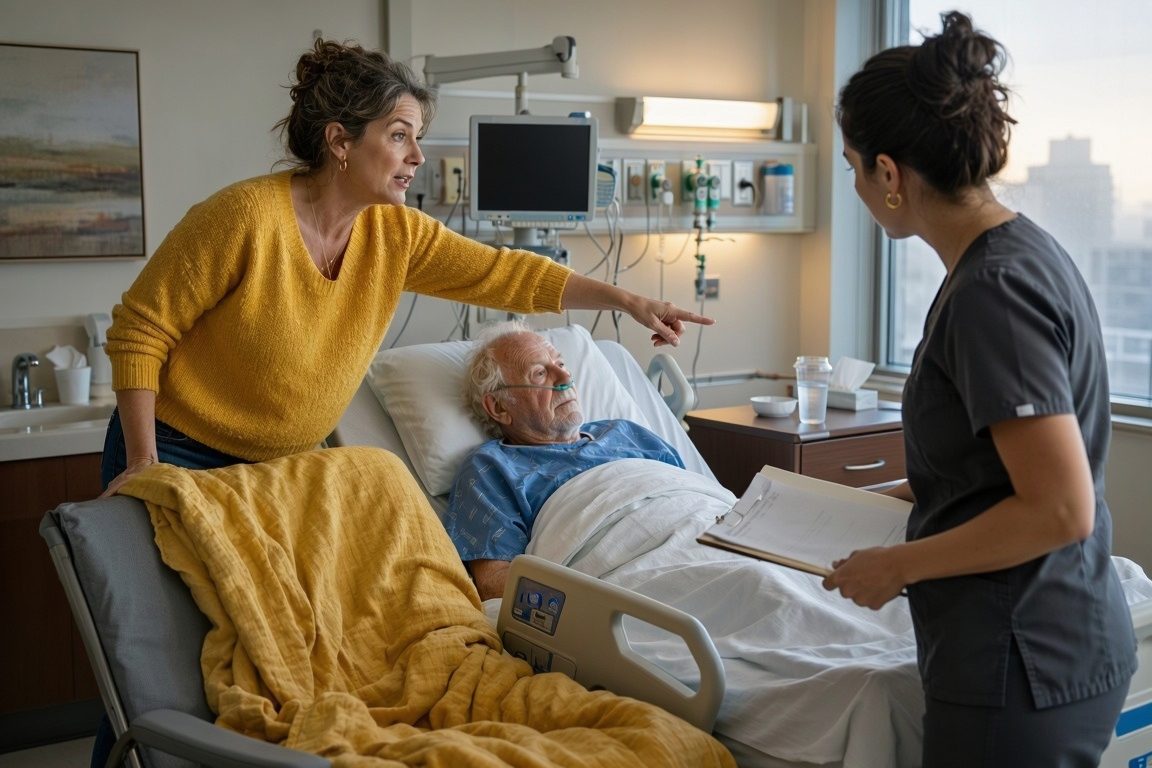
When a person with dementia enters the hospital, they are stepping into a world that is loud, bright, unfamiliar, and full of strangers who touch them, poke them, and ask confusing questions. Their usual coping strategies, routine, familiar faces, a calm environment , are gone. Meanwhile, the hospital staff is focused on treating the medical condition that brought them in, and they may not have the training or time to understand how dementia changes everything. As one expert noted, in a teaching hospital, a person with dementia can become an invisible entity , the staff sees a learning opportunity or a diagnosis, not a human being with a history, fears, and preferences. That is why you must be there: not because your person cannot speak at all, but because the system often does not listen to them.
Medications and Pain Can Wipe Out What Remaining Cognitive Ability They Have
Even a person who is usually calm and cooperative can become agitated, confused, or even hallucinate when given painkillers, sedatives, or anesthesia. One caregiver who was an open-heart patient described how the medicines they were given, to calm them down, to control pain , affected their cognition, understanding, and ability to interact and take care of themselves. If that happens to someone without dementia, imagine the impact on a brain already struggling. Your person may not be able to tell you they are in pain, or they may become so disoriented that they cannot follow simple instructions. You are the one who knows their baseline , what is normal for them , and you are the one who can say, 'They are acting differently. Something is wrong.'
Staff Are Overworked and Not Trained in Dementia: You Fill the Gap
The reality is that many healthcare providers get their training on dementia care only from the moment a person with dementia walks into their office. They may not know how to approach, how to communicate, or how to interpret behaviors. They may assume that if your person cannot answer a question, they are 'non-compliant' or 'confused' in a way that does not matter. But you know that a refusal to eat might mean the food is too hot, or that pacing might mean they need the bathroom. You are the expert on your person. The hospital needs you to translate, to interpret, and to advocate for what is actually happening. As one source put it, families should feel empowered to not just contribute, but take the lead in care conversations.
Practical tools
4
Hospital Communication Sheet
One-page document with
Print multiple copies for staff.
Comfort Bag
Bag containing familiar items:
Real-Time Log
Notebook or sheet to track food, drink, bathroom use, behavior changes, and medication times. Hand copy to incoming nurse at shift change.
IV Cover or Fidget Blanket
Soft cover for IV lines or a texture-rich fidget blanket to reduce attempts to pull out lines, without use of physical restraint.
Different situations
Lewy body dementia (LBD)
People with LBD are extremely sensitive to antipsychotic medications, they can cause severe side effects or even death. You must be extra vigilant about any medication that affects dopamine. Also, LBD often involves visual hallucinations; do not argue with them. Instead, say: 'I see you are seeing something. Let me help you feel safe.' Advocate strongly against any 'as-needed' antipsychotic.
Late-stage dementia
Your person may be non-verbal or bed-bound. Your role shifts to being their voice for pain, comfort, and dignity. Use a pain scale that relies on facial expressions and body tension (e.g., the PAINAD scale). Ask the staff to turn and reposition them every two hours. If they cannot eat, discuss feeding options with the doctor, do not let a feeding tube be placed without a full discussion of goals of care.
Spouse vs. adult child
As a spouse, you may be assumed to be the decision-maker, but you may also be exhausted and grieving. It is okay to ask for help from adult children or a patient advocate. As an adult child, you may need to assert your role if the hospital defers to the spouse who is also overwhelmed. Say: 'I am the healthcare proxy, and I need to be included in all decisions.'
In a facility (nursing home or memory care) that transfers to hospital
The facility should send a transfer sheet with your person's baseline, medications, and known triggers. If they do not, call the facility and ask them to fax it. You may also ask a staff member who knows your person well to accompany them to the ER if possible. If not, you must arrive as soon as possible to fill the gap.
Medicaid or limited resources
If you cannot afford to take unpaid leave, ask the hospital social worker about caregiver support programs, respite vouchers, or volunteer advocate programs. Some hospitals have patient advocates who can sit with your person for short periods. You can also ask a trusted friend or neighbor to rotate shifts. Do not feel guilty, you are doing the best you can.
For the doctor
5
- Ask the doctor: 'What is the plan if my person becomes agitated? Are there non-medication strategies we can try first before using sedatives or antipsychotics?'
- Ask the pharmacist: 'Could any of the medications my person is taking interact with their dementia medications or worsen confusion?'
- Ask the attending physician: 'If my person needs surgery or a procedure, what is the plan for anesthesia? How will it affect their dementia?'
- Ask the social worker: 'Are there any hospital-based advocate programs or volunteer sitters available to help me if I need to step out?'
- Ask the nurse: 'What is the protocol for preventing falls? Can we use a bed alarm or a low bed instead of restraints?'