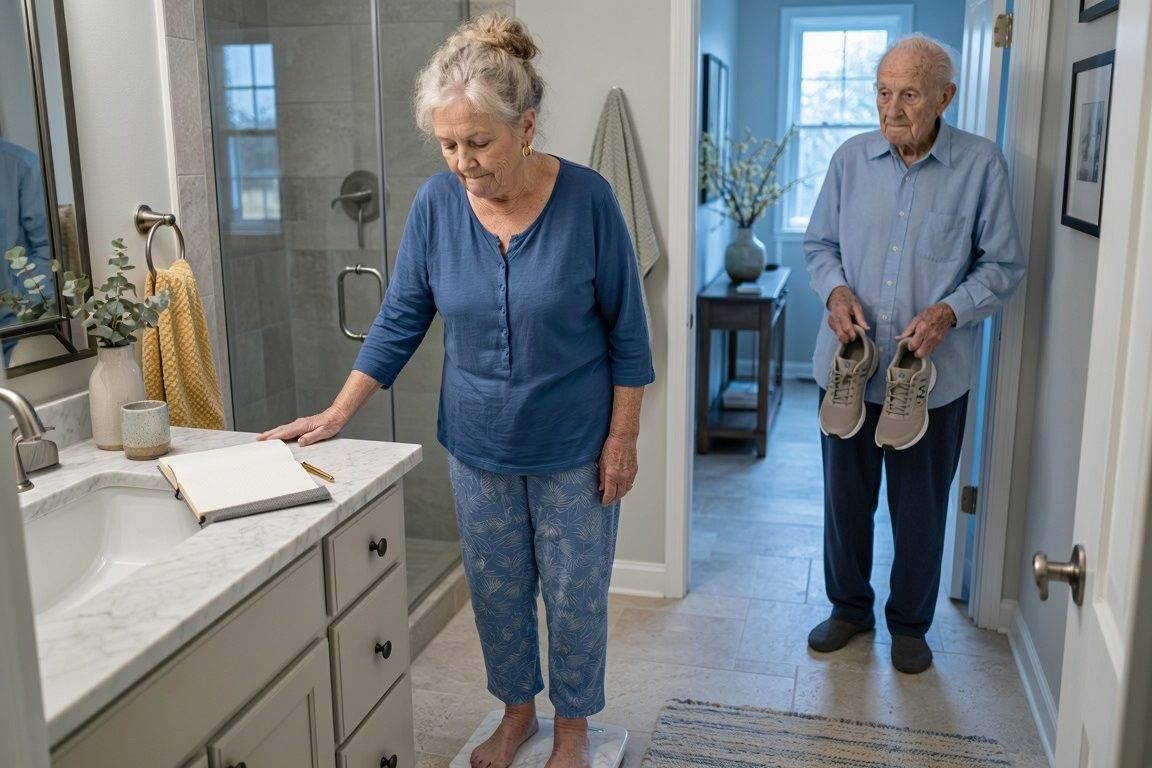
Step by step
What not to do
- Do not drastically cut calories or skip meals, as that slows metabolism and raises fall risk; aim for gentle 100–200 calorie reductions instead.
- Do not force your loved one to eat when refusing in later stages; offer a different texture, temperature, or a calorie-dense drink and let them guide the pace.
- Do not compare progress to anyone else's, as dementia type and stage change the rules, follow their own trajectory.
- Do not abandon healthy habits just because the scale stalled; a plateau is usually temporary and reverting to old patterns brings the weight back.
- Do not overlook signs of depression or social withdrawal, as these can drive appetite loss or overeating; addressing the emotional root often restarts progress.
Key points
- A weight-loss plateau is normal and expected; it is not a sign of failure.
- Small, sustainable changes (2-3 at a time) are more effective than big overhauls.
- In dementia, brain changes directly affect appetite, movement, and weight, adjust your approach accordingly.
- Do not force food in late stages; focus on comfort and high-calorie liquids.
- Caregivers must also care for their own health, small changes compound over time.
- Celebrate the weight already lost and the health improvements already made.
Videos
 How to change your life as a dementia caregiver: A simple way to change your futureThis video explains the compound effect of small decisions, which is key to understanding why plateaus happen and how to break through them with tiny, consistent changes.
 Time with Teepa - Why Can't She Move SuddenlyTeepa Snow explains how pain, fear, and medication side effects can reduce movement, which directly impacts calorie burn and weight loss. This helps you identify hidden causes of a plateau.
 Ep. 349: When Dementia Changes Appetite: It's Not Being Picky: It's Brain ChangeThis video dives into how dementia alters the brain's relationship with food, from craving sugar to not recognizing food at all. Essential for understanding why traditional diet advice may not work.
 What Should We Know About Frontotemporal Dementia (FTD)?FTD often presents with dramatic changes in eating behavior, including overeating or fixating on certain foods. This video helps you tailor your approach for this specific dementia type.
2 more videos
 What is Orthostatic Light Headedness? Dr. Khushboo VermaOrthostatic lightheadedness can cause a person to avoid moving, reducing calorie burn. This video explains the condition and what to watch for.
 How to eat healthy as a dementia caregiver: Interview with a nutritionistThis video offers practical nutrition tips for caregivers, including how to make small, sustainable changes that can help both you and your loved one break through a plateau.
Background
What Is a Weight-Loss Plateau and Why Does It Happen?
A weight-loss plateau is a period of at least several weeks where your loved one's weight stops decreasing, even though you are still following the same diet and exercise plan. This is not a mystery or a sign that your efforts have failed. As the Mayo Clinic explains, when you first start a weight-loss program, the body loses water weight and fat relatively quickly. But as you continue, your body adapts: your metabolism slows down, and you may need fewer calories to maintain your new, lower weight. The same approach that worked at first will now only maintain the current weight, not lead to further loss. This is a natural, expected part of the process, and it happens to nearly everyone who loses weight.
The Brain and Body Changes in Dementia That Affect Weight
In dementia, weight changes are not just about calories in and out. The brain itself drives appetite, movement, and even the ability to recognize food. As Teepa Snow explains, in the middle stages of dementia, the primitive part of the brain may crave sugar and salt, leading to overeating and weight gain. But later, the same person may not recognize food at all, or may be on a constant walking pattern, burning many calories while taking in very little. This can lead to unintentional weight loss. Additionally, medications, pain, fear of falling, and even orthostatic lightheadedness (feeling faint when standing up) can reduce a person's desire or ability to move and eat. Understanding these brain-driven changes is key to knowing why a plateau might happen and how to respond.
The Compound Effect of Small Decisions
Caregivers often face time pressure and may make small, seemingly harmless choices, like picking up fast food once a week, that accumulate over months into significant weight or health problems. As the Dementia Careblazers video notes, a single quick decision repeated week after week can have a huge impact down the road. This works both ways: small, consistent improvements in diet and activity, even if they seem tiny at first, can compound into real progress. The plateau is a good time to look at these small habits, not to feel guilty, but to see where a tiny adjustment might restart the momentum.
Practical tools
4
Portion Control Plates
Divided plates with clear sections for protein, vegetables, and starch so the plate looks full while delivering a smaller, balanced portion.
The 'Wait 10 Minutes' Rule
If your loved one asks for more food right after finishing, suggest waiting 10 minutes; fullness often registers, or they may forget they asked, preventing overeating without confrontation.
High-Calorie Smoothie Template
Blend 1 cup whole milk, ½ cup full-fat Greek yogurt, 1 banana, 2 tablespoons peanut butter, and a scoop of protein powder for roughly 450 easy-to-sip calories when appetite is low.
Simple Weekly Tracker
One-page journal logging meals, drinks, movement, and mood for both of you; review for five minutes each Sunday to find patterns or gradual creep stalling progress.
Different situations
Lewy body dementia (LBD)
Weight loss can be more rapid and unpredictable in LBD due to autonomic dysfunction. Monitor for orthostatic lightheadedness (dizziness when standing) which can reduce activity and appetite. Discuss with the clinician whether medications like antipsychotics are contributing to weight changes. In late stages, failure to thrive and multiple organ dysfunction are common causes of death, so weight loss may be part of the disease progression. Focus on comfort and quality of life rather than aggressive weight loss.
Late-stage dementia (any type)
In late stages, weight loss is often inevitable as the body shuts down. Do not force food. Offer high-calorie liquids and soft foods. The James L. West Center advises that feeding tubes are not recommended because they do not improve outcomes and can cause discomfort. Shift the goal from weight loss to comfort and dignity. Discuss palliative or hospice care with the clinician.
Spouse caregiver vs. adult child caregiver
Spouse caregivers may be more likely to skip their own meals or eat the same food as their loved one, leading to their own weight issues. Adult children may feel pressure to 'fix' the weight plateau and try too many changes at once. Both should prioritize their own health first, a healthy caregiver provides better care. Use the 'Two-Change' Rule for yourself as well.
Person living in a facility
If your loved one is in a facility, you may not have direct control over meals. Communicate with the dietary staff about portion sizes, food preferences, and the need for high-calorie options. Ask to be informed about any weight changes. You can still bring favorite snacks or smoothies during visits. Advocate for a consistent routine around meals.
Medicaid or limited resources
If budget is tight, focus on affordable, nutrient-dense foods like eggs, beans, oats, and frozen vegetables. Use community resources like food banks or senior meal programs. Many areas have free nutrition counseling for seniors. Small changes like drinking water instead of juice can save money and reduce empty calories.
For the doctor
5
- Ask the doctor: 'Could my loved one's weight plateau be caused by a medication change or interaction?'
- Ask the doctor: 'Should we check for orthostatic hypotension, especially if they seem dizzy when standing?'
- Ask the doctor: 'Is there a need to adjust thyroid medication or other metabolic treatments?'
- Ask the doctor: 'Could an underlying infection, like a UTI, be affecting appetite or metabolism?'
- Ask the doctor: 'At what point should we consider palliative or hospice care if weight loss continues?'