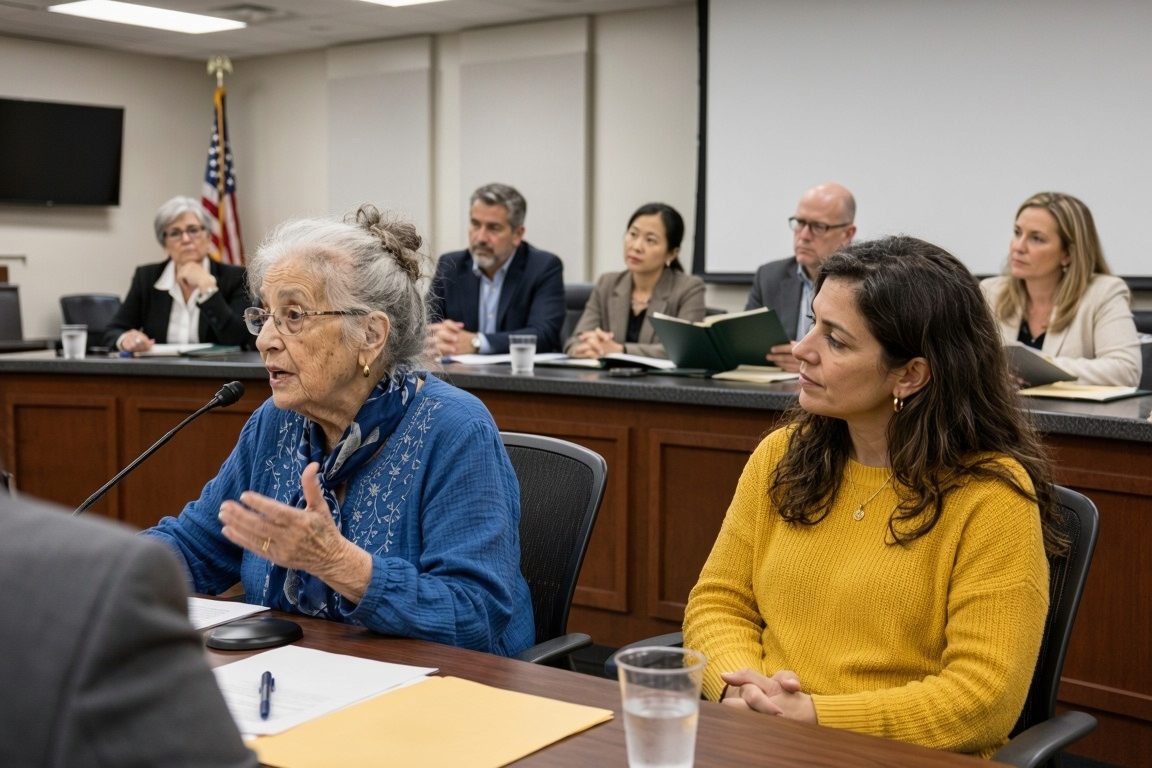
Step by step
What not to do
- Do not assume your story doesn't matter. Policy-makers cannot get your real-life examples from a textbook.
- Do not try to speak for everyone. Say 'in my experience' rather than sweeping generalizations.
- Do not stay stuck in anger. Frame your message around solutions: 'What would help is...'
- Do not go it alone. Pair with another caregiver or an advocacy organization to prepare and debrief.
- Do not forget to include the person living with dementia if they are able. Ask what they want policy-makers to know.
Key points
- Your lived experience as a caregiver or person with dementia is a form of expertise that policy-makers cannot get from research alone.
- Effective policy must be tailored, flexible, and consider the needs of both caregiver and person with dementia.
- Involving people with dementia in designing interventions improves uptake and outcomes.
- Start small: document your story, attend a public hearing, or join an advisory committee.
- Use a solution-focused, personal message: 'This is what happened, this is what should have happened, this is the policy change needed.'
- You are not alone, pair up with a support group buddy to sustain your advocacy over time.
Videos
 Revolutionizing Dementia CareThis video showcases innovative approaches to dementia care that center the voices of people living with the condition and their families, directly supporting the call for lived experience in policy.
 The Problem of Alzheimer's: Dr. KarlawishDr. Karlawish discusses the systemic challenges in Alzheimer's care and research, providing context for why policy must be reshaped by those who live with the disease.
 An Interview with Denise Brown the Founder at The Caregiving Years AcademyDenise Brown, a longtime caregiver advocate, shares insights on how caregivers can turn their experience into powerful advocacy and influence policy.
 Don't forget this when making important dementia caregiving decisionsThis video reminds caregivers to include themselves in decision-making, a key principle that also applies to policy: your needs matter too.
2 more videos
 How To Decrease Your Stress As A Dementia Caregiver Through Dementia CoachingManaging stress is essential for sustainable advocacy. This video offers coaching strategies that help caregivers stay resilient while pushing for policy change.
 The Caregiver's Journal with Lance A. Slatton with Cindy-PT & Christina-ST 'From Son to Caregiver'A personal story of a son becoming a caregiver, illustrating how individual experiences can fuel broader advocacy for better dementia policies.
Background
The Gap Between Policy and Reality
Policy-makers, researchers, and clinicians often design programs and regulations based on data and theory, not on the messy, beautiful, heartbreaking daily life of dementia care. A caregiver who has sat in a hospital room watching a nurse talk past her husband knows that 'patient-centered care' on paper means nothing if staff don't know how to include the person with dementia in decisions. Research shows that caregivers are frequently dissatisfied with hospital care because nurses lack understanding of dementia, fail to involve the patient and family in decisions, and ignore dignity and respect during discharge. When policy is made without lived experience, it can accidentally create more harm, like the visitor restrictions during COVID that led to delirium, weight loss, falls, and even deaths among residents with dementia.
You Are the Expert on Your Experience
Family caregivers and people living with dementia hold knowledge that no researcher can gather from a survey. As one caregiver put it, 'When it comes to our experience, we're the experts, which is why we belong on stage. Our voice must be the loudest'. Policy that works must be tailored and flexible, because dementia changes over time, and what helps one family may not help another. Programs that are effective consider the needs of both the caregiver and the person living with dementia, and they build the caregiver's skills and confidence. Without your input, policy becomes a one-size-fits-all document that leaves too many people sleeping on the couch instead of moving forward.
Inclusion Is Not Just Nice: It Works
When people with early dementia are involved in designing the interventions meant to support them, uptake and engagement improve dramatically. The same is true for policy: when caregivers and people with dementia sit on advisory committees, the resulting initiatives are more practical, more compassionate, and more likely to be used. One caregiver serving on California's Alzheimer's Advisory Committee described the role as 'out of my league' but still found she could have a voice from the inside. That voice is what turns abstract goals into real change, like better hospital visitor policies, funding for caregiver training, and programs that actually teach skills instead of just handing out pamphlets.
Practical tools
3
Your Story Template
Write your advocacy story: (1) one sentence about who you care for and your relationship, (2) one paragraph describing a specific challenge, (3) one sentence about how that made you feel, (4) one sentence about what would have helped, (5) one sentence asking for a specific policy change.
Policy-Maker Contact Script
When calling or emailing an elected official: 'Hello, my name is [your name]. I am a family caregiver for my [relationship]. I am calling to ask that you support [specific policy]. In my experience, [one sentence about your challenge]. Thank you for your time.'
Social Media Advocacy Kit
Use hashtags #DementiaCaregiver, #LivedExperience, #DementiaPolicy. Post a photo with your loved one (with permission) and tag your local Alzheimer's Association or Dementia Australia.
Different situations
Person with early-stage dementia is able to advocate
Prioritize their voice above all. Ask them what they want policy-makers to know. Help them write a letter, record a video, or attend a meeting with you. Use their words as the centerpiece of your advocacy. Remind policy-makers that people living with dementia still want to be included in every decision that affects them.
Caregiver is an adult child vs. spouse
Adult children may have more energy for advocacy but less direct caregiving history. Spouses often have decades of intimate knowledge. Both perspectives are valuable. Adult children can focus on systemic changes (e.g., hospital policies), while spouses can speak to the daily emotional and physical toll. Consider dividing advocacy tasks based on your strengths.
Lewy body dementia or frontotemporal degeneration
These forms of dementia often involve more behavioral changes, younger onset, and different care challenges. When advocating, mention the specific needs of your diagnosis, like the importance of avoiding certain medications, or the need for age-appropriate activities for younger people with dementia. This helps policy-makers understand that dementia is not one disease.
Late-stage dementia or person is in a facility
Your advocacy shifts to focus on quality of life, pain management, and end-of-life care. Emphasize the need for staff training in recognizing pain in non-verbal residents, the importance of meaningful activities, and the critical role of family caregivers as partners in care. Push for policies that allow family to be present 24/7.
Rural or remote location
Access to services is a major barrier. Advocate for telehealth funding, mobile respite programs, and travel subsidies for caregiver training. Share stories of driving hours to a support group or waiting months for a specialist appointment. Policy-makers need to hear how geography affects care.
For the doctor
4
- Ask your doctor: 'Are there any local or national advisory committees for dementia care that you recommend I join?'
- Discuss with your clinician: 'What are the most pressing policy gaps you see in dementia care that I could help advocate for?'
- If the person with dementia is taking medications that affect behavior or mood, ask: 'How can I best describe these medication effects to policy-makers to push for better monitoring guidelines?'
- For end-of-life care policies, ask your clinician: 'What advance care planning documents should I have in place, and how can I advocate for better pain management policies in our state/province?'