Step by step
What not to do
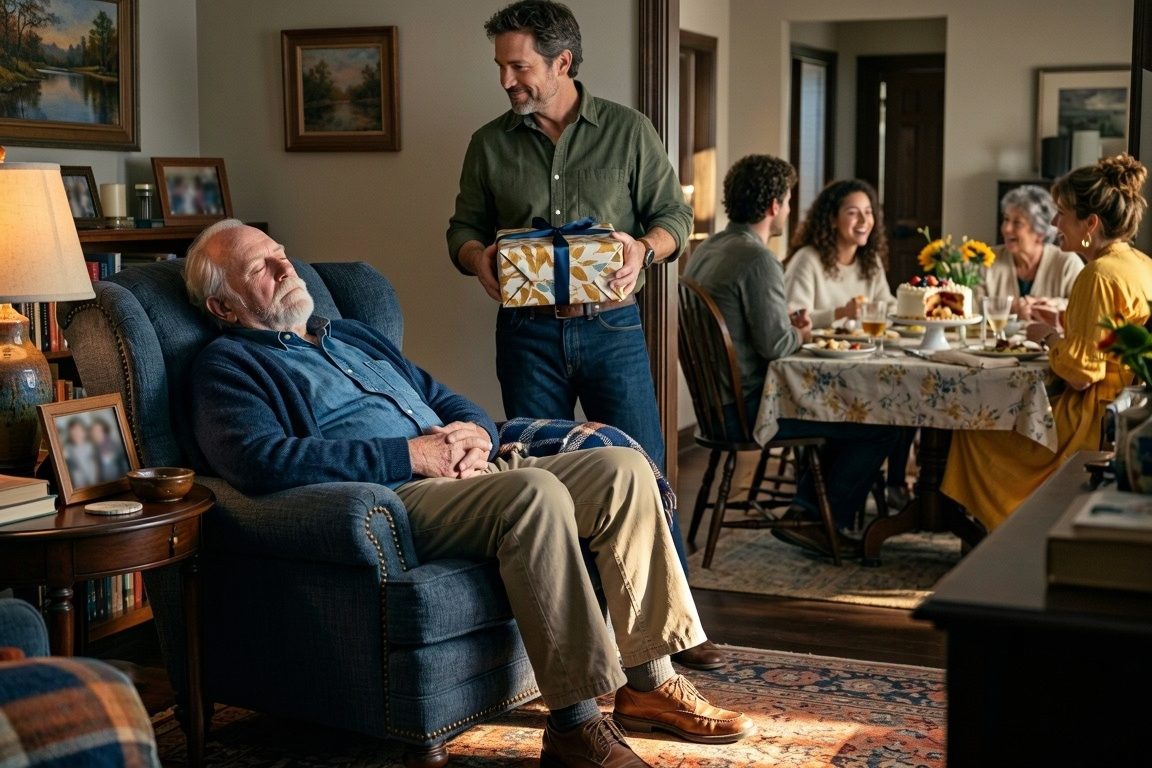
- Do not take a flat affect personally. The common mistake is to think 'They don't love me anymore' or 'They didn't like the gift.' This leads to hurt feelings and guilt.Instead, remind yourself that flat affect is a symptom of the disease, not a reflection of their feelings. Judge the experience by whether they seemed calm and safe, not by their facial expression.
- Do not force a big reaction. Do not say 'Smile for the camera!' or 'Aren't you happy to see us?' This puts pressure on a brain that cannot comply and can cause anxiety or agitation.Instead, simply enjoy the moment yourself and let them be. Your calm presence is the gift.
- Do not surprise them with a large group or an unexpected event. Surprise can trigger fear and confusion because the person does not understand their environment.Instead, give them a simple heads-up: 'Tomorrow, your daughter is coming for a short visit at 10 a.m.' Repeat this a few times if needed.
- Do not over-explain or apologize for their lack of reaction in front of them. Saying 'I'm sorry, she doesn't mean to be rude' can make them feel embarrassed or more confused.Instead, just change the subject or gently guide them to a quiet spot. Guests can be educated beforehand.
- Do not schedule multiple events in one day or week. The exhaustion from one celebration can last for days. If you have a birthday and a doctor's appointment in the same week, consider postponing the celebration. Their emotional battery is small, protect it.
- Do not ignore your own feelings of disappointment or sadness. It is normal to grieve the loss of shared joy. Talk to a friend, a support group, or a counselor. Your emotional health matters, and acknowledging your feelings helps you avoid burnout.
Key points
- Flat affect (lack of emotional expression) is a common dementia symptom; it does not mean your loved one is not enjoying themselves.
- Celebrations, surprises, and disappointments are exhausting because the brain struggles to process emotions, sensory input, and social expectations all at once.
- Keep events short (20-30 minutes max), small (1-2 people), and at a calm time of day (morning is often best).
- Watch for signs of overload, fidgeting, irritability, looking away , and end the event immediately when you see them.
- After any emotional event, allow for a long, quiet recovery period with no other demands.
- Protect your own emotional health: do not take their reactions personally, and seek support for your own feelings of disappointment or grief.
Videos
 What is Flat Affect?This video explains exactly why your loved one may not show excitement or happiness, helping you understand that flat affect is a symptom, not a rejection.
 How To Deal With Angry Dementia ParentWhen emotional events lead to frustration and anger, this video gives practical steps to de-escalate without taking it personally.
 Why Do Dementia Caregivers Experience Burnout And Depression? - TestThis video addresses the compassion fatigue that can come from repeatedly seeing your loved one's flat affect or negative reactions, and how to protect yourself.
 Answering Common Dementia Questions w/ Tam Cummings, PhD July 7Dr. Cummings discusses emotional processing in dementia and why people with the disease may not react 'correctly' to emotional events.
2 more videos
 Why Does Dementia Cause Hallucinations, Delusions, and Paranoia with Lucy Barylak, MSW Aug 10 23If your loved one becomes suspicious or paranoid during celebrations, this video explains why and how to respond calmly.
 Depression and Dementia in Older AdultsThis video covers the link between dementia and depression, which can make emotional exhaustion even worse, and what to look for.
Background
The Brain's Diminished Emotional Toolkit
Dementia damages the parts of the brain that help a person feel and show emotions appropriately. In healthcare, this is called a change in 'affect', the ability to display inner feelings on the outside. A person with dementia may lose the automatic smile or happy reaction you expect when they see a gift or a familiar face. This does not mean they are not enjoying themselves; it means their brain can no longer connect the feeling to the facial expression or words. As one expert explains, 'Flat affect is a common symptom that happens in this disease. This has nothing to do with the person with dementia actually enjoying themselves.' You may need to judge their enjoyment by different clues , whether they sat through the event, whether their eyes followed something interesting, or whether they seemed calm and engaged in a small part of it.
Why Emotional Events Overwhelm the System
Celebrations, surprises, and disappointments are all high-emotion events that demand a lot from a damaged brain. The person with dementia often cannot regulate their emotions, they may react too strongly, too weakly, or in a way that seems strange. For example, a surprise party might trigger fear instead of joy because they do not understand their environment and feel like they are in a strange place. Disappointment , like not being able to complete a simple task , leads to frustration, which often comes out as anger. As one source notes, 'When a person with dementia realizes that this task is harder than they expected or they can't achieve it they get frustrated... and what is it that frustrated people do? They act out in anger.' The brain is also working hard to process sensory input , noise, lights, many people , and this cognitive load is exhausting. By the end of the event, they may be completely drained, irritable, or even sundowning (increased confusion and agitation in the late afternoon or evening).
The Hidden Role of Compassion Fatigue for You
Watching your loved one fail to show happiness or react with anger instead of gratitude can be deeply painful. Over time, this can lead to compassion fatigue, a mix of hopelessness, helplessness, and emotional disengagement. Research shows that family caregivers of people with dementia experience this just as much as professional healthcare workers. You may start to feel that your efforts are pointless or that your loved one does not appreciate you. This is not true , their brain is simply unable to respond in the way you expect. Understanding this can protect you from taking their flat affect or outbursts personally. As one care expert advises, 'You can be sure that you do not make this mean something personal against you and your effort.'
Practical tools
6
The 'Three-Minute Visit' Script
When you arrive for a celebration, say: 'Hi [name], it's [your name]. I brought a flower for your table. Let's put it right here.' Then sit quietly for three minutes. If they seem calm, stay a little longer. If they seem restless, say 'I need to go now, but I'll see you soon. Bye!' and leave. This script avoids overwhelming questions and gives them a concrete, low-pressure interaction.
The 'Recovery Zone' Setup
Create a quiet corner in their room or living area with a comfortable chair, a soft blanket, and a familiar object (like a photo or a stuffed animal). After any emotional event, guide them to this spot. Say 'Let's sit here for a bit.' Dim the lights and play soft music or white noise. Let them rest for at least 30 minutes before any other activity.
The 'One Gift' Rule
Instead of a pile of presents, give one simple, sensory-friendly gift, a soft scarf, a hand lotion, a photo album with one picture per page. Present it slowly. Let them hold it. Do not expect them to unwrap it themselves if that frustrates them. You can say 'I thought you might like this. It's soft.' Then let them explore it at their own pace.
The 'Exit Strategy' Checklist
Before any event, decide in advance how you will end it. Write down:
This prevents you from staying too long out of politeness.
The 'Emotional Weather Report' Log
Keep a small notebook or a note on your phone. After each event, jot down: Date, time, number of people, what happened, how your loved one reacted (e.g., 'flat affect, then irritable'), and how they were the next day. Over time, you will see patterns, for example, that events before noon are fine, but after 3 p.m. are terrible. Use this to plan future events.
The 'Compassion Fatigue First Aid' Kit for You
Keep a list of three things that help you recharge: a 5-minute breathing exercise, a call to a friend who understands, or a cup of tea alone. After a difficult event, do one of these before you do anything else. This prevents the buildup of hopelessness and emotional disengagement that leads to burnout.
Different situations
Lewy body dementia
People with Lewy body dementia are more prone to delusions and hallucinations, which can be triggered by the confusion of a celebration. Keep events very small and predictable. Avoid any surprises. Watch for signs of paranoia, if they accuse someone of stealing, do not argue. Simply say 'I'll help you look for it' and redirect to a calm activity. Also, they may have extreme sensitivity to noise and light, so dim the environment even more than usual.
Late-stage dementia (severe cognitive decline)
In late stages, the person may not recognize anyone or understand what a celebration is. Skip traditional parties entirely. Instead, focus on one-on-one sensory moments: holding hands, listening to a favorite song, or looking at a single photo. Do not expect any reaction. Your goal is simply to provide comfort and a familiar presence. Keep visits very short, 5 to 10 minutes. Watch for signs of pain or discomfort, as they may not be able to express it verbally.
Spouse caregiver vs. adult child caregiver
As a spouse, you may feel a deep personal loss when your partner does not react to a gift or a visit. It can feel like a rejection of your love. Remind yourself often that this is the disease, not them. Consider joining a support group for spouses. As an adult child, you may feel guilty or frustrated that your parent does not appreciate your efforts. It can help to talk to siblings or a counselor about your feelings. In both roles, give yourself permission to feel sad, but do not let it stop you from creating small, quiet moments of connection.
Living in a facility
If your loved one is in a facility, coordinate with staff before any visit or celebration. Ask them what time of day the person is most alert and calm. Plan the event in a quiet common area or, better, in their room. Keep the group small, just you and maybe one other person. Let staff know your exit plan so they can help if your loved one becomes agitated. After you leave, ask staff to check on them and offer a calming activity like a warm drink or a walk.
Medicaid or limited resources
You do not need expensive gifts or elaborate parties. A simple, homemade card, a favorite snack, or a short walk outside can be just as meaningful. Use free resources like local library storytimes (if your loved one enjoys quiet groups) or online support groups. Focus on the quality of the moment, not the cost. If you are feeling burnt out, look into respite care through your local Area Agency on Aging, it may be covered by Medicaid.
For the doctor
4
- If your loved one has sudden, severe mood swings or aggression after a seemingly small event, discuss with their doctor whether there might be an underlying medical issue like a urinary tract infection or pain.
- If your loved one shows signs of depression, such as persistent sadness, loss of interest in everything, or talk of worthlessness , ask their doctor about screening and treatment options. Depression is common in dementia and can make emotional exhaustion worse.
- If you notice your loved one having hallucinations or delusions during or after events, especially if they are new or worsening, discuss this with their neurologist or geriatric psychiatrist. It may be a sign of disease progression or a medication side effect.
- If you yourself are feeling hopeless, helpless, or emotionally numb for more than two weeks, please talk to your own doctor about caregiver burnout and depression. Your health matters, and there is help available.