Step by step
What not to do
- Don't try to do everything yourself because you feel guilty or think no one else can do it right. This leads to exhaustion and resentment, and the person with dementia picks up on your stress.Instead, accept that asking for help is a sign of strength and good care.
- Don't assume the person with dementia will 'be fine' with just you, especially in unfamiliar places. They may become anxious or shadow you constantly, making the outing stressful for both.Instead, introduce a third person gradually, starting with short, familiar outings.
- Don't ignore your own health. If you're tired, cranky, or in pain, the outing will likely go badly. As one source notes, 'if the caregiver is cranky and the person we're taking care of is cranky, is that going to work out? Probably not'.Instead, rest before the outing or reschedule.
- Don't use logic or reasoning to calm the person if they're upset. Saying 'It's cold, you need your coat' won't work.Instead, just bring the coat and offer it later, or use a distraction like 'Look at that bird!'.
- Don't forget to protect the person's dignity. If you need to use a towel or pad on the car seat (e.g., for incontinence), put one on your seat too and say, 'My seat gets hot, so I put this down'. This avoids embarrassment.
- Don't expect the third person to be a medical expert. They just need to be a kind, patient companion. Over-explaining dementia to them can overwhelm them.Instead, give simple, practical tips like 'If she repeats herself, just answer and change the subject.'
Key points
- A triad (you + person + helper) prevents burnout and preserves joyful connection during outings.
- The helper doesn't need medical skills, just patience and a willingness to be a companion.
- Start with short, low-stress outings and debrief afterward to improve the dynamic.
- Use simple tools like choice scripts, visual cues, and time limits to reduce anxiety.
- Personalize the approach based on the person's dementia type, stage, and your relationship.
- Always protect the person's dignity with small tricks like the two-seat towel.
Videos
 Dementia Care Partner Talkshow Ep. 50: How to divert your loved one when they shadow you constantlyThis video directly addresses the challenge of constant shadowing, which a triad can help manage by giving the person another companion.
 The Baffled Brain: Demystifying Dementia Episode 22 April 24 ,2021This episode explains why people with dementia get confused in unfamiliar settings, which is why a triad provides extra support and reduces stress.
 Time with Teepa - When a Physician's Order Causes Disorder!Teepa Snow discusses how to advocate for the person's needs, including the need for a triad, even when others disagree.
 Zinnia Caregiver Support Session: Responding to Dementia-related Changes in the Person You SupportThis session offers practical tips for adapting to changes, which is essential when introducing a new helper into outings.
Background
The Dyad Trap: Why Two Isn't Enough
When you go out alone with a person who has dementia, you quickly become their sole focus. They may shadow you, ask the same questions, or become anxious if you step away. You end up doing all the work, navigating, prompting, redirecting, managing behaviors, while trying to enjoy the outing. As one expert notes, this turns the whole day into 'work or a drain or stressful,' with no real human-to-human connection. The person with dementia feels your tension, which can increase their confusion or agitation. You lose the fun, and they lose a partner in the experience.
The Triad Solution: Three Is a Party, Not a Problem
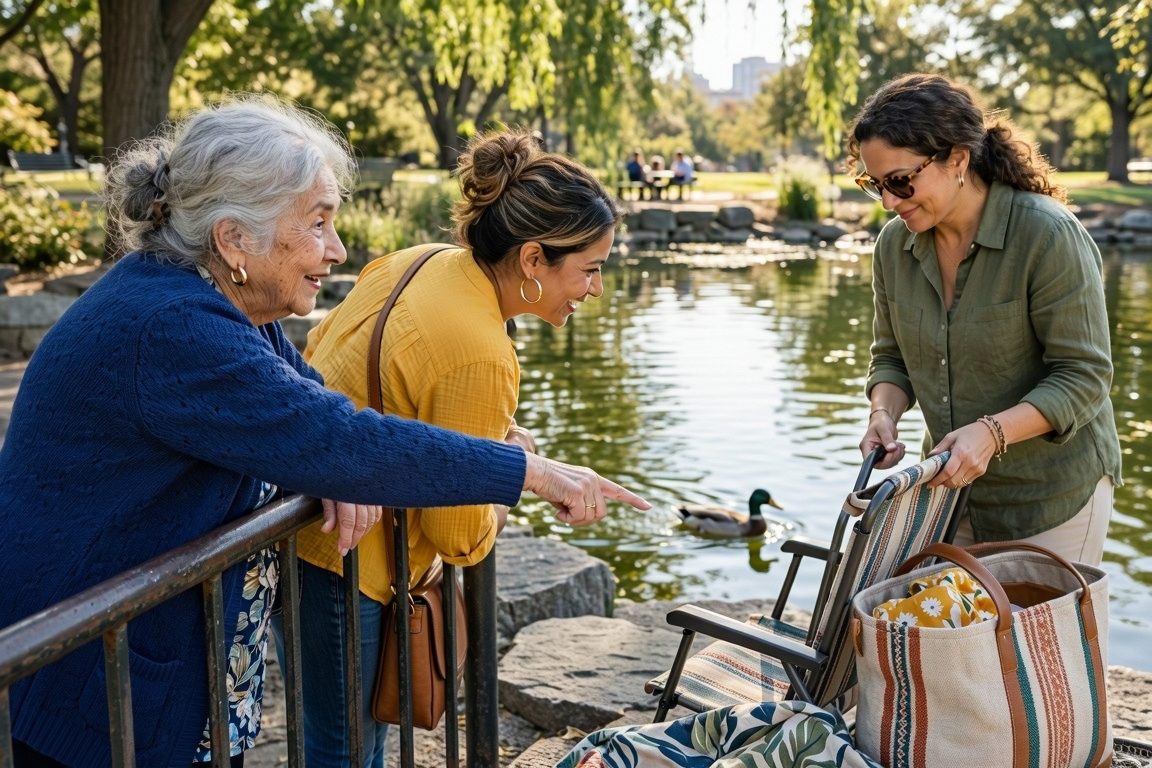
A triad means you, the person with dementia, and a third person, a helper, friend, or another family member. This third person can take over for a while, giving you a break while still providing the person with a 'partner' to follow. As Teepa Snow explains, if the person is a 'people person,' they need someone to be with; if it's not you, it has to be someone else. The triad lets you get what you need (rest) while the person always has what they need (companionship). The third person can also help with tasks like carrying bags, watching for hazards, or engaging the person in conversation while you handle logistics. This reduces stress for everyone and makes the outing feel more like a shared adventure.
How a Triad Preserves Joy and Connection
When you're not overwhelmed, you can actually enjoy the time together. The third person can take the lead on care tasks, like helping with a bathroom break or offering a snack, so you can focus on being a companion, not a manager. This shift allows for 'fun and human-to-human connection that does not revolve around caregiving'. For example, while the helper chats with your loved one about the birds in the park, you can relax and notice the flowers. The person with dementia feels less like a patient and more like a participant. The triad also helps prevent burnout: when you're rested, you're more patient, and the person with dementia is calmer.
The 'Dementia Detective' Approach to Outings
Before any outing, think like a detective: what changed? Is the person more tired today? Is the environment noisy? Are you rushed? As one source advises, 'something changed in them, something changed in the environment, or something changed in the caregiver'. A triad helps you address all three. The third person can adjust to the person's mood (e.g., slow down if they're confused), modify the environment (e.g., find a quiet bench), and give you space to breathe. When all three pieces line up, the person, the environment, and the caregiver, the person is more likely to be happy and cooperative.
Practical tools
6
The 'Two-Seat Towel' Trick
If you're worried about accidents or spills during the outing, put a towel or disposable pad on both the person's seat and your own. Say, 'My seats get hot, so I put these down to protect them.' This normalizes the situation and avoids shaming the person.
The 'Choice Script' for the Helper
Give the helper a simple script to use when the person seems unsure or agitated: 'Would you like to sit here or walk over there?' or 'Do you want the blue towel or the green towel?' This gives the person a sense of control and reduces anxiety.
The 'Three-Question Debrief'
After each outing, ask the helper three questions:
This helps you improve the triad dynamic and catch issues early.
The 'Emergency Kit' for the Helper
Pack a small bag for the helper with:
This lets the helper handle minor issues without interrupting you.
The 'Visual Cue' for the Person
If the person gets confused about where to go, use a visual cue like a brightly colored hat or scarf that the helper wears. Say, 'Follow the red scarf, it's our guide today.' This gives the person a simple, non-verbal direction.
The 'Time-Limited Outing' Plan
Set a timer on your phone for 30 minutes. When it goes off, it's time to head back, regardless of how the outing is going. This prevents overstaying and ensures you end on a positive note. You can always extend later if everyone is doing well.
Different situations
Lewy body dementia or Parkinson's dementia
These conditions often cause fluctuations in alertness and visual hallucinations. The helper should be trained to watch for sudden confusion or falls. Keep outings very short (15–20 minutes) and avoid busy, visually complex environments. The helper can use a calm, low voice and avoid sudden movements.
Late-stage dementia (bedridden or very limited mobility)
Outings may be limited to a wheelchair trip to a garden or a car ride with the windows down. The triad still helps: the helper can push the wheelchair while you sit beside the person, or the helper can drive while you focus on comforting the person. Use soft music or familiar scents (like lavender) to soothe.
Spouse vs. adult child caregiver
Spouses often feel more guilt about asking for help, thinking they 'should' do it all. Adult children may have more energy but less patience. For spouses, start with a paid helper for one short outing per week. For adult children, recruit siblings or friends and rotate roles. Both need to remember that the person with dementia needs a 'partner,' not just a caregiver.
In a facility (assisted living or nursing home)
The facility staff can be part of the triad. Ask a staff member to accompany you and your loved one on a walk or to a facility event. This helps the person get used to staff as companions, not just caregivers. It also gives you a break and lets staff see how the person behaves outside their room.
Medicaid or low-income situations
You may not be able to afford paid help. Look for free or low-cost options: a volunteer from a local church, a student from a nearby college (e.g., nursing or social work program), or a neighbor who can trade time. Some Area Agencies on Aging offer respite vouchers. Even one hour a week can make a difference.
For the doctor
4
- If the person with dementia has a history of wandering or getting lost, ask the doctor about using a GPS tracker or medical ID bracelet during outings.
- If the person becomes aggressive or agitated during outings, discuss whether a medication adjustment might help, but never change meds without a doctor's guidance.
- If you are the primary caregiver and have health issues (e.g., heart disease, arthritis), ask your doctor if it's safe for you to continue outings, and if so, what precautions to take.
- If the person has a condition like diabetes or epilepsy, ask the doctor what signs to watch for during outings and what emergency steps to take.