Step by step
What not to do
- Don't say 'You are home, you live here', it dismisses their reality and often triggers agitation or attempts to leave.
- Don't argue, explain, or use logic like 'That house is gone', their brain can't process it, and it erodes trust.
- Don't ask open-ended questions such as 'Why do you want to go home?', these demand working memory they may not have. Use simple closed questions instead.
- Don't take it personally, it is a symptom of the disease, not a verdict on your care or their love for you.
- Don't ignore the request or abruptly change the subject, it feels dismissive and usually escalates the distress.
- Don't physically restrain or block them, it heightens fear.
- Don't rely on the same response every time, what soothes today may not work next month; stay flexible and lean on your notes.
Key points
- 'I want to go home' is an emotional need for safety and belonging, not a factual statement about a building.
- Never argue or reason, validation and redirection work; correction makes things worse.
- Use the three-step Validate–Reassure–Redirect approach every time, but vary the redirect so they don't get stuck in a loop.
- Your calm tone and body language regulate theirs, settle yourself before you speak.
- Ask simple, closed questions ('Do you miss your mom?'), not open-ended ones that require complex thinking.
- Always rule out unmet physical needs, hunger, pain, bathroom, fatigue, overstimulation, before assuming it's purely memory.
- Keep a flexible toolkit of phrases and activities and adjust as the dementia progresses.
- In a facility, helping your loved one form new bonds with staff can slowly make the new setting feel like 'home.'
Videos
 'I WANT TO GO HOME!' dementia challengeThis video shows a real-life example of the challenge and offers practical, compassionate response strategies from a dementia care expert.
 When Dementia Patients Say 'I Want to Go Home': What to Say (3-Step Script) | Dr. Khushboo VermaProvides a clear, easy-to-remember three-step script (validate, ask, redirect) that you can use immediately.
 3 Activities for Dementia Patients that Stop 'I Want to Go Home'Offers three specific, hands-on activities to redirect the person's focus and reduce the frequency of the request.
 Dementia Care Partner Talk Show Podcast: Ep. 86 - 'I Want to Go Home!'Features Teepa Snow explaining the deeper emotional meaning behind the phrase and how to respond with empathy and skill.
5 more videos
 What to Do When Someone with Dementia says 'I Want to Go Home' (The BIG Mistake You're Making)Identifies the most common caregiver mistake (arguing) and shows you what to do instead, with real examples.
 Why Do Dementia Patients Want To Go Home?Explains the neurological and emotional reasons behind the request, helping you understand the 'why' so you can respond more compassionately.
 How Do You Calm A Dementia Patient?This video covers general calming techniques that work well for the 'I want to go home' scenario, including breathing, tone of voice, and sensory comfort.
 How To Respond When Someone With Dementia Constantly Asks To Go HomeThis video offers multiple strategies for when the request is frequent, including how to mix up your responses as the disease progresses.
 How To Convince A Person With Dementia To MoveWhile focused on moving, this video's techniques for reducing resistance and using validation are directly applicable to the 'I want to go home' situation.
Background
Understanding the situation
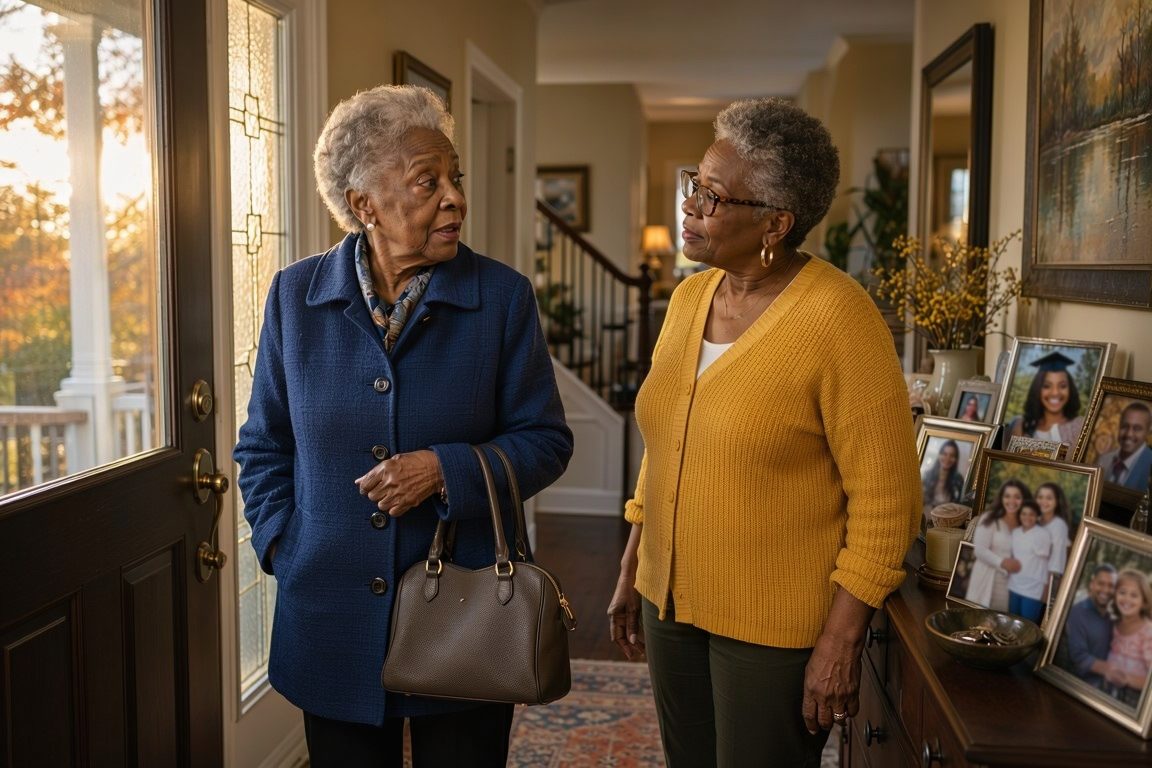
The phrase 'I want to go home' is almost never about the physical building you're standing in. In dementia, the most recent memories, including moving in with you or even owning their own home for the past 20 years, fade first, while vivid memories of a childhood home or the house where they raised young children remain strong. So 'home' is usually a place from their past, often one that no longer exists. Underneath the words sits an unmet need: fear, anxiety, boredom, pain, hunger, fatigue, loneliness, or being overwhelmed by noise and bright light. In effect they are saying, 'I feel unsafe and unsure, and I want to get back to where I felt secure.' This is why logic backfires. Telling them 'You ARE home, you've lived here ten years' asks a brain that can no longer process new facts to override a deeply felt reality, so it feels like an argument, raising agitation, packing, or attempts to leave. The proven alternative, used by dementia care experts, is Validate–Reassure–Redirect: acknowledge the emotion, offer reassurance of safety and presence, then gently guide attention to something comforting in the present. It meets the heart first and never requires them to remember or reason.
Practical tools
9
Validate–Reassure–Redirect Script
The core three-step response, named by dementia experts. (1) VALIDATE the emotion without confirming the false belief: 'You're missing home, that must feel so hard.' (2) REASSURE with safety and presence: 'I'm here with you. You're safe.' (3) REDIRECT to something comforting: 'While we're here, let's look at this photo album.' Keep it saved on your phone and practice until it feels natural.
Closed-Question Caution
When you ask a question, keep it simple and answerable yes/no or with a single image, 'Was there a big tree in the yard?' or 'Do you miss your mom?' Avoid open-ended 'why' questions, which require working memory your loved one may no longer have and can deepen frustration.
The 'Pretend Call' Script
When they insist on checking on someone (a parent, child, or sibling), pick up the phone and say, 'Let me call them.' Have a brief pretend conversation, then report back warmly: 'They said everything's fine and they'll see you tomorrow. Let's stay here tonight.'
Daily Routine Anchor
Post a simple, predictable daily rhythm
Predictability reduces the disorientation that often sparks 'I want to go home,' especially in the late afternoon and early evening.
Notebook Tracking
Keep a small notebook recording what you tried, what calmed them, what didn't, and when each episode occurred. Over time you'll see patterns (time of day, triggers) and can fine-tune your responses as needs change.
Comfort Kit for 'Home' Moments
Assemble a small basket or grab-bag with
When the request arises, offer an item: 'This might help you feel more at home here.'
Reminiscence Prompt List
A short list of gentle sensory questions to draw them into a comforting memory: '
'
Environmental Cues & Safety Setup
Place familiar objects around
Use soft lighting and reduce background noise. For wandering risk, use discreet prevention rather than confrontation: a 'Stop' sign at eye level, a bookshelf wall decal over a door, childproof knob covers, or a discreet door alarm.
1 more tool
Staff Connection Plan (Care Facility)
Identify one favorite staff member and bring a small gift to encourage daily check-ins. Share the Validate–Reassure–Redirect script with the team for consistency, and bring familiar items (a quilt, photo, small lamp) plus a daily 'home' activity so the facility can gradually feel safe and known.
Different situations
Early-stage Alzheimer's (around Stage 4): Your loved one may still have some insight and can be gently reoriented, but only AFTER validation, and keep it brief: 'I know you miss your old house, that was a special place. Right now we're at my house, and you're safe here. Let's look at pictures of your garden.' Avoid long explanations; lean on direct redirection to a favorite activity.
Middle-stage / moderate dementia (Stage 5): Verbal ability remains but memory loss is significant, and the request may cycle several times a day. Use Validate–Reassure–Redirect each time but VARY the redirect (different activity, different room) so they don't get stuck in a loop. If they're packing, guide them to a new task: 'Let's pack this bag for a picnic instead.'
Late-stage Alzheimer's or dementia (Stage 6+): Drop all reality orientation. Focus entirely on validation and non-verbal comfort: gentle touch, soft music, a familiar scent, rocking in a chair, a warm drink, or a favorite stuffed animal. Keep responses short, warm, and repetitive, in a low calm voice. Expect the request many times a day; the 'pretend call' and 'go home tomorrow' scripts work well.
Lewy body or Parkinson's dementia: These conditions often bring visual hallucinations, fluctuating attention, and strong sensitivity to stimuli. The request may be triggered by seeing a frightening or confusing image or by sensory overload. Check first: 'Is someone bothering you?' or 'You look scared: I'm here with you.' Dim lights, lower noise, speak slowly and calmly, validate the fear, then redirect to a concrete familiar object or simple task.
Adult child caring for a parent: Your parent may see you as a child rather than a caregiver, which can make the request sting. Remember they are seeking their own parents or childhood safety, not rejecting you. Try 'I'm here with you, Mom. You're safe' or 'Tell me about your home.' Avoid 'You're with me now' if it confuses; say 'We're together, and that's what matters.'
Spouse caring for a partner: Your partner may be longing for a childhood home or a place from before your marriage, which can feel painful. It is not a reflection on your relationship. Offer closeness: 'I know you miss home. I'm right here with you. Let's sit together,' and use shared memories from your life together as a redirection.
In a care facility: The phrase is extremely common and may be frequent. The goal is helping them form new attachments: ask staff to use the same Validate–Reassure–Redirect approach, bring familiar items from their previous home, and build in a daily 'home' activity (photo album, favorite radio show). Over time, feeling connected and safe can let the facility become 'home.'
Common questions
8
Why does my spouse or loved one keep asking to go home when we are already home?
What do I do when a person with dementia wakes confused and asks where they are?
How can I respond when my loved one refuses to eat or insists on going home?
How do I respond when a person with dementia insists on going home?
How does my own reaction and tone affect the situation when my loved one says 'I want to go home'?
What does it mean when a person with dementia finds the keys or wants to leave?
How can I address the underlying unmet need when a person with dementia wants to leave?
How do I help my loved one feel at home and form new attachments in a care facility?
For the doctor
2
- Contact a clinician if the distress is new, sudden, or paired with fever, increased confusion, or pain, this can signal an underlying issue such as a urinary tract infection or delirium. Also seek guidance if the request comes with severe agitation, aggression, or unsafe attempts to leave that risk falls or wandering
- ask about safety measures (door alarms, locks, wander-management systems), an occupational therapy or geriatric psychiatry referral, or a care-plan meeting in a facility. If episodes occur multiple times an hour and don't respond to validation and redirection, ask the doctor to check for pain, infection, or medication side effects. Never start, stop, or change any prescription medication on your own, and always confirm before using any calming supplement or over-the-counter remedy (such as melatonin or herbal teas), as interactions with dementia medications can occur, all medication decisions must be made with your clinician.