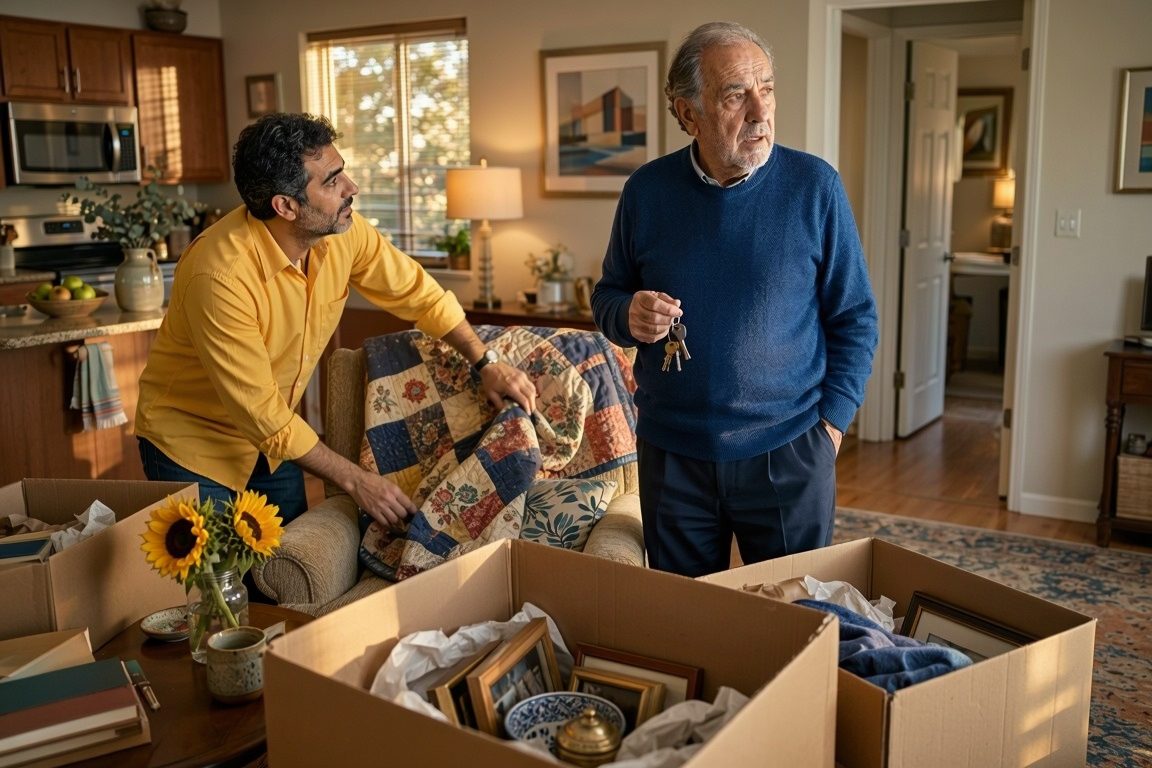
Step by step
What not to do
- Do not say 'You are home now' or 'We moved you here for your safety.' This contradicts their internal reality and can make them feel more lost, anxious, or angry.Instead, validate their feeling and redirect.
- Do not argue or try to reason with them about the move. They cannot hold onto the facts of the situation, and arguing only escalates distress.Instead, acknowledge their emotion and shift the focus.
- Do not take their words personally. When they say 'I want to go home,' it is not a rejection of you or the facility. It is an expression of fear, confusion, or discomfort. Your job is to soothe, not to defend.
- Do not force them to stay in their room if they are agitated. A change of location, even just walking down the hall, can reset their mood. Use movement as a tool, not a punishment.
- Do not leave them alone for long periods during the first few weeks. Loneliness and unfamiliarity amplify the 'I want to go home' feeling. Frequent, short visits from you or a familiar friend can ease the transition.
- Do not assume that once they settle in, the phrase will never return. It may reappear during times of stress, illness, or even a change in staff. Treat each occurrence as a fresh opportunity to validate and redirect.
Key points
- 'I want to go home' is usually about a feeling of safety from the past, not the actual house they left. Validate the feeling, don't correct the fact.
- Transfer trauma can last 2–8 weeks. Be patient and consistent. The phrase may fade as they settle in, but it can return during stress.
- Preparation before the move, familiar items, gradual visits, reduces the shock. On move-in day, focus on connection, not logistics.
- Use validation, then redirect to a sensory or meaningful activity. Avoid arguing, reasoning, or saying 'You are home now.'
- Create a daily routine with simple roles or jobs to give them a sense of purpose in the new setting.
- Personalize your approach based on the type of dementia, the stage, and your relationship. What works for one person may not work for another.
Videos
 3 Activities for Dementia Patients that Stop 'I Want to Go Home'Offers three concrete, engaging activities you can do with your loved one to redirect the 'I want to go home' feeling and reduce its frequency.
 'I WANT TO GO HOME!' dementia challengeProvides a direct, empathetic response strategy for when the phrase is said repeatedly, with examples of what to say and do.
 Michala Gibson & Mandy Shoemaker Founders of Prairie Elder Care and ConnectivitiesDiscusses the broader transition to assisted living and how to create a sense of home in a new setting, including practical tips from professionals.
 What to Do When Someone with Dementia says 'I Want to Go Home' (The BIG Mistake You're Making)Identifies the common mistake caregivers make (arguing or correcting) and teaches the validation-redirect approach with clear examples.
2 more videos
 Should you let your loved one with dementia who is in a nursing home visit their old home? 6 SIGNSHelps you decide whether a visit back to their previous home is helpful or harmful, with six signs to consider before trying it.
 How to get someone with dementia to accept help from others: 5 tips (plus bonus)Useful for when your loved one resists care from facility staff, offers strategies to build trust and cooperation with new caregivers.
Background
Why 'I Want to Go Home' Happens After a Move to Assisted Living
When a person with dementia says 'I want to go home' in assisted living, they are not necessarily referring to the house they left last week. For many, 'home' means a place of safety, comfort, and familiarity from an earlier time in life, often their childhood home or the home where they raised their children. Dementia erases newer memories first, so their sense of reality may be stuck decades in the past. The unfamiliar sights, sounds, and routines of assisted living can feel foreign and frightening, making them feel lost and desperate to return to that safe place they remember.
The Role of Transfer Trauma and the Adjustment Period
The move itself can cause 'transfer trauma', a period of heightened confusion, anxiety, and behavioral changes that can last anywhere from two to eight weeks. During this time, the person may not recognize their new room as their own, may pack their bags repeatedly, and may plead to go home. This is not a sign that the move was wrong; it is a normal reaction to a major disruption in their world. Your job is not to convince them they are home, but to help them feel safe and connected in this new place.
What They Really Need: Validation, Not Correction
Trying to reason with them, saying 'You live here now' or 'We moved you here for your safety', almost always backfires. They cannot hold onto that new information, and arguing only increases their anxiety and agitation. Instead, they need you to acknowledge their feelings. When you say, 'You miss home, don't you? That must be so hard,' you meet them in their emotional reality. From there, you can gently redirect their attention to something comforting or engaging in the present moment.
Practical tools
6
Validation and Redirect Script
A simple two-step verbal tool: Step 1: 'You miss home, don't you? That's so hard.' Step 2: 'Tell me about your favorite room in that house.' or 'Let's go look at the bird feeder together.' Practice this script so it becomes automatic.
Comfort Kit for the Room
A small basket or box with items that engage the senses and evoke comfort:
Use these items when they are upset.
Life Story Board
Create a simple poster or digital display with photos from their childhood, young adulthood, and family life. Place it where they can see it easily. When they say 'I want to go home,' point to a photo and say, 'Tell me about this picture.' This connects them to positive memories without needing to leave.
Daily Role Card
Write a simple, positive 'job' for them each day, such as 'Today's helper: fold napkins for dinner' or 'Today's greeter: welcome visitors at the door.' Present it as a privilege, not a chore. This gives them a sense of purpose in the new setting.
Transition Calendar
A simple visual calendar that marks the days with a checkmark or sticker. Each day they are in assisted living, you can say, 'Look, we've been here three days. Tomorrow we'll have lunch together.' This helps them (and you) track progress without pressure.
Music Playlist of Their Era
Create a playlist of songs from their teens and twenties, the music of their 'home' era. Play it softly during visits or when they seem anxious. Music can bypass the damaged parts of the brain and evoke feelings of safety and familiarity.
Different situations
For a person with Lewy body dementia or Parkinson's disease dementia
These individuals may have more visual hallucinations, fluctuations in attention, and sensitivity to medications. When they say 'I want to go home,' it may be triggered by a hallucination (e.g., seeing a stranger in the room). Validate the feeling first, then gently redirect to a different area. Avoid sudden movements or loud noises, which can increase confusion. Discuss any new or worsening hallucinations with their clinician.
For a person in late-stage dementia (moderately severe to severe)
In later stages, the person may have very limited verbal ability. 'I want to go home' may be expressed as moaning, pacing, or trying to leave. Focus on non-verbal comfort: a gentle touch, a familiar song, a warm blanket. Use simple, one-step commands like 'Sit with me' or 'Look at this.' Do not expect them to understand explanations. Your calm presence is the most powerful tool.
For an adult child caregiver vs. a spouse caregiver
Adult children may feel guilt about 'putting Mom in a home.' Spouses may feel a deep sense of loss and loneliness. Both need to practice self-compassion. For adult children: remind yourself that the move was made for safety. For spouses: visit often, but also give yourself permission to rest. The phrase 'I want to go home' may hit you harder, talk to a support group or counselor about your own feelings.
For a person with frontotemporal dementia (FTD)
FTD often affects behavior and personality more than memory early on. The person may be more impulsive, agitated, or socially inappropriate. 'I want to go home' may be said with anger or insistence. Stay calm and do not take it personally. Use redirection to a preferred activity (e.g., a puzzle, a snack, a walk). Avoid lengthy explanations, they may not process them. Consistency and routine are especially important.
For a person on Medicaid or in a facility with limited resources
If the facility has fewer staff or less personalized care, you may need to be more proactive. Visit during high-stress times (like meals or evenings) to provide extra support. Bring your own comfort items (photos, music) to personalize the room. Advocate with the care team for simple, consistent routines. You can also ask about volunteer programs or local dementia-friendly community groups that offer additional support.
For the doctor
4
- If the person's distress about 'going home' is accompanied by new or worsening agitation, aggression, or hallucinations, discuss with their doctor whether a medication adjustment or a medical evaluation (e.g., for infection or pain) is needed.
- If the person is trying to leave the facility repeatedly and is at risk of elopement, ask the care team about safety measures (e.g., door alarms, wander guards) and discuss with the facility's social worker or a geriatric care manager.
- If the person is refusing to eat, drink, or participate in care due to distress about the move, consult with their primary care provider or a dementia specialist to rule out depression or other medical issues.
- If you are considering a trial visit back to their old home, discuss with their clinician first, some experts advise against it because it can increase confusion and distress, while others say it may help in certain stages. Get personalized guidance.