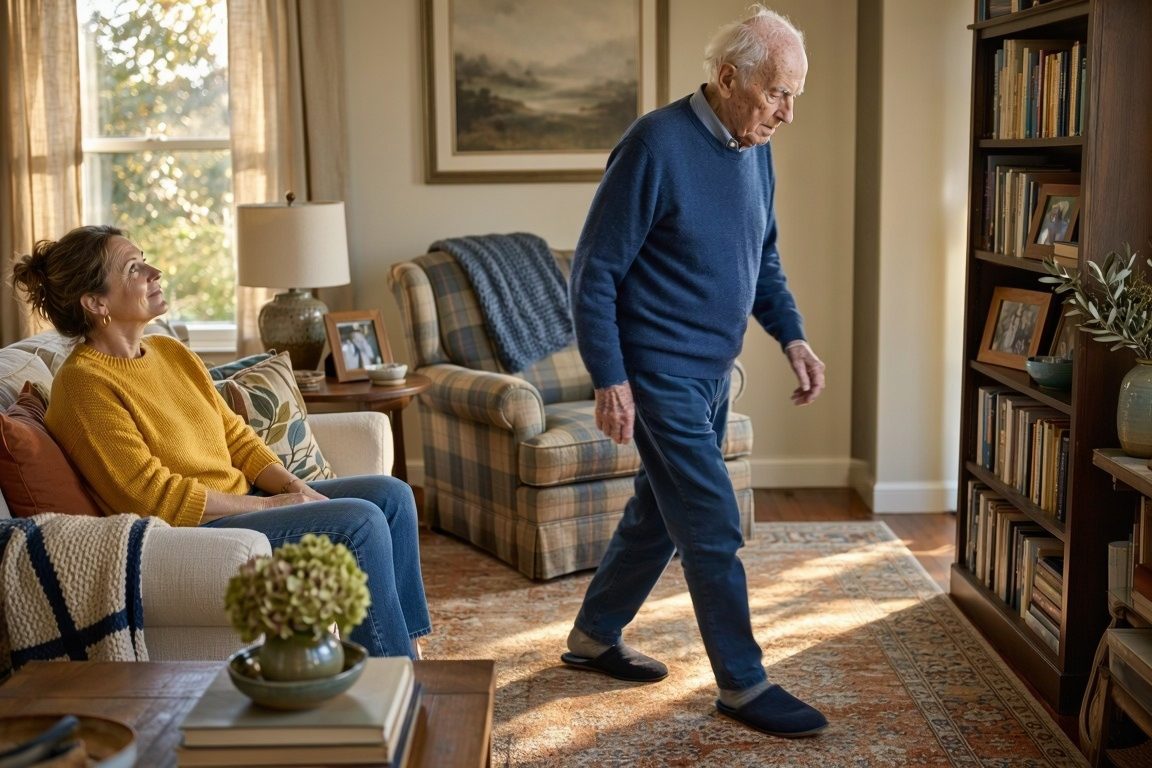
Step by step
What not to do
- Do not grab their arm, block their path, or try to force them to sit down.
- Do not ask 'Why are you pacing?' or 'What's wrong?', they likely cannot tell you, and the question can feel frustrating.
- Do not turn on the TV or radio to 'distract' them, extra noise and flickering images usually add to confusion.
- Do not correct them if they are doing a repetitive task 'wrong', criticism can shut down engagement and increase distress.
- Do not argue with them, try to reason them out of pacing, or insist they 'know' they already live here. Their reality is real to them.
Key points
- Pacing is a sign of an unmet need, usually fear, pain, overstimulation, or the need to use the bathroom. Do not take it personally.
- Never physically block or grab a pacing person. Instead, clear a safe path and let them move until they tire.
- Offer something to hold and play familiar music from their youth, these are two of the most effective calming tools.
- Reduce environmental triggers: dim lights, close blinds, turn off the TV, and lower noise levels.
- Preempt afternoon pacing by scheduling quiet, repetitive tasks (folding towels, sorting buttons) for the 3:00–5:00 PM window.
- Check for pain, hunger, thirst, bathroom needs, and temperature comfort before assuming the pacing is 'just dementia.'
- Take care of yourself, pacing is exhausting to witness. Accept help, take breaks, and talk to your doctor if you feel overwhelmed.
Videos
 The 7 Stages Of Dementia: Stage 6This video explains the specific challenges of stage 6, including pacing, fear, and the need for security objects. It directly supports the advice to offer something to hold and use music.
 How to Use a Positive Physical Approach to Assess Abilities with Someone Living with DementiaTeaches the calm, front-approach technique that is essential when approaching a pacing person. Helps you use your own body language to reduce fear.
 What Are The 7 Stages Of Alzheimer's Disease? Stage 6Reinforces the emotional state of a person in stage 6, fear, confusion, and the need for comfort. Helps caregivers understand why pacing happens.
 Dementia and Anxiety: What you can doExplores the link between anxiety and pacing, and offers practical strategies to reduce anxiety without medication.
2 more videos
 What to do when a person with dementia refuses care: 6 simple strategiesPacing can escalate into care refusal. This video gives gentle redirection techniques that align with the 'help me' approach described in this guide.
 Understanding Sundowning Syndrome: Supporting Those With Dementia Through the NightDirectly addresses late-afternoon pacing and sundowning, with tips on lighting, routine, and calming activities.
Background
What Pacing Really Means
When a person with dementia paces, they are not being difficult on purpose. Pacing is often a sign that their brain is trying to disengage from an overwhelming environment or that they have an unmet need. In middle and late stages, the brain loses the ability to process complex sensory input, too much noise, too many people, a cluttered room, or even the wrong lighting can trigger a feeling of being trapped or frightened. The person may not be able to tell you they are scared, in pain, or need the bathroom. Instead, their body moves: back and forth, back and forth. This is their way of coping with what they cannot put into words. As one expert explains, the person is using what is working for them in that moment , it is a dynamic, real-time response to their internal and external world.
Why It Happens More in the Afternoon and Evening
Pacing often peaks in the late afternoon and early evening, a phenomenon sometimes called sundowning. As the day wears on, the person's brain becomes more fatigued. Their ability to filter out noise, manage emotions, and stay oriented declines. The fading light, shadows, and reflections on windows can create visual confusion. They may feel anxious, restless, or even fearful without knowing why. Their brain can no longer internally soothe itself, so the anxiety comes out as physical movement, pacing. This is not a sign that you have done something wrong; it is a predictable part of the condition. Recognizing this pattern helps you plan ahead rather than react in frustration.
Pacing vs. Wandering: A Key Difference
Pacing is usually repetitive, back-and-forth movement in a contained area, often without a clear destination. Wandering, on the other hand, is more purposeful, the person may be trying to 'go home,' find a bathroom, or leave the house. Both behaviors come from unmet needs, but the approach differs. For pacing, you can often let it run its course while addressing the underlying trigger. For wandering, you need to redirect and ensure safety immediately. In middle and late stages, pacing is more common than purposeful wandering, but you should always be alert to the difference. If the person seems to be searching for something or trying to leave, your response must prioritize safety first.
Practical tools
4
The 'Something to Hold' Kit
Keep a small basket in each room they tend to pace through, stocked with
When pacing starts, offer one item at a time with a calm voice: 'Here, hold this for me.'
The Late-Afternoon Prep Routine
By 3:00 PM each day:
Finish stimulating activities by early afternoon. Consider a short outdoor walk earlier in the day.
An Era-Appropriate Music Playlist
Build a playlist of 15–20 familiar songs from their teens, twenties, and thirties, upbeat but not frantic. Avoid tracks with sudden loud changes or ties to grief. Keep it queued up so you can start it within seconds when pacing begins.
The Pacing-Path Safety Audit
Walk every route they tend to pace and remove hazards:
Different situations
Lewy body dementia (LBD)
Pacing in LBD can be more intense and unpredictable due to fluctuations in cognition and alertness. Visual hallucinations may also trigger pacing, they may be trying to 'get away' from something they see. Do not argue about what they see. Instead, say, 'I see you are upset. Let's go into the other room where it is quieter.' Also, LBD patients are very sensitive to medications , never give antipsychotics without a specialist's guidance, as they can cause severe reactions. Discuss any new pacing with their neurologist.
Spouse vs. adult child caregiver
Spouses often feel more personally responsible and may try harder to 'fix' the pacing, leading to burnout. Adult children may feel less emotionally entangled but more stressed by the disruption to their own family life. Both need to set boundaries: it is okay to let them pace for 20 minutes while you sit and rest. If you are an adult child, ask siblings to take shifts. If you are a spouse, accept help from friends, say 'yes' when someone offers to sit with them for an hour.
In a facility (assisted living or memory care)
If your loved one is in a facility, pacing is common and often allowed in safe, enclosed areas. Work with the staff to identify triggers, is it happening after meals? During shift changes? Request that they be offered a calming activity at that time. You can also bring in their favorite music playlist or a familiar object to hold. If the facility uses alarms or tracking devices, make sure they are properly fitted and checked daily. Visit during the late afternoon to observe and collaborate with staff.
For the doctor
5
- If pacing is new, sudden, or accompanied by a fever, confusion, or a change in behavior, ask the doctor: 'Could this be a urinary tract infection or another medical issue?'
- If you suspect pain but cannot get a clear answer, ask: 'Can we try a non-pharmacological pain relief approach (like a warm compress or repositioning) first? If that does not work, what pain medication is safest for their stage of dementia?'
- If pacing is severe, causing falls, or leading to aggression, ask: 'Are there any non-drug approaches we should try first? If medication is needed, what are the risks and benefits for their specific dementia type?'
- If the person has Lewy body dementia, ask: 'Are there any medications we should absolutely avoid because of sensitivity? What is the safest plan for managing agitation or hallucinations?'
- If pacing is disrupting sleep for both of you, ask: 'Could a sleep study or a review of their current medications help? Are there any behavioral strategies we can try before considering a sleep aid?'