Step by step
What not to do
- Don't wait until a crisis forces placement (e.g., a fall, a hospitalization, or caregiver collapse). Crisis placements often lead to rushed decisions and facilities that are not ideal.Instead, start researching and touring facilities when you first notice the criteria (incontinence, resistance to care) appearing regularly.
- Don't assume that all memory care units are the same. Some are in assisted living (private-pay only), others in nursing homes (Medicare/Medicaid accepted). A common mistake is choosing a facility that cannot handle the person's mobility or behavioral needs. Always ask: 'What happens if my loved one becomes more agitated or tries to leave?'
- Don't hide the move from the person or lie about it. Saying 'We're going on a trip' can cause confusion and distress when they realize it's permanent.Instead, use simple, truthful language: 'We are going to a new home where nurses will help you.' Repeat this calmly as needed.
- Don't neglect your own emotional preparation. Many caregivers feel guilt, grief, or relief, all normal. Join a support group (like ALZConnected) before and after placement. Talking to others who have been through it can reduce isolation and provide practical tips.
- Don't forget to ask about hospice eligibility. If the person has late-stage Alzheimer's with significant functional decline (e.g., FAST score of 7 or higher, meaning they cannot walk, talk, or eat independently), they may qualify for hospice. Hospice can provide extra support, including a nurse who visits regularly and a team that helps with symptom management. Discuss this with the doctor.
Key points
- Look for specific criteria: regular incontinence, inability to cooperate in care, inability to recognize home/caregivers, caregiver burnout, or risk to caregiver health.
- Start researching facilities when you first notice these signs, do not wait for a crisis.
- Memory care units are locked and specialized but often private-pay; skilled nursing homes accept Medicare/Medicaid but may not have locked units.
- Use a daily tracking sheet for two weeks to gather data for the doctor and for your own clarity.
- Prepare the person for the move with simple, truthful language and familiar items.
- Your health matters: if you are burned out, placement is a valid and necessary step.
Videos
 When Is It Time for a Nursing Home? Alzheimer's Dementia CareThis video directly addresses the emotional and practical signs that it is time for placement, including caregiver burnout and safety concerns. It offers a compassionate perspective from someone who has been through it.
 The Baffled Brain: Demystifying Dementia Episode 23 May 1 ,2021This episode explains the clinical progression of late-stage dementia and the role of facilities in providing 24/7 supervision and medical care. It helps you understand what to expect from a facility.
 How Do I Find Local Dementia Adult Day Care Services? - TestWhile focused on adult day care, this video offers a model for how to research local services, including questions to ask and resources like the Alzheimer's Association. Useful as a stepping stone before full placement.
 What Level Of Care Does A Dementia Patient Need?This video breaks down the different levels of care (assisted living, memory care, skilled nursing) and helps you match your loved one's needs to the right facility type.
2 more videos
 Taking your parent with Alzheimer's to the hospitalThis video offers practical tips for hospital visits, which often precede placement. It covers how to communicate with staff and advocate for your loved one in a medical setting.
 How Dying Looks In Dementia With Hospice Nurse JulieThis video explains the physical signs of end-stage dementia and how hospice can provide comfort. It helps you know when to consider hospice in a facility setting.
Background
What Is Happening and Why: The Shift from Home Care to Facility Care
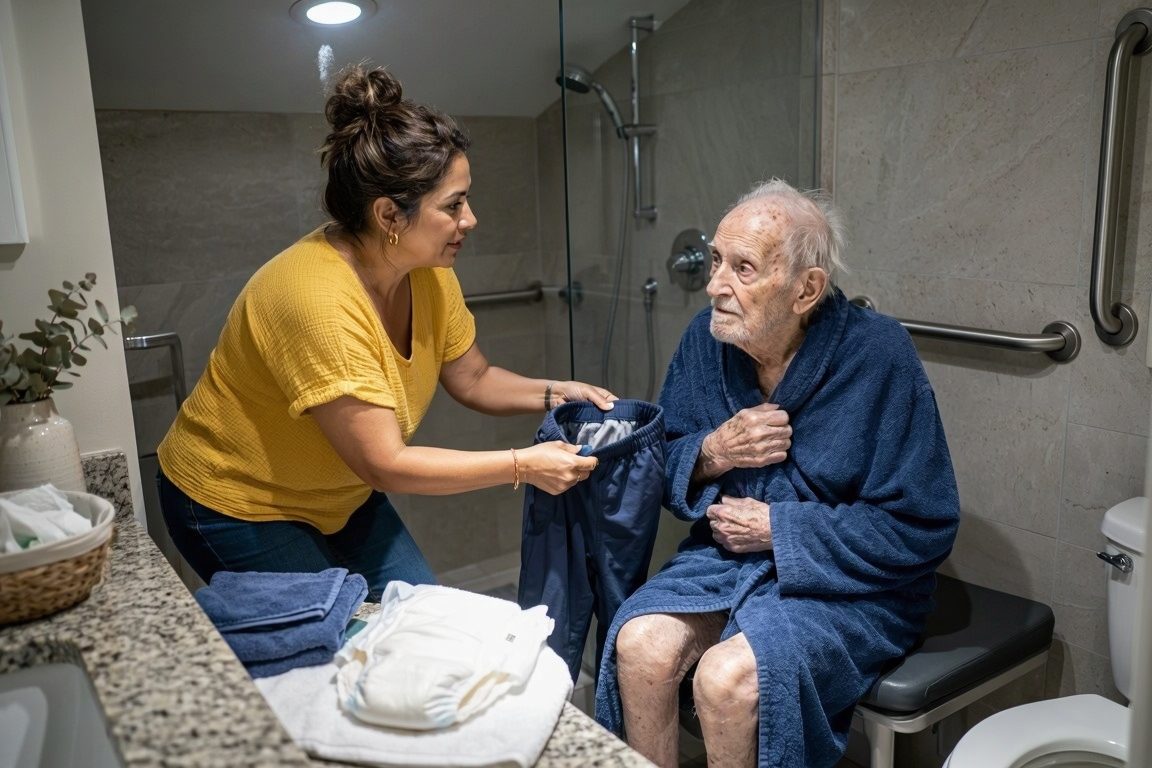
In late-stage Alzheimer's, the disease has progressed to the point where the person can no longer participate in their own care. They may be unable to recognize familiar caregivers or their own home, and they often require round-the-clock supervision for safety. The physical demands of caregiving, such as managing incontinence, feeding, and preventing falls, become overwhelming for even the most dedicated family caregiver. This is not a failure on your part; it is a natural progression of the disease. The Alzheimer's Association notes that during the late stages, around-the-clock care needs become more intensive, and it is common to reassess whether home care is still safe and sustainable.
The Clinical Criteria: When Is It Really Time?
Research from the University of South Florida's Gerontology Center provides explicit criteria that families find helpful when making this decision. These include regular incontinence of bladder and bowel, the patient's inability to cooperate in their own care (e.g., resisting bathing or dressing), and the patient's inability to realize they are at home with familiar caregivers. Additional grounds include the withdrawal of a paid caregiver, risk to the health of the primary caregiver (such as injuries from lifting or chronic stress), and primary caregiver burnout, where the caregiver's physical or emotional health is declining. These are evidence-based markers that the current care arrangement is no longer working.
The Types of Facilities and What They Offer
When home care is no longer an option, you have several facility choices. Memory care units are specialized, locked units within assisted living or nursing homes that provide 24-hour supervision, structured activities, and staff trained in dementia care. These are often private-pay, meaning they may not accept Medicare or Medicaid. Skilled nursing homes (also called nursing homes) can accept Medicare and Medicaid and provide medical care, but not all have locked memory care units, so you must ask. Some facilities also offer palliative care or hospice services within the building. The Alzheimer's Association emphasizes that hospice is an option when the person is diagnosed with less than six months to live, and it focuses on comfort and dignity. Ideally, end-of-life wishes should be discussed early, while the person can still participate.
Practical tools
6
The Daily Tracking Sheet
Create a simple chart with columns for date, incontinence episodes (bladder/bowel), resistance to care (yes/no), and whether the person recognized you. Use it for two weeks. This gives you concrete data to show the doctor and helps you see the pattern without relying on memory.
The 'Three Questions' Script for Facility Tours
When you call or visit a facility, say: 'I am considering placement for my loved one with late-stage Alzheimer's. Can you tell me:
' Write down the answers and compare facilities.
The 'I Will Be With You' Phrase
During the move, use this exact phrase: 'We are going to a new place where people will help you. I will be with you.' Repeat it calmly, without adding extra details. This reduces confusion and anxiety. Avoid saying 'for a while' or 'just for now' because that can create false hope.
The Burnout Self-Checklist
Print or save this checklist:
If you answer 'yes' to three or more, it is time to prioritize placement for your own health.
The Medicaid Eligibility Pre-Screening
Call your state's Medicaid office or visit their website. Ask: 'What are the income and asset limits for long-term care Medicaid? Do you have a pre-screening form I can fill out?' Many states have a quick online tool. This helps you know if you qualify before you tour facilities.
The 'End-of-Life Wishes' Document
If not already done, write down the person's wishes regarding life-sustaining treatment (e.g., feeding tubes, CPR, hospitalization). The Alzheimer's Association recommends discussing this while the person can still participate. If they cannot, gather family and the doctor to create a plan based on what you know they would want. Keep a copy in the facility file.
Different situations
For a spouse caregiver (vs. adult child)
Spouses often feel intense guilt and may delay placement longer. It is crucial to separate your role as a spouse from your role as a caregiver. Remind yourself: 'I am still their partner, but I cannot provide the medical care they need.' Spouses may also have financial concerns: Medicaid planning is especially important. Consider consulting an elder law attorney.
When the person has a history of wandering or aggression
Prioritize facilities with secure, locked memory care units. Ask about their protocol for elopement (wandering away) and how they handle agitation without using antipsychotics. Some facilities have 'wander guard' systems or enclosed outdoor gardens. Avoid facilities that cannot guarantee safety.
When the person is already in a hospital or rehab facility
This is a common crisis point. Work with the hospital's discharge planner or social worker. They can help arrange a direct transfer to a skilled nursing facility with a memory care unit. You may have only a few days to decide, so have your list of pre-approved facilities ready. Ask: 'Can we do a trial stay of a few days?'
When the person is eligible for hospice (FAST score 7 or higher)
Hospice can be provided in a facility. Ask the facility if they have a contract with a hospice provider. If not, you can bring in an outside hospice team. Hospice provides extra nursing visits, pain management, and emotional support for the family. The facility may allow a hospice room with a bed for family to stay overnight.
When the person has other medical conditions (e.g., diabetes, heart disease)
Choose a skilled nursing facility that has a registered nurse on staff 24/7 and can manage medications, insulin, or oxygen. Memory care units in assisted living may not have the same level of medical oversight. Ask: 'Can you manage my loved one's specific condition? Who coordinates with their specialists?'
For the doctor
6
- Ask the doctor: 'Based on my tracking sheet, do you agree that the criteria for placement are met?'
- Ask the doctor: 'Can you provide a written order for a geriatric care manager or social worker to help with the transition?'
- Ask the doctor: 'Is my loved one eligible for hospice? If so, can you refer us to a hospice provider that works with facilities?'
- Ask the doctor: 'What medications might help with agitation or sleep during the transition? Are there any risks I should know about?'
- Ask the doctor: 'Can you write a letter of medical necessity for the facility to help with insurance or Medicaid approval?'
- Ask the doctor: 'What is the safest way to manage the move day, especially if my loved one becomes very distressed? Should we consider a gradual transition plan?'