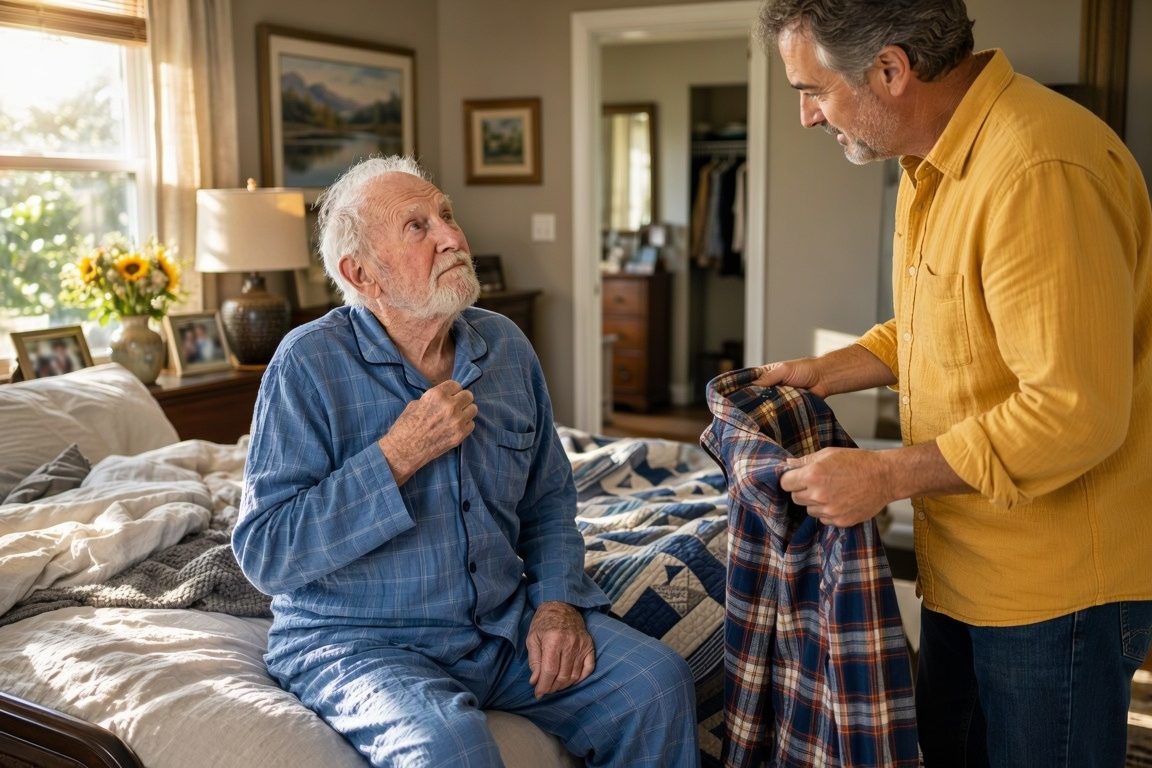
Step by step
What not to do
- Do not argue or insist they are wrong. Saying 'No, you haven't changed since yesterday' will only escalate frustration and damage trust.Instead, redirect with a neutral statement like 'Let's just get this ready for later.'
- Do not force or physically wrestle them into clothes. This can cause injury, fear, and long-term resistance. If they are truly refusing, stop and try a different approach later. Safety and dignity come first.
- Do not ask 'Do you want to change?' This invites a 'no' that you then have to overcome. Always use a statement or a choice between two acceptable options.
- Do not rush or show impatience. Your anxiety is contagious. If you are tense, they will sense it and resist more. Take a deep breath, slow down, and use a calm, cheerful voice.
- Do not leave the room cold. A chilly room makes undressing feel unbearable. Always check the temperature and warm it up first.
- Do not assume the refusal is about the clothes themselves. It may be about pain, a urinary tract infection, constipation, or a medication side effect. If resistance is new or sudden, consult a doctor to rule out medical causes.
Key points
- Never argue or insist they are wrong about having changed, it is a symptom, not a lie.
- Always warm the room first; a cold room is a major barrier to undressing.
- Replace yes/no questions with statements or choice illusions to reduce resistance.
- Simplify the task: lay out only one set of clothes in order, and remove distractions.
- Use a warm, slow, calm approach; rushing triggers anxiety and refusal.
- If they refuse, take a break and try again later with a different tactic.
Videos
 What to do when a person with dementia refuses care: 6 simple strategiesThis video offers six practical, gentle strategies for handling refusal of care, including changing clothes. It directly addresses the 'I already changed' scenario and shows how to redirect without conflict.
 How Do You Persuade Someone With Dementia To Bathe?While focused on bathing, the techniques for persuasion, warm environment, choice illusions, and calm approach, apply directly to changing clothes. The principles are identical.
 Should You Force a Loved One with Dementia to Bathe?This video explains why forcing is harmful and offers alternatives. It reinforces the importance of dignity and flexibility, which are key when a person refuses to change clothes.
 The Baffled Brain Demystifying Dementia Episode 30 June 26 2021This episode explains the brain changes behind refusal behaviors, including the 'I already changed' phenomenon. Understanding the 'why' reduces caregiver frustration and improves responses.
2 more videos
 Caregiver Training: Sexually Inappropriate Behaviors | UCLA Alzheimer's and Dementia Care ProgramIf the refusal to change is accompanied by sexual comments or actions, this video provides training on how to respond safely and respectfully. It addresses a specific, challenging variant of the topic.
 How to prevent your loved one with dementia from misplacing all the important thingsWhile about misplacing items, the strategies for reducing confusion and creating a calm environment are directly transferable to the dressing refusal scenario.
Background
Why They Say 'I Already Changed'
When a person with dementia insists they have already changed clothes, their brain is not being dishonest, it is genuinely unable to access the memory of the last change or is experiencing a distorted sense of time. The part of the brain that tracks recent events (the hippocampus) is damaged, so the person may truly believe they changed an hour ago, yesterday, or even moments ago. This is not a lie; it is a symptom of the disease. Additionally, the brain may be protecting them from the anxiety of admitting they need help, which can feel like a loss of control or dignity.
Sensory and Physical Factors at Play
Dementia changes how the brain processes temperature, touch, and body awareness. A person may feel cold even in a warm room because their temperature regulation is off, making them reluctant to remove layers. Conversely, they may feel hot and uncomfortable but cannot articulate it. Their depth perception may be distorted, making the act of pulling a shirt over their head feel like falling into a dark tunnel. The sensation of fabric against their skin can also become irritating or even painful due to changes in nerve signaling. These physical discomforts are real to them, even if you cannot see them.
The Role of Routine and Fatigue
Many people with dementia experience 'sundowning', increased confusion and agitation in the late afternoon or evening. If you are trying to change them into pajamas at 8 PM, they may be too tired, hungry, or overstimulated to cooperate. Their brain is fatigued from processing the day's events, and any request feels like an overwhelming demand. Similarly, if they have always changed clothes at a certain time (e.g., after breakfast), asking them to change at a different time can feel wrong and confusing. The brain craves predictability, and any deviation can trigger resistance.
Practical tools
6
Choice Illusion Phrases
Instead of asking yes/no, offer two options: 'Do you want the red sweater or the blue one?' 'Do you want to change now or after your tea?' 'Should we start with your shirt or your pants?' Keep the options simple and both lead to the desired outcome.
No-Rinse Body Wipes
These are large, thick wipes that require no water or rinsing. Use them for a 'sponge bath' on days when a full change is refused. They are warm, soothing, and can be used without removing all clothes. Look for brands like 'Comfort Bath' or 'No-Rinse Shampoo Caps.'
The 'Freshen Up' Script
Say: 'I noticed a little spot on your sleeve. Let me just wipe it off for you.' Then use a warm, damp cloth to wipe their arm, and while doing so, say 'This shirt feels a bit damp, let's put on a dry one.' This avoids the word 'change' and feels like a small fix.
Layered Clothing Strategy
Dress them in layers that are easy to remove. For example, a t-shirt under a button-down shirt. When it's time to change, you can remove the outer layer and say 'Let's just take off this one, the inside one is fine.' This reduces the feeling of a full change.
Warm Environment Setup
Before attempting a change, turn up the thermostat or use a space heater in the room. Wait 10 minutes for the room to warm up. A warm room makes undressing feel safe and comfortable. You may need to sweat a little, that is okay.
Visual Cue: Laid-Out Clothes
This reduces confusion and decision fatigue.
Different situations
Late-stage dementia (unable to follow verbal cues)
Use hand-over-hand guidance: gently place their hand on the fabric and guide their arm through the sleeve while saying 'Let's do this together.' Use adaptive clothing with velcro or magnetic closures. Do not expect verbal cooperation; focus on gentle, slow physical assistance.
Lewy body dementia (hallucinations or paranoia)
Be extra cautious: they may believe the clothes are contaminated or that someone is trying to harm them. Use very simple, reassuring language: 'This is a safe shirt. It is yours.' Avoid sudden movements. If they are hallucinating, do not argue about the hallucination; instead, say 'I see you are worried. Let's just sit for a moment.'
Spouse vs. adult child caregiver
Spouses may have a history of intimacy that makes changing clothes feel more natural, but also more emotionally charged. Adult children may need to use a more formal, respectful tone. Both should avoid power struggles. If the person is more cooperative with a stranger, consider hiring a home health aide for the task.
Living in a facility
Coordinate with staff to use the same approach. Share what works at home. If the person refuses to change for staff, ask if they can have a familiar family member present or use a favorite blanket or music during the change. Consistency across caregivers reduces confusion.
Medicaid or limited budget
You do not need expensive tools. Use a warm washcloth from your kitchen, lay out clothes from their closet, and use your own calm voice. Many free resources exist online (like the videos below). Focus on the strategies that cost nothing: changing your words, slowing down, and warming the room.
For the doctor
4
- If the refusal to change clothes is sudden or accompanied by new confusion, fever, or pain, ask the doctor: 'Could this be a urinary tract infection or another medical issue?'
- If the person is on medications for dementia or other conditions, ask: 'Could a medication side effect be causing agitation or sensory changes that make changing clothes uncomfortable?'
- If the person has a history of falls or balance issues, ask: 'Are there safe ways to help them change without risk of falling? Should we consider adaptive clothing?'
- If the person is showing signs of depression or anxiety that worsen around dressing, ask: 'Would a referral to a geriatric psychiatrist or occupational therapist help?'