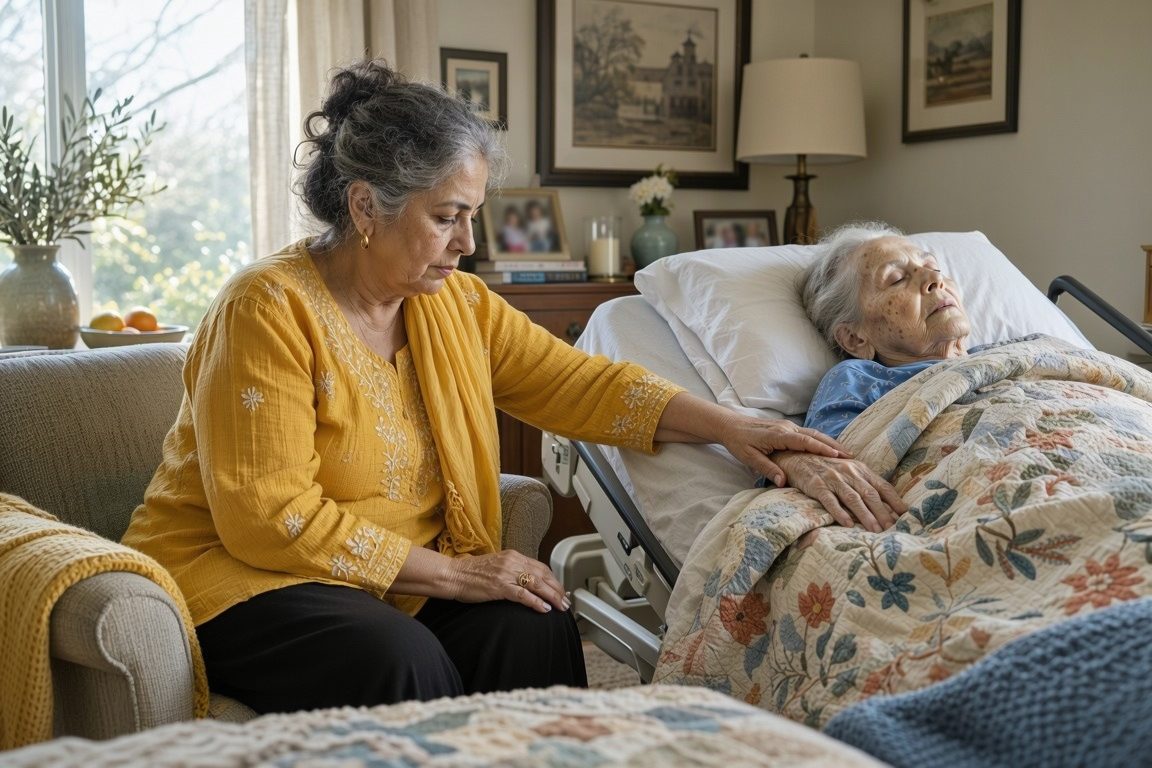
Step by step
What not to do
- Do NOT rush to call everyone in the first few minutes. Take at least 5–10 minutes to sit with your parent and the reality of what has just happened.
- Do NOT try to fix, suppress, or outrun your grief.Instead, let yourself cry, sit in silence, or laugh if a tender memory surfaces.
- Do NOT make major decisions in the first 24 hours, avoid signing funeral contracts, moving money, or cleaning out your parent's room.
- Do NOT carry guilt that you could have done more. You showed up and helped your parent transition with dignity.
- Do NOT panic at small twitches, soft sounds, or the release of fluid or air from your parent's body after death. These are normal physical changes, not signs of life or suffering.
Key points
- The first thing to do after a parent dies is nothing, pause, breathe, and be present for at least 5–10 minutes.
- Use this time to say goodbye, perform a small ritual, or simply sit in silence. There is no right or wrong way.
- Call only one trusted person first to help you with logistics, then call hospice or the doctor.
- Avoid making major decisions or cleaning out their room in the first 24 hours.
- If children or people with dementia are present, use simple, concrete language about death and offer comfort.
- Take care of your own physical needs, eat, drink, rest. Grief is exhausting, and you deserve kindness.
Videos
 What to Do When an Aging Parent Dies: How to Stay Present and Calm in Their Final MomentsThis video directly addresses the first moments after death, emphasizing the importance of pausing and being present. It offers a gentle, practical approach for caregivers.
 Parenting the Parent (Caring for Aging Parents)This video explores the role reversal that often happens in caregiving, which can help you understand your emotions after your parent's death.
 Martin Hernandez General Manager of Home Care at A Place for MomThis interview provides insights on having open conversations with aging parents, which can help you feel more prepared for end-of-life decisions.
 How To Spot Dementia In Elderly Parents: Essential Caregiver Tips And AdviceIf your parent had dementia, this video helps you understand their experience, which can inform how you handle their final moments and the grief that follows.
2 more videos
 How to Care for a Loved One with DementiaThis video offers general dementia care strategies that are useful for understanding your parent's needs in their final days and the immediate aftermath.
 Taking your parent with Alzheimer's to the hospitalIf your parent died in a hospital or facility, this video provides tips on making the environment familiar and managing transitions, which can help you feel more in control.
Background
Why Pausing Matters: The Sacred Space Between Worlds
When your parent takes their last breath, time can seem to slow down. The air in the room feels different, there is a sense that the space between this world and wherever they are going has thinned. This is not a moment to rush. It is a moment to simply be. Many caregivers feel an instinct to immediately call the nurse, hospice, or family members, but doing so can rob you of a once-in-a-lifetime opportunity to honor the transition. By stopping, taking a deep breath, and staying present, you create a space that honors your parent, yourself, and the mystery of life and death.
The Emotional Landscape: Pain, Beauty, and Permission to Feel
This time is filled with both pain and beauty, loss and love. There is no right or wrong way to go through this process. Whether your relationship with your parent was close, complicated, or even painful, being present in these first moments can bring a measure of peace later. Even if your parent was in a coma and unaware, actions like lotioning their hands, brushing their hair, or simply sitting with them can become a peace offering, a way to honor the relationship as it was. You deserve to be fully present in this significant moment, and you have permission to take things slow, one step at a time.
What Happens Physically and Medically After Death
After death, the body begins to cool and stiffen (rigor mortis) over the next few hours. Breathing and heartbeat have stopped. There may be small muscle twitches or sounds as air escapes the lungs, these are normal and not signs of life. If your parent was on hospice, the hospice nurse will need to be called to officially pronounce death and complete paperwork. If there was no hospice, you may need to call emergency services or a doctor. However, none of this needs to happen in the first few minutes. You have time to sit, breathe, and say goodbye.
Practical tools
5
The 'Pause and Breathe' Ritual
Place one hand on your chest and one on your belly. Inhale slowly for 4 counts, hold for 4 counts, exhale for 6 counts. Repeat 3 times.
A 'Goodbye' Script for Any Relationship
If you don't know what to say, try: 'I love you and I release you.' 'Thank you for everything.' 'I forgive you and I ask for your forgiveness.' 'You are safe now.' 'Go toward the light.' Say it from wherever you are.
The 'First Call' Script
When you call the hospice nurse, doctor, 911, or a funeral home, say: 'My parent has passed away at home. We are with them. The time of death was [time]. What do you need us to do next?'
A 'Sacred Object' Kit
Keep a small bag ready with
After death, use these to create a quiet ritual, lotion their hands, brush their hair, rest the photo on their chest.
The 'Document Folder'
Prepare a folder labeled 'After Death.' Include:
Different situations
If your parent had dementia or Alzheimer's (any stage)
Your parent may have been unable to communicate in their final days. The moment of death may feel ambiguous if they were already unresponsive. Focus on the ritual of presence, lotioning hands, brushing hair, speaking softly. If other family members with dementia are present, they may not understand the death and may ask repeatedly. Respond with simple, compassionate truth each time: 'They have died. I am here with you.' Avoid correcting them harshly; instead, redirect to a comforting memory or activity.
If you are an adult child (versus a spouse)
As an adult child, you may feel a mix of relief, grief, and responsibility. You might also be the one making all the calls and decisions. It is okay to ask a sibling or friend to take over logistics for the first hour. If you were the primary caregiver, you may feel a sudden emptiness, your role has ended. Allow yourself to grieve that loss. If you have children of your own, they may need extra reassurance and simple explanations about death.
If death occurs in a facility (hospital, nursing home, hospice house)
In a facility, staff will handle the pronouncement and body removal. You may have less time alone with your parent. Ask the staff: 'Can we have a few minutes alone with them before you take them?' Most facilities will honor this. If not, you can still say goodbye in the hallway or outside. Bring a small object (a photo, a letter) to leave with them if allowed.
If your parent was on Medicaid or had limited funds
You may need to choose a more affordable funeral home or consider cremation. Do not feel pressured to spend money you don't have. Many funeral homes offer payment plans or reduced rates for Medicaid recipients. Ask: 'What are the most affordable options for burial or cremation?' You can also contact your local Area Agency on Aging for guidance on low-cost funeral assistance.
If you had a difficult or estranged relationship with your parent
You may feel guilt, anger, or numbness. It is okay to feel whatever comes up. The 'sacred moment' is for you too, you can use it to release old wounds. Say aloud or silently: 'I release you. I release myself. I choose peace.' You do not need to pretend the relationship was perfect. Honoring your own truth is part of the process.
For the doctor
4
- If your parent was on medications for pain, anxiety, or other conditions, ask the hospice nurse or doctor: 'Should we stop all medications now that they have passed? Are there any special disposal instructions?'
- If your parent had a DNR (Do Not Resuscitate) order, confirm with the hospice nurse that it was followed. If there was no DNR and you called 911, be prepared that they may attempt resuscitation. Discuss with your clinician in advance how to handle this scenario.
- If you are unsure about the legal steps for body release or death certification, ask the funeral home or hospice: 'What paperwork do we need to sign? How do we obtain multiple copies of the death certificate?'
- If you feel overwhelmed by grief or have thoughts of harming yourself, call your doctor or a crisis hotline immediately. Grief can be intense, and you do not have to go through it alone.