Step by step
What not to do
- Do not play loud, chaotic, or unfamiliar music. Match tempo to mood: slower for calm, slightly faster for energy.
- Do not force participation. If uninterested, try later with a different song or approach. Pushing damages trust.
- Do not use music as passive background filler. Engage interactively, clap, sing, or move together.
- Do not correct wrong lyrics or mixed-up verses. Emotional connection matters, not accuracy. Preserve dignity.
- Do not begin when stressed or rushed. Take deep breaths first, your calm presence is essential.
Key points
- Rhythm is processed across the entire brain and often remains accessible long after language and memory decline.
- Use music from the person's 'music set' (ages 10–25) for the strongest emotional and memory connections.
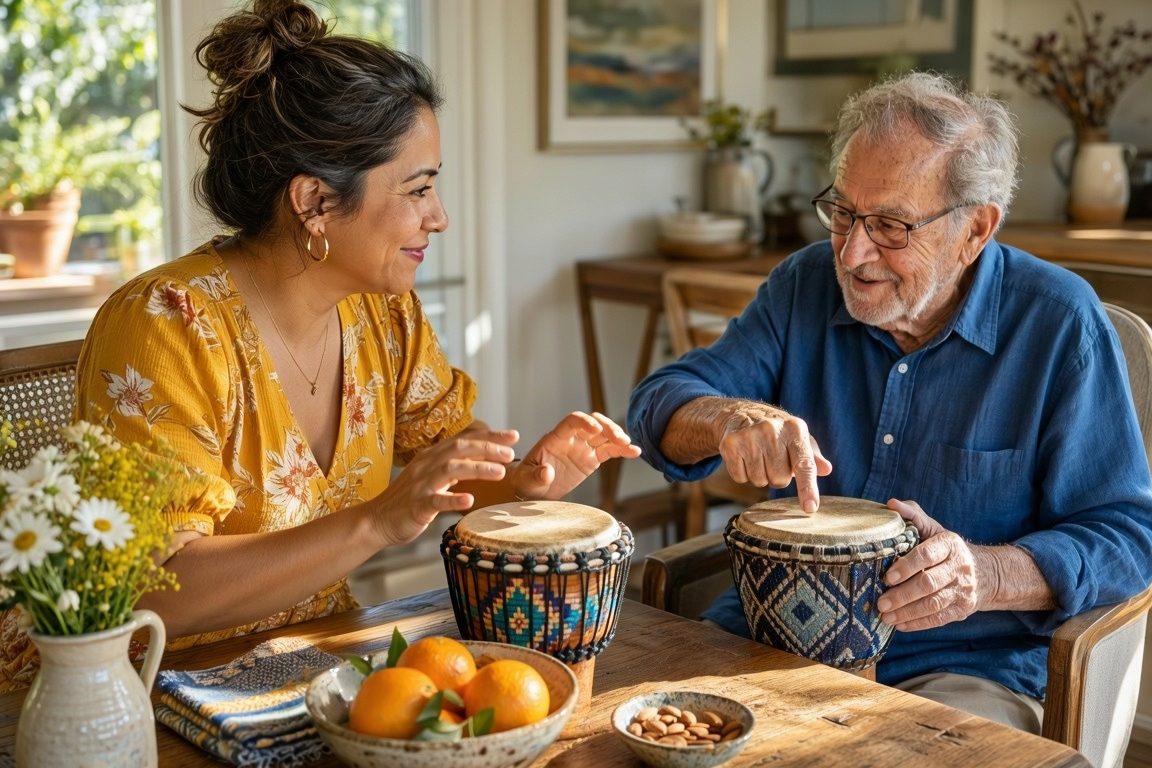
- Start with simple, steady rhythms before adding melody or lyrics. Let the person watch and then invite participation.
- Adapt the activity to the person's current ability: clapping, tapping, swaying, or just listening are all valid forms of engagement.
- Repeat successful activities, short-term memory loss means they will feel new each time, and repetition strengthens neural pathways.
- Watch the person's cues: if they are not engaged, try a different song, tempo, or time of day. Never force participation.
- Pair rhythm with touch (hand massage, gentle swaying) for added calming and connection, especially in later stages.
Videos
 How to keep a dementia patient busyThis video offers practical, low-prep activity ideas that can be adapted to include rhythm and music, helping you keep the person engaged throughout the day.
 How to Use Music When You're Not A Music Therapist | Teepa's ClipsTeepa Snow explains how to use rhythm and music effectively without formal training, emphasizing the importance of rhythm over content and the 'music set' concept.
 How to Use a Positive Physical Approach to Assess Abilities with Someone Living with DementiaThis video teaches the Positive Physical Approach, which is essential for setting up a successful, non-threatening music or rhythm activity.
 Top 5 Indoor Activities for Seniors with Dementia (For Free)These free, indoor activities can be easily combined with rhythm, for example, sorting objects to a beat or singing during a simple task.
2 more videos
 Dementia Friendly Activities at Home: Part 1 of 3This series provides step-by-step guidance for setting up home activities, including music-based ones, with clear adaptations for different abilities.
 What Activities Are Good For Dementia Patients? Module 1This module covers the foundational principles of activity planning, including how to use music and rhythm to create meaningful engagement.
Background
Why Rhythm Works When Words Don't
When dementia affects the brain, it gradually damages areas responsible for language, memory, and executive function. However, music and rhythm are processed across the entire brain, including regions that are among the last to be impacted by the disease. This means that a person who cannot hold a conversation or remember what happened five minutes ago may still be able to tap their foot to a beat, hum a familiar tune, or even sing every word of a song from their youth. As one expert notes, people with dementia tend to pick up on rhythm rather than content, much like a young child does. Rhythm is one of our earliest learning tools, and it can be used to build new connections or reawaken old ones.
For a care partner, this is a profound opportunity. Instead of trying to reason or explain, you can meet your loved one where they are, in a world of feeling, sensation, and emotion. Rhythm provides a structure that the brain can latch onto, offering comfort and predictability. It can also serve as a bridge for physical activity, social interaction, and emotional expression. When you use rhythm, you are not just entertaining; you are actively supporting the parts of the brain that still work well, helping the person feel capable, connected, and seen.
The Dynamic Nature of Engagement
It is important to remember that dementia is a dynamic condition. What worked yesterday, or even ten minutes ago, may not work today. The person's abilities, mood, and energy level can shift without warning. As a care partner, your role is to be a careful observer: watch what the person is showing you through their body language, facial expressions, and sounds. Are they leaning in or pulling away? Are their eyes bright or dull? Are they humming along or sitting still? These clues tell you whether the rhythm is connecting or overwhelming.
This is not a failure on your part or theirs. It is simply the nature of the disease. The goal is not to force engagement but to invite it. If a song or activity doesn't land, try a different tempo, a different instrument, or a different time of day. The rhythm itself can be the constant, the thing you return to again and again, even if the content changes. And because short-term memory is often impaired, you can repeat the same song or activity many times, and it will feel fresh each time. This repetition is actually helpful, as it allows the brain to practice and strengthen those neural pathways.
Practical tools
6
The 'Music Set' Playlist
Simple Rhythm Instruments
Gather easy-to-hold items:
Keep in a basket near the person's favorite chair for active participation.
The 'Rhythm Routine' Script
Try: 'Hi [name], I have music you'll love. Let's listen and tap along.' Demonstrate a slow tap on your leg. If no response, gently take their hand and tap it in rhythm, saying 'That's it. You've got it.'
Movement Adaptations
Prioritize safety and comfort.
The 'Calm Down' Playlist
Prepare slow, familiar songs like 'Amazing Grace' or classical lullabies. Use when agitated, play softly, pair with gentle hand massage or slow breathing to regulate the nervous system.
The 'What Worked Today' Log
Different situations
Early-stage dementia (Gem state: Ruby/Amber)
The person can still follow multi-step instructions and may enjoy learning a new simple rhythm pattern or instrument. You can ask them what songs they like and involve them in creating the playlist. They may also enjoy attending a music group or class. Encourage them to keep playing an instrument they already know, with adaptations if needed.
Middle-stage dementia (Gem state: Amber)
Focus on familiar songs and simple, repetitive rhythms. The person may not be able to learn new songs but can still participate in call-and-response or fill-in-the-blank singing. Use rhythm to structure daily activities like bathing or dressing, sing a song about washing hands or brushing hair. Keep sessions short and watch for signs of frustration.
Late-stage dementia (Gem state: Ruby)
The person may not be able to sing or clap, but they can still respond to rhythm through breathing changes, eye contact, or small movements. Use very slow, gentle rhythms. Place your hand on their shoulder or hand and tap softly. Sing lullabies or hymns. The goal is comfort and connection, not performance. Even a slight relaxation of the jaw or a softening of the eyes is a success.
Care facility setting
Coordinate with staff to find a quiet time and space. Bring your own playlist and instruments. If the person is in a shared room, use headphones or earbuds for the music, but still engage with rhythm by tapping their hand or shoulder. You can also join facility music programs, but be prepared to adapt if the group setting is overstimulating.
Adult child vs. spouse caregiver
As an adult child, you may not know the person's music from their youth as well as a spouse would. Ask other family members or look through old records, photos, or online searches. A spouse can lean into shared memories, 'Remember when we danced to this at our wedding?', which can deepen the emotional connection. Both roles benefit from patience and a willingness to try again.
Common questions
9
How can I meet a person's intimacy needs without sexualizing the interaction?
Focus on gentle, non-sexual touch like hand-holding or a soft shoulder rub while humming a familiar tune from their youth, which can create warmth and connection without pressure.
How can knowing my loved one's background help me engage them or calm a behavior?
Use their favorite songs or hobbies from ages 10–25, like playing big band music if they loved dancing in the 1940s, to spark recognition and ease agitation by tapping into long-term memories.
How can I engage a person with dementia who seems resistant or uninterested?
Start by simply sitting nearby and tapping a slow, steady rhythm on the table; let them watch, then invite them to join with a single finger tap, and if they don't respond, try a different tempo or song later.
How should I adjust my tone, rhythm and volume when speaking?
Speak in a low, calm, slightly slower rhythm, like a lullaby, matching their breathing pace, and keep your volume just above a whisper to avoid startling them.
How can I use a singing phone call to connect with a loved one?
Call and sing the first verse of a song they loved at age 20, pausing to let them hum along or finish a line, then say 'I love you' in the melody's rhythm, this meets intimacy needs without words.
How can I use a familiar song to engage conversation and creativity?
After humming their wedding song, pause and ask a simple question like 'What color was your dress?' or 'Who danced with you?' using the song's rhythm to guide your pace, inviting one-word answers.
How can I use hand-under-hand to convey rhythm and support during activities?
Place your hand gently under theirs, then move it in a slow, steady clap or tap against your knee; let them feel the beat through your hand, then gradually reduce your pressure so they can lead.
How can I use music or rhythm to help my loved one understand or speak?
Sing or tap the rhythm of a key word, like 'wa-ter' with two taps, while pointing to a glass, then repeat the rhythm slowly; their brain may lock onto the beat and retrieve the word.
How can I use rhythm and pacing to connect with and calm a person with dementia?
Match your steps to a slow, steady drumbeat in your head or hum a calming song from their youth while walking; this shared pace lowers heart rates and creates a sense of safety without any demands.
For the doctor
4
- If the person has a history of seizures, ask the doctor if certain types of music or rhythms could trigger them.
- If the person has hearing aids or cochlear implants, ask the audiologist about the best way to deliver music (e.g., volume, type of speaker).
- If the person becomes extremely agitated or aggressive during music sessions, discuss this with the doctor to rule out pain, discomfort, or other medical issues.
- If the person has a pacemaker or other implanted device, check with the cardiologist about using headphones or earbuds near the device.