Step by step
What not to do
- Do not force your loved one to watch something they resist. If they turn away or seem distressed, switch to a different category or turn it off. Pushing can cause agitation and make them associate the activity with stress.
- Do not ask ‘Do you remember this?’ repeatedly. This can feel like a test and increase anxiety.Instead, make observations yourself: ‘I love this song’ or ‘That’s a beautiful garden.’ This invites them to share without pressure.
- Do not leave the room immediately after starting a video. Your presence is part of the experience. If you walk away, they may feel abandoned or confused. Stay for at least the first few minutes to model engagement.
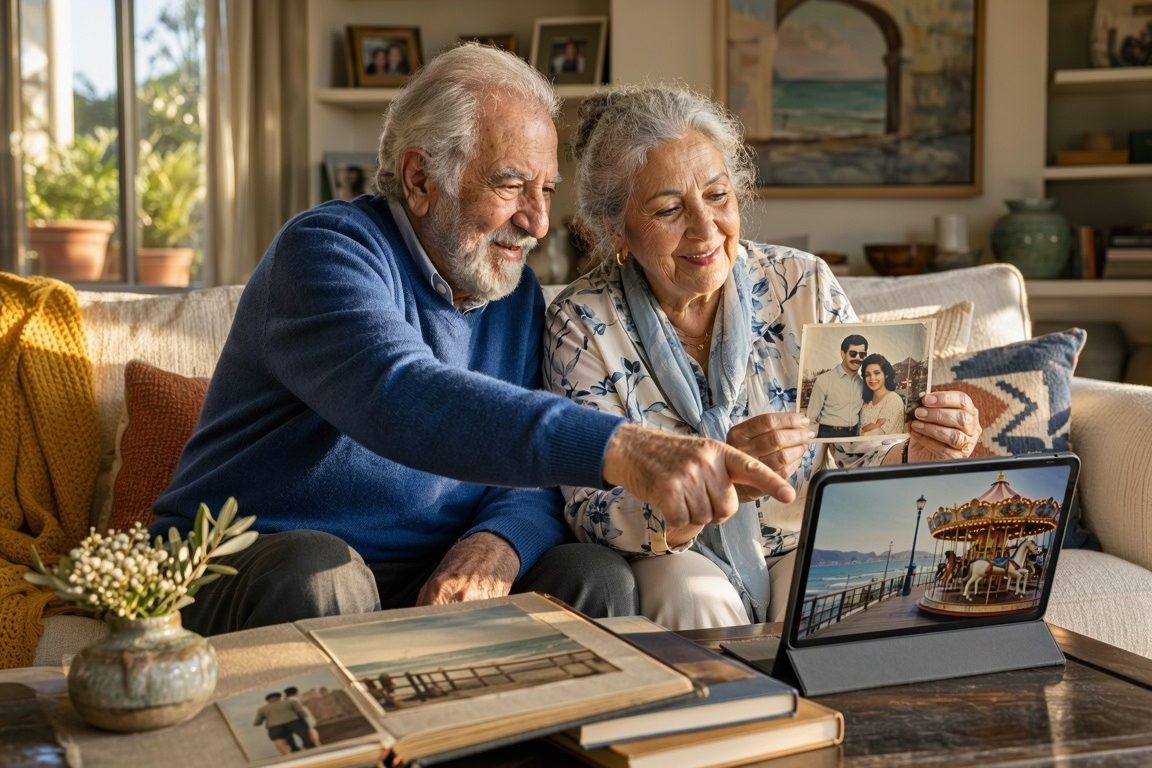
- Do not use Joygage as a babysitter for long periods. While it can provide respite, overuse can lead to overstimulation or isolation. Aim for short, meaningful sessions (10–20 minutes) and then do a simple activity together like folding laundry or looking at a photo album.
- Do not expect perfect recall. The goal is emotional connection, not factual accuracy. If your loved one says something incorrect about a memory, don’t correct them.Instead, say, ‘That’s interesting, tell me more about that.’ This validates their experience.
- Do not compare your loved one’s reaction to others. Every person with dementia is different. Some may love music, others may prefer nature scenes. Let their cues guide you, and don’t feel discouraged if a session doesn’t go well.
Key points
- Joygage is a subscription streaming service designed for dementia, using machine learning to adapt content to your loved one’s preferences and cognitive level.
- It taps into long-term memories from decades ago, which are often preserved, to spark joyful conversations and reduce agitation.
- Use it as a shared activity: sit together, make observations, and avoid testing questions like ‘Do you remember this?’
- Start with short sessions (10–15 minutes) and build a daily routine to reduce anxiety and provide structure.
- Combine Joygage with sensory objects (e.g., a seashell for beach videos) to deepen engagement.
- Use the service for your own respite, when your loved one is engaged, take a few minutes to recharge.
Videos
 An Interview with Craig Fowler CEO of Joygage Dementia Engagement SoftwareHear directly from the creator about how Joygage was developed to solve the problem of repetitive viewing and to give caregivers a break. This video explains the technology and the philosophy behind it.
 An Interactive and Media Collection for people living with dementia & their care partnersA demonstration of how Joygage works in real time, showing the interface and examples of content. Useful for seeing how to navigate the app and what to expect.
 dementia gift guide 2018While not specifically about Joygage, this video offers ideas for other engagement tools that complement Joygage, like memory books and sensory kits. Helps you build a fuller toolkit.
 Are Memory Aid Apps Useful For Dementia Caregivers?Discusses the broader category of memory aid apps, including Joygage-like services. Provides context on how technology can support both the person with dementia and the caregiver.
2 more videos
 When You Want to Walk Away From Dementia Caregiving (But Can’t)Addresses caregiver burnout and the emotional weight of caregiving. Offers strategies for self-care, which is essential when using tools like Joygage for respite.
 Simple dementia trick to get your loved one talking and feeling happy.A short, practical video on using reminiscence to spark conversation. The techniques shown here can be applied directly when using Joygage content.
Background
What is Joygage and Why Does It Work?
Joygage is a personalized media platform that uses machine learning to adapt content to your loved one’s preferences and cognitive abilities. Unlike generic streaming services, Joygage focuses on material that triggers long-term memories, like classic movies, music from their youth, or nature scenes, without requiring them to follow a complex plot. The service was created by a caregiver who saw his own mother with dementia repeatedly watch the same movie because it was familiar and comforting, but he wanted more variety so both he and his mom could enjoy something new together. This is the core insight: Joygage doesn’t just occupy time; it creates shared moments of joy and recognition.
How It Helps with Memory Recall
In dementia, long-term memories from decades ago are often preserved longer than recent ones. Joygage capitalizes on this by offering content from the person’s younger years, like 1950s TV shows, big band music, or old travelogues. When your loved one sees a familiar scene or hears a song from their past, it can trigger a cascade of personal memories: where they were, who they were with, how they felt. This isn’t just entertainment; it’s a form of reminiscence therapy that can improve mood, reduce anxiety, and strengthen your bond. The platform also adjusts difficulty: if a video is too complex or causes frustration, the system lowers the cognitive demand, making it more enjoyable.
Why Caregivers Need It Too
Caregivers often feel isolated and exhausted, watching the same content on repeat. Joygage gives you a break from that monotony by offering fresh material that you can enjoy together. It also provides a structured activity that doesn’t require you to plan or prepare, just turn it on and sit together. This can be a form of respite, even if just for 20 minutes, allowing you to recharge while still being present. As one expert notes, the service was designed to solve the problem of finding ways to keep a loved one active and engaged day after day, which is a common struggle for families.
Practical tools
6
Joygage Subscription
A monthly or annual subscription to the Joygage service. It includes access to a curated library of videos, music, and interactive content. The platform uses machine learning to adapt to your loved one’s preferences and cognitive level. Sign up at their website and install the app on a smart TV, tablet, or streaming device.
Conversation Starters Phrases
Use these exact phrases to spark memory recall without pressure: ‘That’s a beautiful song: I remember dancing to it with you.’ ‘Look at that old car, it reminds me of the one you drove in the 60s.’ ‘I love this scene, it feels like a place we visited.’ Keep your tone warm and curious, not interrogative.
Sensory Companion Kit
Prepare a small box of objects that match common Joygage themes:
When a video plays, hand them the object. This multi-sensory approach can deepen engagement and trigger more vivid memories.
Daily Routine Checklist
Create a simple checklist for yourself:
This structure reduces decision fatigue.
Family Sharing Feature
Joygage allows you to share a session link with family members. Use this to invite a distant relative to watch the same video at the same time. You can then have a video call afterward to discuss it. This helps your loved one feel connected to more people and gives the caregiver emotional support.
Mood Tracking Log
Keep a simple notebook or digital note to track which videos your loved one enjoys most. Note the date, video title, and their reaction (e.g., smiled, hummed, talked about childhood). Over time, this helps you refine choices and also gives you a record to share with their doctor if needed.
Different situations
Early-stage dementia (mild cognitive impairment)
Your loved one may be able to use Joygage independently. Show them how to navigate the app and let them choose videos. They might also enjoy discussing the content more deeply. Use it as a springboard for creating a memory book or writing down stories together.
Middle-stage dementia (moderate decline)
Your loved one may need more guidance. Sit with them and select videos that are short and simple (e.g., 5-minute nature clips). Use the sensory companion kit. If they become agitated, switch to calming music or a familiar song. Avoid content with fast cuts or loud noises.
Late-stage dementia (severe decline)
Focus on sensory and emotional content: soft music, gentle nature scenes, or lullabies. Your loved one may not verbally respond, but watch for non-verbal cues like relaxed breathing, a smile, or a hand squeeze. Keep sessions very short (5 minutes) and always be present. The goal is comfort, not recall.
Lewy body dementia (with visual hallucinations or movement issues)
Be cautious with visual content that might trigger hallucinations. Stick to simple, slow-moving scenes like a garden or a gentle river. Avoid flashing lights or rapid scene changes. If your loved one has trouble sitting still, use a tablet that they can hold or prop up on a pillow. Consult their doctor if you notice increased confusion after viewing.
Frontotemporal dementia (behavioral variant)
Your loved one may have changes in personality or social behavior. They might not respond to nostalgic content in the same way. Try videos that match their current interests, maybe old comedy sketches or music from their teenage years. Be flexible and follow their lead. If they become disinhibited or agitated, switch to a calming nature video.
For the doctor
4
- If your loved one becomes more agitated or confused after using Joygage, discuss this with their doctor to rule out other causes like pain or medication side effects.
- If you notice any new visual hallucinations or delusions after starting the service, especially in Lewy body dementia, consult their neurologist.
- If your loved one has a history of seizures, ask their doctor if flashing or rapidly changing video content could be a trigger.
- If you are using Joygage as a respite tool and feel overwhelmed, discuss caregiver burnout and available support services with a social worker or primary care provider.