Step by step
What not to do
- Do not skip the debriefing; the real learning occurs during emotional and practical processing afterward.
- Do not expect a single simulation to transform caregiving overnight; treat it as a starting point for gradual skill-building.
- Do not pressure a person with dementia to participate in a simulation; it is designed only for caregivers and can be distressing.
- Do not rigidly compare your simulation experience to your loved one’s reality; use it as a tool for empathy, not as a claim of full understanding.
- Do not use simulation to test for dementia; rely on medical professionals for diagnosis and assessment.
Key points
- Dementia simulation builds empathy by letting you briefly experience sensory and cognitive challenges similar to those of a person with dementia.
- The real learning happens during the debriefing conversation, where you connect your feelings to practical care strategies.
- Simulation is for caregivers only, never for a person already living with dementia.
- Use the experience to make one or two concrete changes in your daily caregiving approach, then build from there.
- Combine simulation with ongoing education, support groups, and professional guidance for lasting skill development.
- Revisit the simulation periodically as dementia progresses to adjust your strategies.
Videos
 Uniting for Better Dementia Care = Seni + Dementia LiveThis video explains what Dementia Live is and how it is used in training, giving you a clear picture of what a simulation experience involves and why it is effective.
 5 Changes Caregivers Face After a Dementia Diagnosis!This video outlines the common changes caregivers experience, which simulation can help you understand and prepare for emotionally and practically.
 Dementia Caregivers! 3 Signs You're Burning OutSimulation can be emotionally intense; this video helps you recognize burnout signs so you can take care of yourself before and after the experience.
 Can Dementia Guidance Help Reduce Caregiver Burnout? | TestThis video discusses how guidance and training (including simulation) can reduce burnout, reinforcing the value of the experience.
2 more videos
 How Do Online Support Forums for Dementia Help Address Caregiver Stress? | TestAfter simulation, connecting with online forums can help you process your experience and learn from others, reducing isolation.
 Convincing someone with dementia to go to higher level of careSimulation can help you understand why a person with dementia might resist care changes; this video offers strategies for navigating those conversations.
Background
What a Dementia Simulation Actually Does
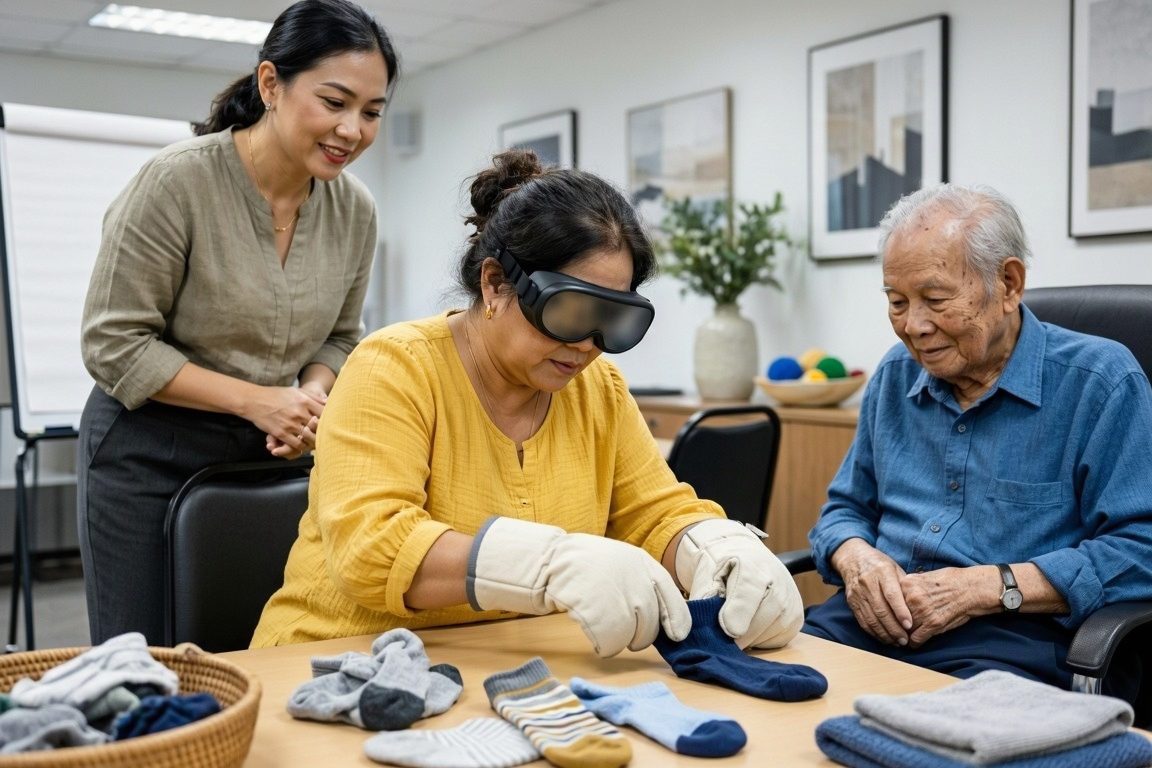
A dementia simulation is a structured, immersive experience that uses sensory equipment, like special goggles that limit peripheral vision, gloves that reduce fine motor control, and audio tracks that mimic auditory processing difficulties, to temporarily give you a taste of what it might feel like to live with dementia. The goal is not to scare you or make you feel helpless. Instead, as experts like Teepa Snow explain, the real value lies in helping caregivers understand the 'why' behind behaviors that can otherwise seem confusing or frustrating. When you personally experience how disorienting a busy room can be, or how hard it is to follow a simple instruction when your senses are distorted, you gain a visceral understanding that no lecture or book can provide.
Why Simulation Builds Empathy and Practical Skills
Research and caregiver training programs consistently show that simulation experiences can improve a caregiver's ability to interpret behaviors, manage their own stress, and feel more competent in daily care. For example, programs like Dementia Live report measurable improvements in caregivers' perceived ability to cope, their energy levels, and their understanding of the person with dementia's experience. The key is that simulation is followed by a guided debriefing conversation, where you can process your emotions and connect what you felt to specific care strategies. This combination of feeling and reflection helps you move from simply knowing facts to actually applying compassionate, effective techniques in real-life situations.
What the Experience Feels Like (and Why That Matters)
Participants often describe the simulation as disorienting, frustrating, or even overwhelming. You might feel clumsy, anxious, or misunderstood. That discomfort is intentional and valuable. It mirrors what a person with dementia experiences every day, and it gives you a direct emotional reference point for why they might become agitated, withdraw, or resist help. Importantly, experts caution that someone who is already experiencing dementia symptoms should not go through the simulation, because it could be genuinely distressing and confusing for them. The simulation is a tool for caregivers, not for the person living with the condition.
Practical tools
5
Dementia Live Simulation Kit (or similar)
A sensory kit (goggles, gloves, audio) used with a certified facilitator, including a discussion guide and take-home tip sheets for applying insights to daily care.
Post-Simulation Reflection Questions
Write answers to three questions immediately after:
Revisit weekly.
Caregiver Communication Script for Calming Moments
Short, slow, calm phrases (e.g., 'I am here to help you. Let’s sit down together.') avoiding questions like 'Do you remember?' Practice until natural.
Environmental Audit Checklist
Develop from simulation experience (e.g., reduce noise, glare, clutter, use plain tablecloths, improve lighting). Review and adjust monthly.
Online Caregiver Skill-Building Course
Free or low-cost courses such as Dementia Careblazers or Answers About Alzheimer’s that teach communication and behavior management. Use simulation as motivation to enroll in weekly lessons.
Different situations
For family caregivers of someone in early-stage dementia
Focus the simulation on understanding early cognitive changes like memory lapses and disorientation. Practice using validation techniques (e.g., 'That must be confusing for you') rather than correction. The goal is to build empathy for the person's frustration, not to 'fix' them.
For professional caregivers working in a facility
Use the simulation to improve team communication and consistency. After the experience, hold a staff meeting to discuss how to modify the environment (e.g., reducing noise at shift changes) and how to approach residents with a calm, predictable routine. Consider repeating the simulation annually as part of ongoing training.
For adult children caring for a parent with dementia
The simulation can help you process the role reversal and grief that often come with caregiving. After the experience, talk with a counselor or support group about your feelings. Use the insights to set realistic expectations for yourself and to ask for help from siblings or community resources.
For caregivers of someone with Lewy body dementia
Because Lewy body dementia often involves visual hallucinations and fluctuating cognition, the simulation's sensory distortions may feel especially relevant. After the simulation, learn specific strategies for responding to hallucinations (e.g., not arguing, offering reassurance) and for managing the unpredictability of symptoms.
For caregivers in a home setting with limited resources
If you cannot attend an in-person simulation, look for free online videos or virtual reality experiences that simulate dementia. Pair these with a guided discussion from a local Alzheimer's Association chapter or a dementia coach. Focus on one or two practical changes you can make without spending money, such as simplifying your loved one's daily routine.
For the doctor
4
- If you or a family member experiences significant emotional distress during or after the simulation, talk to a mental health professional or your doctor about support options.
- If the simulation raises concerns about your own cognitive health (e.g., you find it hard to distinguish the simulation from your normal experience), discuss this with your primary care provider.
- Before using any new care technique learned from the simulation, especially if it involves changes to medication or physical handling, consult with your loved one's doctor or a dementia care specialist.
- If you are considering using a simulation as part of a training program for staff in a facility, ensure the program is reviewed by a medical or ethical board to avoid causing distress to participants.