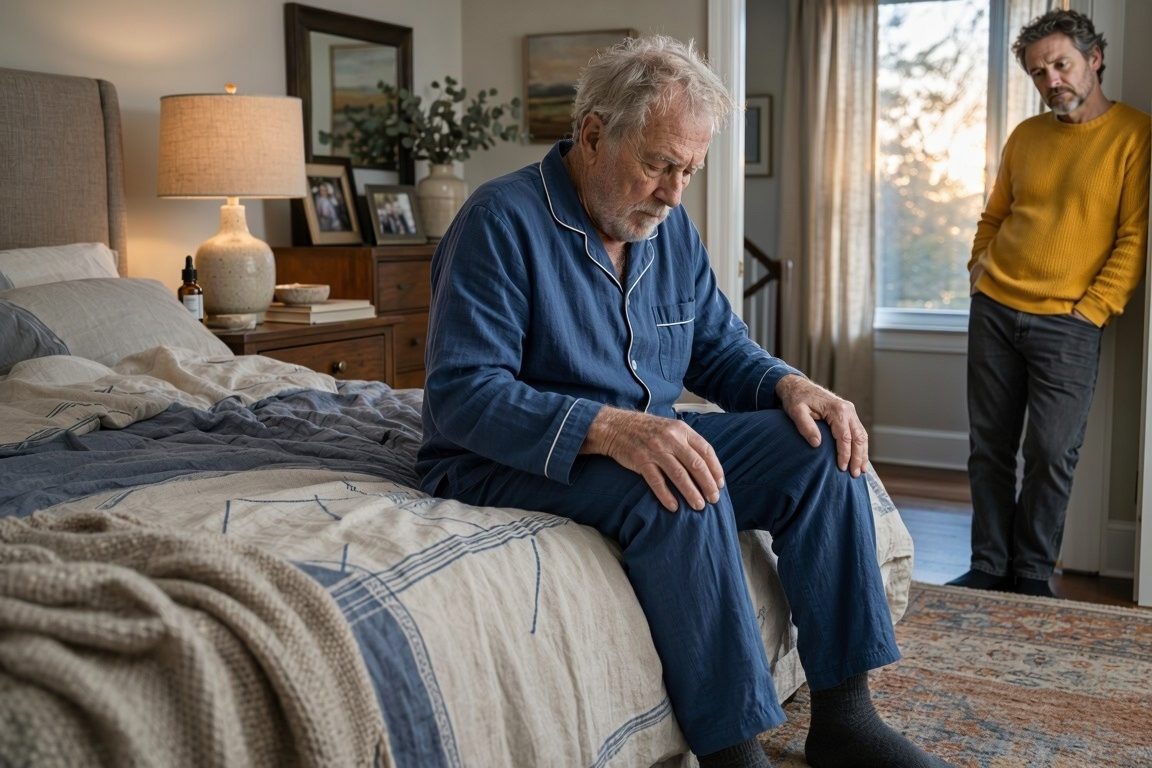
Step by step
What not to do
- Do not stop cannabis abruptly without medical supervision; sudden withdrawal can mimic dementia symptoms.
- Do not assume CBD is risk-free, it can cause side effects and interactions, especially in older adults.
- Do not dismiss dependence risk because cannabis is 'natural' or prescribed; 9–30% of regular users develop dependence.
- Do not use cannabis as first-line treatment, start with non-pharmacological approaches (routine, touch, music) first.
- Do not give cannabis without the primary doctor's or specialist's knowledge and approval.
- Do not hide cannabis use from any clinician; full disclosure is essential for safe prescribing and emergency response.
Key points
- Cannabis dependence is a real risk for 9-30% of users, including those using it for medical reasons in dementia.
- Withdrawal symptoms (insomnia, sweating, mood changes, belly pain) can occur with abrupt cessation and may worsen dementia symptoms.
- Do not stop cannabis suddenly; work with a doctor on a gradual tapering plan to minimize withdrawal.
- CBD is not risk-free, it can cause side effects and interact with medications, especially in older adults.
- Non-pharmacological approaches (routine, music, touch) should be tried first before turning to cannabis.
- Always involve a clinician when using cannabis for a person with dementia, and be transparent about the product, dose, and frequency.
Videos
 Cannabis & Alzheimer's: CBD/THC for Dementia? [Hemp, Marijuana, etc.]This video explains the differences between CBD and THC, their potential benefits and risks for dementia, and the importance of understanding product quality and dosing.
 Being Patient: Explainer | Medical Cannabis and DementiaThis video discusses the current research on cannabis for dementia, including the potential for cannabis to replace antipsychotics, and the need for more studies.
 Ask Teepa Anything! Live on YouTubeTeepa Snow answers caregiver questions about cannabis use in dementia, emphasizing symptom management and the need for baseline assessment before starting.
 Courageous Conversations: Integrating Cannabinoids and Dementia CareThis video provides a deeper dive into how cannabinoids can be integrated into dementia care, including practical tips for dosing and monitoring.
2 more videos
 Live on TikTok | Brains in Jeopardy at Yonder BarThis live discussion touches on the risks of substance use in dementia, including cannabis, and the importance of caregiver education.
 Why Does Caring for Elderly Parents Make Me Mean?This video addresses caregiver stress and burnout, which is relevant when dealing with the added complexity of cannabis dependence and withdrawal.
Background
What Is Cannabis Dependence?
Cannabis dependence, also called cannabis use disorder, occurs when a person's use of cannabis starts to interfere with their daily life, at work, school, or home. It is not the same as simply using cannabis for medical reasons. According to the American Psychiatric Association, an estimated 9 to 30% of cannabis users become dependent, and about one in six adolescent users develop cannabis use disorder. Dependence can develop even when cannabis is used for symptom relief, such as for anxiety, pain, or sleep issues in dementia. The key sign is that the person feels they cannot function without it, or they continue using despite negative consequences. This is not a moral failing; it is a physiological and psychological adaptation of the brain to the substance.
What Is Withdrawal and Why Does It Happen?
Withdrawal symptoms occur when a person who has been using cannabis regularly suddenly stops or sharply reduces their dose. The Mayo Clinic notes that withdrawal can include insomnia, sweating, belly pain, anger, or mood changes. These symptoms happen because the brain has adapted to the presence of cannabinoids (like THC) and needs time to rebalance its own endocannabinoid system. Withdrawal is not dangerous in the same way as alcohol or benzodiazepine withdrawal, but it can be very uncomfortable and may lead the person to resume use just to feel better. For someone with dementia, withdrawal can be especially confusing and distressing, as they may not understand why they feel so bad. It is important to recognize that withdrawal is a sign of physical dependence, not addiction, though it can be part of a larger pattern of problematic use.
Risks Specific to Dementia and Older Adults
For older adults and people with dementia, the risks of cannabis dependence and withdrawal are amplified. The Mayo Clinic advises that people with active heart disease, active mental health disorders, or a history of substance misuse should avoid cannabis. Cannabis can worsen depression, raise blood pressure, and increase the risk of psychosis in those with schizophrenia. For dementia patients, the side effects of cannabis, such as dizziness, drowsiness, impaired mental function, and paranoid thinking, can overlap with and aggravate dementia symptoms, as noted by Alzheimer's Proof. There is also a risk of cannabinoid hyperemesis syndrome, which causes severe, frequent vomiting. A case report from PubMed describes a 94-year-old woman who developed acute encephalopathy (altered mental status, hallucinations) after her family gave her CBD products. This underscores that even CBD, often considered safe, can cause serious problems in vulnerable older adults. Withdrawal symptoms like mood changes and insomnia can also worsen behavioral symptoms in dementia, making care more challenging.
Practical tools
3
Daily use-and-effect log
A simple one-week record: time, product, dose, route, observed effects (calm, sleepy, agitated, confused, fall). Bring to appointments to help clinician assess pattern.
Full medication and supplement list
Up-to-date list of every prescription, OTC drug, vitamin, and supplement with doses and prescribers. Share with all clinicians to review cannabis interactions.
Withdrawal and emergency symptom tracker
Two-column checklist: one side lists withdrawal signs to report (irritability, sleep changes, stomach pain, appetite loss), other lists red-flag symptoms needing 911 (hallucinations, severe vomiting, chest pain, sudden major confusion). Post on fridge or in medicine cabinet.
Different situations
For a person with Lewy body dementia (LBD)
People with LBD are extremely sensitive to medications, including cannabis. The risk of psychosis, confusion, and falls is higher. Withdrawal symptoms like mood changes and insomnia can mimic LBD symptoms, making it hard to tell what is causing what. Work closely with a neurologist or geriatric psychiatrist. Start with a microdose (e.g., 1-2.5mg THC) and increase very slowly. Avoid high-THC products entirely. Non-pharmacological approaches are especially important here.
For a spouse caregiver vs. an adult child caregiver
A spouse may feel more comfortable managing cannabis use at home, but may also be less likely to see dependence as a problem because they want to relieve suffering. An adult child may be more proactive about seeking medical help but may face resistance from the parent. Both should attend a doctor's appointment together to discuss risks. The spouse may need extra support to accept that cannabis can cause harm, while the adult child may need to practice patience and empathy when raising concerns.
For a person in a facility (nursing home or assisted living)
Facilities have strict policies about cannabis, even in states where it is legal. You cannot simply bring in your own product. Work with the facility's medical director and nursing staff. They may require a doctor's order and a pharmacy-dispensed product. The facility will also monitor for side effects and withdrawal. Be prepared for pushback, some facilities refuse to administer cannabis. If that happens, ask for a referral to a facility that is more open to cannabinoid therapy. Also, note that the facility may have a policy against abrupt discontinuation, which is good, but you still need a plan.
For a person on Medicaid or Medicare
Medicare does not cover cannabis or CBD products, and Medicaid coverage varies by state. This means you will likely pay out-of-pocket. The cost can be a barrier, leading to inconsistent use or use of lower-quality products. Talk to the doctor about whether a prescription drug like dronabinol (a synthetic THC) or nabilone might be covered and appropriate. These are FDA-approved for nausea and appetite stimulation, and may have fewer risks than street-bought cannabis. Also, some states have medical cannabis programs that offer discounts for low-income patients.
For a person with a history of substance misuse (alcohol, opioids, etc.)
The Mayo Clinic explicitly advises that people with a history of substance misuse should avoid cannabis. The risk of dependence and relapse is very high. If your loved one has such a history, do not introduce cannabis without a thorough discussion with an addiction specialist. If they are already using it, a supervised tapering plan is essential. Consider alternative treatments for symptoms, such as SSRI antidepressants for anxiety or melatonin for sleep. The AAFP notes that combining cannabis with alcohol or benzodiazepines is especially dangerous.
For the doctor
7
- Ask the doctor: 'My loved one has been using [specific product and dose] for [symptom]. Could they be dependent? What are the signs of withdrawal I should watch for?'
- Ask the doctor: 'Is it safe to stop cannabis suddenly, or should we taper? Can you help us create a tapering schedule?'
- Ask the doctor: 'Could cannabis interact with my loved one's current medications, especially blood thinners, antidepressants, or heart medications?'
- Ask the doctor: 'Given my loved one's age and dementia diagnosis, is cannabis the safest option for managing [symptom], or are there other treatments we should try first?'
- Ask the doctor: 'If we decide to continue cannabis, what is the safest product and dose for someone with dementia? Should we avoid THC entirely?'
- Ask the doctor: 'My loved one has a history of [heart disease, mental health disorder, substance misuse]. Is cannabis safe for them?'
- Ask the doctor: 'If withdrawal symptoms become severe, what should I do? Should I go to the emergency room, and what should I tell them?'