Step by step
What not to do
- Don't force the relaxation response on your loved one when they're agitated. If they're upset, trying to make them breathe deeply can backfire.Instead, model calmness yourself, speak softly, breathe slowly, and let them see you relax first.
- Don't expect immediate results. The relaxation response is a skill that builds over time. If your first attempt feels awkward or doesn't calm you, that's okay. Keep trying, even for just 60 seconds a day.
- Don't use relaxation as a substitute for needed breaks or respite. It's a tool, not a cure-all. If you're exhausted, a five-minute breathing exercise won't replace a good night's sleep or a few hours of respite care. Use it alongside other supports.
- Don't criticize yourself for feeling stressed. Guilt and frustration are normal responses to extreme caregiving demands. Instead of judging yourself, use the relaxation response as a way to be kind to yourself in the moment.
Key points
- The relaxation response is a proven way to lower stress hormones and improve your health and your loved one's mood.
- Even one minute of deep breathing can shift your body out of fight-or-flight mode.
- Model calmness yourself, your loved one will often mirror your relaxed state.
- Use micro-breaks throughout the day to prevent stress from building up.
- Pair relaxation with other supports like respite care and support groups for best results.
- Be patient with yourself. This is a skill that gets easier with practice.
Videos
 Caregiver Stress and Depression, Dr. Helen Lavretsky | UCLAMDChatDr. Lavretsky explains the science behind mind-body techniques like meditation and how they can reduce inflammation and improve cognition for caregivers.
 What Is The Power Of Micro-breaks In Dementia Self-care?This video shows how short, intentional breaks can restore your energy and focus, which is exactly what the relaxation response is about.
 What Are The Three Golden Rules Of Dementia?These rules help you approach care with less stress, which makes it easier to practice relaxation techniques.
Background
What is the Relaxation Response and Why Does It Matter?
The relaxation response is the opposite of the 'fight-or-flight' stress reaction. When you're a caregiver, your body is often stuck in high-alert mode, your heart races, your muscles tense, and your mind churns with worries like 'What if she wanders?' or 'I'm too tired for this.' Over time, this chronic stress can harm your health, leading to exhaustion, sleeplessness, and even physical illness. Research shows that practices like meditation and deep breathing can actually change your body on a cellular level, reducing inflammation and improving your immune response. For the person with Alzheimer's, stress can worsen symptoms like sundowning or agitation, so calming yourself can have a ripple effect on them too.
How Stress Affects Both of You
Caregiver stress is real and common. You might feel irritable, have trouble concentrating, or notice your own health slipping. Studies have linked high caregiver stress to depression, anxiety, and even a decline in your own memory and thinking. For the person with Alzheimer's, stress can trigger confusion, aggression, or withdrawal. But here's the hopeful part: mind-body techniques like yoga, guided imagery, and meditation have been shown to help both of you. They break the cycle of stress by giving your brain a reset. Even a few minutes of focused breathing can lower your heart rate and help you feel more in control.
Practical tools
5
The 'Breathe Together' Phrase
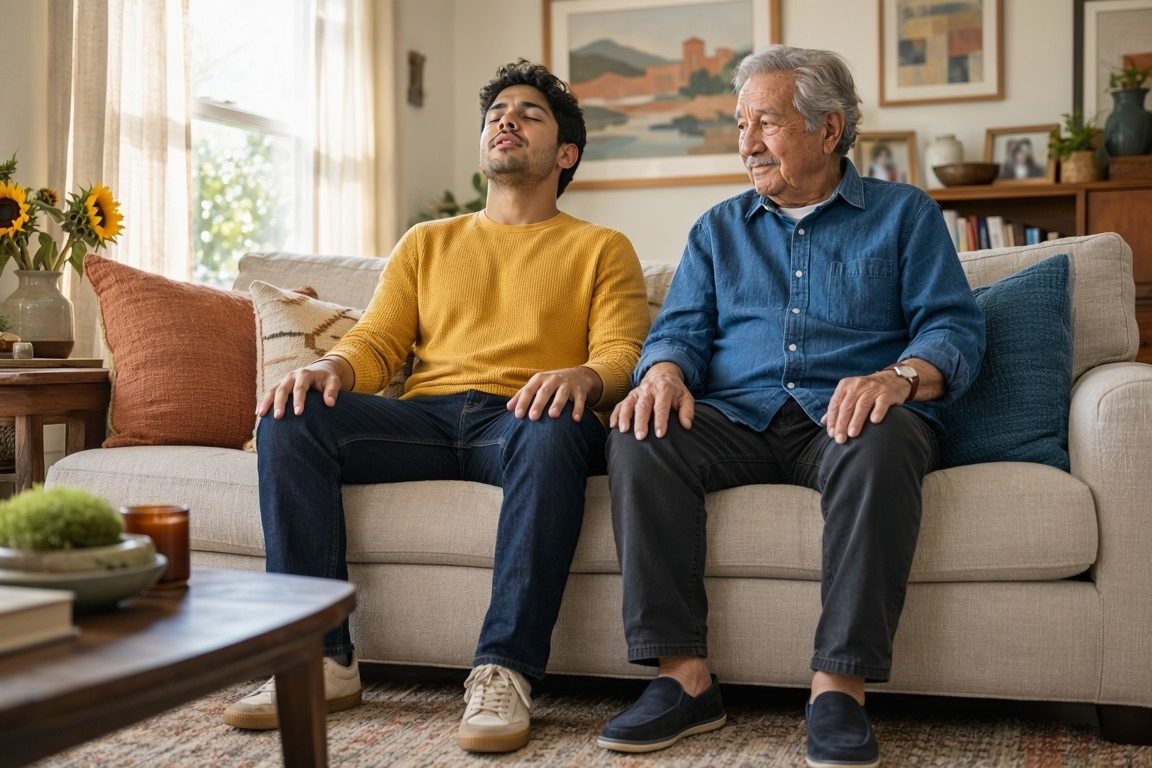
When you notice tension rising, say to your loved one: 'Let's take a deep breath together. In through your nose, out through your mouth.' Model it slowly. This works even in later stages because they may mirror your breathing.
Calm Down Kit
Assemble a small basket with items that soothe:
When stress spikes, bring out the kit and focus on one item for a minute. This gives both of you a sensory anchor.
Two-Minute Timer
Use a kitchen timer or phone app set for two minutes. When you feel overwhelmed, set the timer and do nothing but breathe or gaze out the window. When it rings, you're allowed to return to tasks. This makes relaxation feel manageable, not like a big time commitment.
Guided Relaxation Audio
Find a free guided meditation or body scan audio (many are on YouTube or apps like Insight Timer). Play it for five minutes during a quiet time. For your loved one, choose one with nature sounds or soft music. Listen together without talking.
The 'S.T.O.P.' Acronym
When stress hits:
This interrupts the stress spiral.
Different situations
Early-stage Alzheimer's (patient can still follow instructions)
You can teach the relaxation response together as a shared activity. Say, 'I read that deep breathing can help us both feel better. Want to try it with me for two minutes?' Use a simple app or a nature video. They may enjoy leading the breathing sometimes.
Middle-stage Alzheimer's (patient has more confusion or agitation)
Focus on your own relaxation first. Your calm presence is contagious. Use short, simple phrases like 'Time to relax now' and pair it with a soothing ritual, like a warm drink or soft music. Avoid asking them to do complex steps.
Late-stage Alzheimer's (patient is mostly bedbound or non-verbal)
The relaxation response is for you, but it still benefits them. Sit beside them, hold their hand, and breathe slowly. They may feel your calm energy. Play gentle music or a guided relaxation softly in the room. Your lowered stress can reduce their agitation.
Spouse caregiver vs. adult child caregiver
Spouse caregivers often feel guilty taking time for themselves. Remind yourself: 'Taking five minutes to breathe helps me be a better partner.' Adult child caregivers may have other family demands. Use micro-breaks during natural pauses, like after getting the kids to school.
In a facility setting
You can still practice the relaxation response during visits. Before entering your loved one's room, take three deep breaths in the hallway. During the visit, if they become agitated, step back, breathe, and speak slowly. The staff may also have a quiet room you can use.
For the doctor
3
- If you have a heart condition or respiratory issue, ask your doctor if deep breathing exercises are safe for you.
- If your loved one has a history of panic attacks or severe anxiety, discuss with their clinician whether relaxation techniques might trigger discomfort.
- If you're experiencing severe depression, insomnia, or physical symptoms from stress, talk to your doctor. The relaxation response is a support, not a replacement for medical care.