Step by step
What not to do
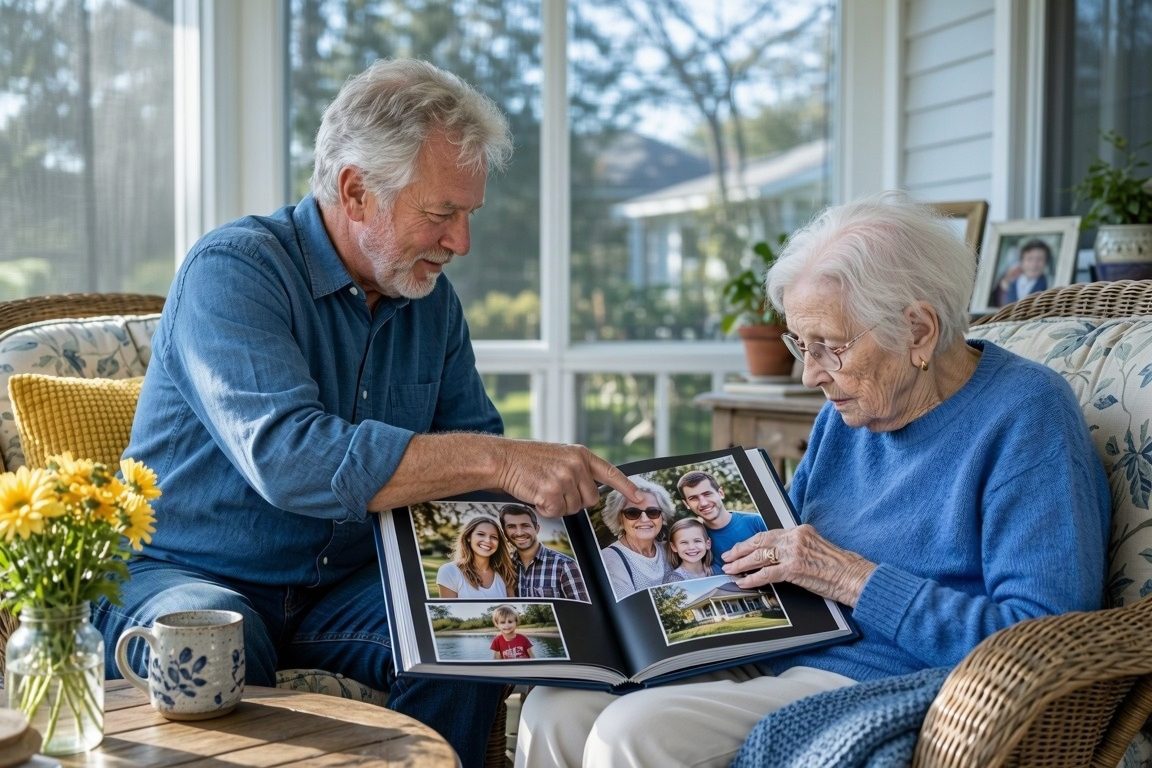
- Do not ask 'Who is this?' when showing a photo. This puts pressure on them to recognize the person.Instead, say 'Here is your brother John, he always made you laugh.'
- Do not ask 'What did you have for lunch today?' on the phone. They likely do not remember, and it can make them feel inadequate.Instead, talk about something you are eating or a shared memory.
- Do not say 'Don't you remember? I already told you.' This triggers shame and defensiveness.Instead, simply repeat the information calmly, as if it is new.
- Do not give hints or clues to help them 'find' the answer. This still feels like a test.Instead, provide the answer yourself in a natural way: 'That's your granddaughter, Emma, she loves painting.'
- Do not use baby talk or a condescending tone when you avoid testing. Adults with dementia deserve respect. Speak to them as you always have, just with more patience and fewer memory demands.
Key points
- Memory quizzes create shame and resentment, not connection or improvement.
- Emotional memory lasts longer than event memory, your tone matters more than facts.
- Always label photos and events yourself; never ask 'Who is this?' or 'Do you remember?'
- Use present-moment redirects and emotional reassurance to soothe confusion.
- Let doctors handle formal assessments; your role is to be a loving companion.
- Choose kindness over truth unless safety is at risk.
Videos
 Avoid doing this with someone with dementia.This video directly addresses why testing memory is harmful and offers alternative approaches.
 What To Avoid When Caring For Dementia PatientsCovers common pitfalls including quizzing, with practical tips to avoid them.
 What Not To Do When Caring For Someone With Dementia?Lists specific 'don'ts' like testing memory and correcting, with clear explanations.
 The BIGGEST dementia advice for YOUEmphasizes the cardinal rule of not testing memory and choosing kindness over truth.


Background
Why testing feels natural but hurts deeply
As a caregiver, you may ask memory questions out of genuine concern or curiosity, wondering if your loved one still recognizes a photo, remembers a recent meal, or knows what day it is. This impulse is understandable, but for a person with dementia, these questions carry a different undertone. They can feel like a pop quiz they are destined to fail. The person may sense your hidden hope that they will 'get it right,' and when they cannot, they experience shame, embarrassment, or even defensiveness. Over time, this can make them dread talking to you, because every conversation feels like an exam.
The emotional memory trap
Even if your loved one cannot recall the specific event or fact you asked about, their emotional memory remains intact. They may not remember that you asked 'Who is this?' about a photo, but they will remember the feeling of being put on the spot and failing. That lingering sense of shame or confusion can sour your interactions for hours, even if they cannot explain why. This is why experts emphasize that emotional memory lasts longer than event memory, your tone and intent matter far more than the factual answer.
Testing proves nothing and solves nothing
Repeatedly quizzing a person with dementia does not help them remember better, nor does it give you useful information about their condition. It simply highlights what they have lost, which can be devastating for both of you. As one expert puts it, 'If they knew who that was in the picture, they would tell you.' The only thing testing accomplishes is creating pressure, resentment, and a wedge in your relationship. Let the doctor handle formal assessments, your role is to connect, not to diagnose.
Practical tools
6
The 'Label and Move On' Phrase
When showing a photo or mentioning an event, immediately supply the key information. For example: 'This is your cousin Sarah at her wedding, she looked so happy.' Then move on to a feeling or observation: 'I love her dress, don't you?' This removes the test and invites a shared moment.
The 'Present Moment Redirect'
If your loved one seems stuck on a memory they cannot retrieve, redirect to something happening right now. Say 'I hear a bird outside, listen!' or 'This tea is warm, isn't it?' This grounds them in the present and reduces the pressure of the past.
Whiteboard or Digital Reminder Board
Place a small whiteboard in the kitchen or living room with the day's schedule written in large letters: 'Lunch at 12:30, walk at 3:00.' This answers repeated questions before they are asked, without you having to repeat yourself. For tech-savvy families, a smart speaker can announce reminders aloud.
The 'Emotional Reassurance' Script
When you see confusion or frustration, use these exact phrases: 'You're okay, I've got this.' 'It's all taken care of.' 'No worries, we're fine.' These statements soothe the emotional brain and build trust, even if the factual memory is gone.
Photo Album with Written Labels
Create a photo album where each picture has a label underneath: 'Grandma and her garden, 2019.' When you look at it together, read the label aloud. This turns a potential quiz into a shared storytelling moment.
The 'One-Step Instruction' Rule
Instead of giving multi-step instructions like 'Go to the bathroom, wash your hands, and then come to the table,' give one step at a time: 'Let's go to the bathroom now.' Then, after that step: 'Let's wash our hands.' This reduces cognitive load and avoids the feeling of being tested.
Different situations
Lewy body dementia or Parkinson's dementia
These conditions often involve fluctuating cognition and visual hallucinations. Testing memory can be especially distressing because the person may have good days and bad days. Avoid any questions that rely on recent memory, and instead focus on the present moment. Use visual cues like clocks and calendars even more consistently, as executive function is often impaired.
Late-stage dementia (severe memory loss)
In late stages, the person may not recognize close family members. Do not quiz them on names or relationships. Instead, use your own name when you greet them: 'Hi Mom, it's your daughter Sarah.' Focus on sensory comfort, touch, music, familiar scents, rather than verbal recall. Your goal is to create a sense of safety, not to test recognition.
Spouse vs. adult child caregiver
Spouses may feel a stronger urge to test memory because they are used to sharing a life and want to 'bring them back.' Adult children may feel pressure to 'prove' the diagnosis to siblings. Both should remember that testing damages the relationship. Spouses can lean into shared routines and sensory memories (e.g., 'Remember our favorite song?'). Adult children can focus on creating positive visits without memory demands.
Living in a facility vs. at home
In a facility, staff may inadvertently quiz residents during activities. Advocate for your loved one by asking staff to avoid memory questions and instead use open-ended prompts. At home, you have more control over the environment, use visual schedules and consistent routines to reduce the need for verbal reminders.
Early-stage dementia with insight
In early stages, the person may be aware of their memory loss and feel embarrassed. Avoid any questions that highlight their deficits. Instead, offer gentle support: 'I know remembering names is hard: I'll help you out.' Use humor and teamwork, not testing.
For the doctor
3
- If you are concerned that your loved one's memory loss is accelerating or causing safety risks (e.g., wandering, leaving the stove on), discuss a formal cognitive evaluation with their doctor. Do not rely on your own quizzes at home.
- If your loved one becomes severely distressed or agitated after memory questions, talk to their clinician about possible anxiety or depression treatments. Emotional reactions to testing can be a sign of unmet needs.
- If you are unsure about the stage of dementia or the best communication strategies, ask the doctor or a dementia care specialist for a referral to occupational therapy or a support group.