What not to do
- Do not assume family will step in – most solo caregivers have children nearby (59%) yet still get no regular help.
- Do not skip your own scheduled medical appointments or refill your own prescriptions late.
- Do not ignore new injuries or illnesses in yourself – delayed care worsens outcomes and increases your spouse's risk of losing their caregiver.
- Do not try to handle dementia-related aggression alone without a safety plan – call 911 or a crisis team if you fear for your own physical safety.
- Do not isolate further – isolation is already reported by 1 in 4 solo caregivers; daily phone contact reduces that effect.
Key points
- 55% of older married decedents are cared for by a solo spouse, you are not alone in this.
- Solo caregivers provide about 43 hours of care per week, often without paid help.
- Caregivers who neglect their own health are at risk of dying before their loved one.
- Accepting help is not a sign of failure; it is essential for both of you.
- After your spouse dies, depression rates are high for both solo and supported caregivers, plan for grief support now.
- Use free resources: Area Agency on Aging, Alzheimer's Association helpline, hospice, and online support groups.
Videos
 The Long Term Care Crisis in AmericaExplains why so many families end up as solo caregivers due to the cost of professional care and lack of insurance coverage.
 Self-care for Caregivers | Linda Ercoli | TEDxUCLAOffers practical self-care strategies specifically for overwhelmed caregivers, including the importance of respite.
 Are You a Caregiver?Helps you identify yourself as a caregiver and understand the continuum of care, from hands-on to orchestrating care.
 I Wish Someone Told Me: The 10 Things All Caregivers and Aging Adults Should Know About CaregivingCovers unexpected challenges like financial strain, loss of identity, and the importance of planning ahead.
2 more videos


Background
What Solo Spousal Caregiving Looks Like at the End of Life
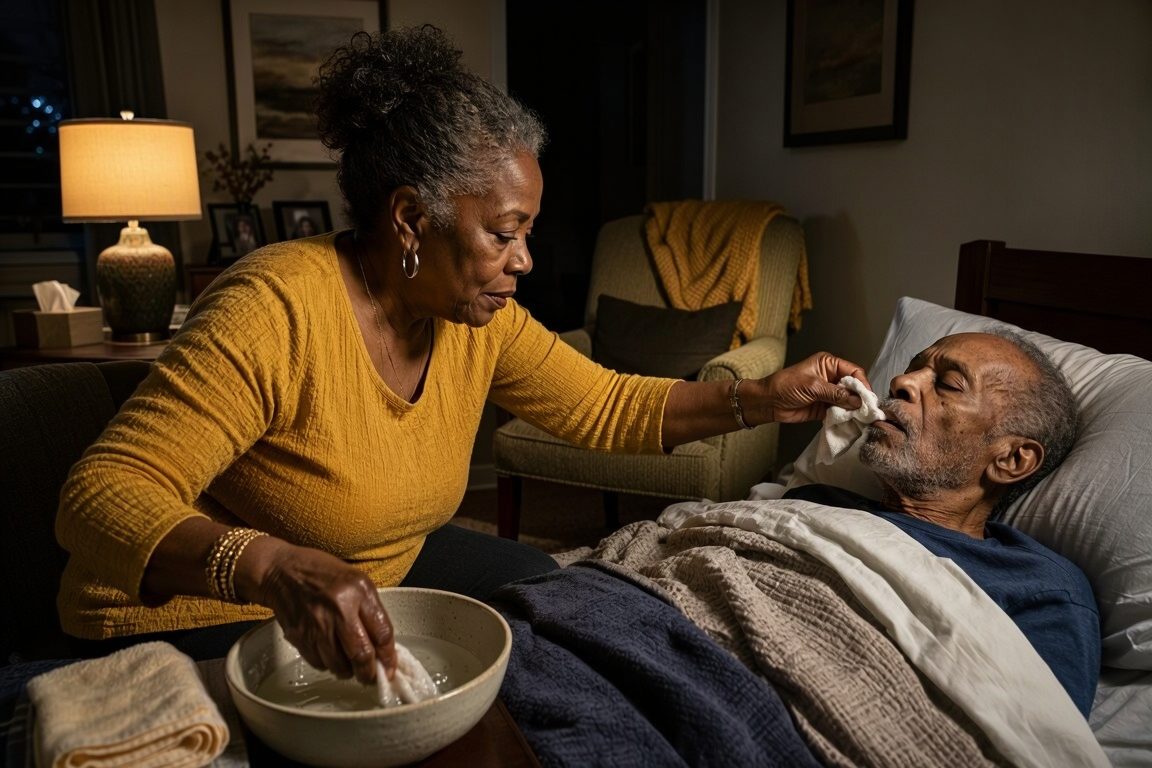
Solo spousal caregiving means you are the primary, and often only, person providing hands-on help with daily activities like bathing, dressing, toileting, feeding, and managing medications for your dying spouse. According to a study of older married decedents, 55% of spouses were solo caregivers, meaning they had no paid helpers, no family members regularly assisting, and no formal home care. Another 36% received some support, usually from adult children (two-thirds of those who got help) or paid aides (40%). Solo caregivers typically provide about 43 hours of care per week, while supported spouses provide about 90 hours total (including 20 more hours from the spouse themselves). This means even when you have help, you are still doing the lion's share.
Why This Happens and Who You Are
Solo caregiving often arises because of financial constraints, geographic distance from family, or a deep sense of duty. Many solo caregivers are women (67% of all family caregivers are female), and they average 49 years old, though spousal caregivers tend to be older. Solo caregivers are more likely to be non-Hispanic white (81% vs. 71% for supported caregivers) and less likely to be Black (10.1% vs. 16.2%). While 59% of solo caregivers have adult children living nearby, those children may not be able to help due to their own jobs, families, or health issues. The care recipient often has dementia (42% of solo care recipients vs. 29% of supported ones), which adds layers of behavioral and cognitive challenges. Financially, 7 out of 10 older adults will need long-term care, and 63% of family caregivers dip into their own retirement savings to pay for it. Medicare and traditional insurance rarely cover long-term home care, so many families rely on unpaid family labor.
The Hidden Toll on Your Own Health and Future
Caregiving is rewarding but also physically, emotionally, and financially draining. Solo caregivers report high emotional stress (two in three caregivers), physical strain (nearly half), and isolation (one in four). Before bereavement, solo caregivers are actually less likely to be depressed than supported caregivers, possibly because they are too busy or feel a sense of purpose. However, after their spouse dies, depression rates spike to 39% for solo caregivers and 42% for supported caregivers, nearly identical. Solo caregivers are also less likely to have ADL/IADL dependence or be hospitalized in the two years after bereavement, but there is no difference in mortality or nursing home entry. The real danger is that caregivers often die before the person they care for, due to chronic stress, neglect of their own health, and lack of respite. As one expert put it: 'You are not doing your loved one any favor if you work yourself into the grave.'
Practical tools
5
Medical ID bracelet with dual emergency contacts
Wear one that lists your spouse's dementia status, your primary diagnosis, and two contacts (neighbor + adult child or friend).
Medication blister packs (weekly) or automated dispenser
Prevents double-dosing or missed doses. Essential if you are both sleep-deprived or have memory lapses.
Voice-controlled fall alert or smart speaker
Hands-free way to call for help if either of you falls. Google Home or Alexa can call a preset contact without needing to reach a phone.
Single-page 'If I collapse' sheet posted on fridge
Lists:
Grab bars, bed rail, and transfer belt
Reduces back strain and fall risk during toileting and position changes. Transfer belt is often free from local senior centers.
Different situations
If your spouse has dementia (especially late-stage)
You will likely need more help with behavioral symptoms like agitation, wandering, or sundowning. Consider installing door alarms and locks. Use a GPS tracker (like AngelSense) if they wander. Join a dementia-specific support group. The Alzheimer's Association 24/7 Helpline (1-800-272-3900) can provide crisis advice. Hospice is especially important for dementia patients because they cannot communicate pain or discomfort.
If your spouse has Lewy body dementia or Parkinson's
Be aware of hallucinations, sleep disorders, and sudden changes in alertness. Do not argue about hallucinations, instead, say 'I see you are upset. Let me help you.' Falls are a high risk; use a walker or wheelchair. Discuss with the clinician about medications that can help with movement or sleep. Respite care is critical because these conditions are unpredictable.
If you are a male spouse caregiver
Men are less likely to ask for help or join support groups. You may feel pressure to be 'strong.' It is okay to cry and to ask for help. Look for male-only caregiver groups online or in-person. Many men find practical help (like fixing things) easier to accept than emotional support. Start with a task: 'Can you help me install a grab bar in the bathroom?'
If you are caring for a spouse with cancer at end of life
Pain management is often a bigger issue. Work closely with hospice to adjust medications. You may need to learn how to give injections or manage a feeding tube. Fatigue can be extreme; use a hospital bed at home to reduce lifting. Ask about palliative care early, it is not just for the last days.
If you live in a rural area
Access to home health aides, hospice, and support groups may be limited. Use telehealth for doctor visits. Look into the Veterans Administration (if applicable) for home care. Contact your local church or senior center, they may have volunteers who can drive you to appointments or bring meals. Consider moving closer to a city if possible, but only if it is safe and affordable.
For the doctor
5
- Ask your spouse's doctor: 'Is my spouse eligible for hospice? What are the signs that death is near? How do I manage pain or breathing changes at home?'
- Ask your own doctor: 'Given my caregiving stress, should I be screened for depression, high blood pressure, or heart disease? Can you recommend a therapist or support group?'
- Ask about medication adjustments: 'My spouse is having trouble swallowing pills. Can we switch to liquid or patch forms? Are there any drug interactions I should watch for?'
- Ask about legal documents: 'Do we need a do-not-resuscitate (DNR) order, a living will, or a healthcare power of attorney? Who can help me fill these out?'
- Ask about financial help: 'Are there any programs that can help pay for home care or respite? Can you refer me to a social worker or financial counselor?'