Step by step
What not to do
- Do not stop, change, or adjust any medication without consulting the prescriber.
- Do not assume snoring is harmless, it can signal sleep apnea, which may worsen confusion and dementia symptoms.
Key points
- Sleep apnea is very common in older adults with dementia, but it is often missed because symptoms overlap with dementia itself.
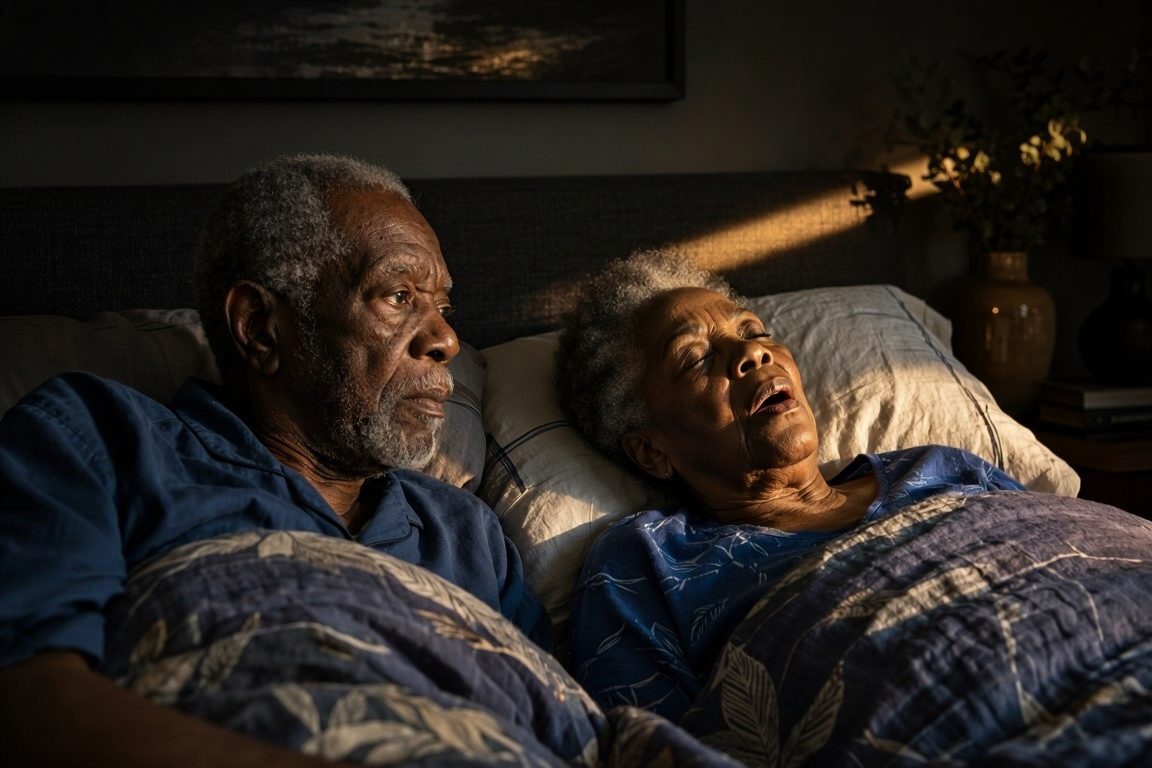
- The classic signs are loud snoring, gasping, choking, or pauses in breathing during sleep, ask a bed partner or record audio.
- Daytime sleepiness, worsening confusion, and new agitation can all be signs of untreated sleep apnea.
- A sleep study (in-lab or home) is the only way to diagnose sleep apnea. Do not rely on guesswork.
- CPAP is the gold standard treatment and can be used successfully by many people with dementia, with patience and support.
- Treating sleep apnea can improve cognition, reduce agitation, and improve quality of life for both the person with dementia and the caregiver.
Videos
 Sleep and DementiaThis video explains how dementia affects sleep and why sleep apnea is a common but treatable cause of nighttime problems.
 Neurologist's #1 Sleep Trick for 30% Sharper Memory | Dr. Khushboo VermaDr. Verma shares a practical tip for improving sleep quality, which can be especially helpful for someone with dementia and sleep apnea.
 Management of Comorbid Symptoms that Interfere with Sleep in the Older AdultThis video covers how to manage multiple sleep-disrupting conditions, including sleep apnea, in older adults.
 Waiting Months for a Dementia Specialist? Do These 8 Things Now | Dr. Khushboo VermaDr. Verma outlines steps you can take while waiting for a specialist, including how to start observing sleep apnea signs.
2 more videos
 Kicking or Punching in Sleep? Don’t Let This Be Missed: Sleep Behavior & Parkinson’s/Lewy DementiaThis video focuses on REM sleep behavior disorder, which often coexists with sleep apnea in Lewy body dementia and Parkinson’s.
 Managing Sleep & Sundowning in Dementia CareThis video offers strategies for managing sundowning and sleep problems, including how sleep apnea can worsen evening agitation.
Practical tools
1
Smartphone audio/video recorder
Use your phone to record short clips of breathing during sleep; play them for the doctor to help diagnose sleep apnea.
Different situations
Lewy body dementia or Parkinson’s disease dementia
Sleep apnea is still possible, but you should also watch for REM sleep behavior disorder (RBD), where the person acts out vivid dreams, kicking, punching, or yelling. This is a hallmark of Lewy body dementia. If you see this, mention it to the doctor separately. CPAP can still be used, but the person may need extra help getting used to the mask due to visual hallucinations or anxiety.
Late-stage dementia (unable to communicate)
You cannot rely on the person reporting symptoms. Instead, rely entirely on observation. Look for restlessness, thrashing, or sudden awakenings during the night. Daytime sleepiness may be extreme. A home sleep test may be easier than an in-lab study. CPAP may still be an option, but some people in late stages may not tolerate it. Discuss with the doctor whether treatment is likely to improve quality of life.
Spouse caregiver vs. adult child caregiver
If you are the spouse, you may be sleeping in the same bed and are more likely to notice snoring or gasping. Use that to your advantage. If you are an adult child living apart, ask the spouse or a home health aide to do the observations. You can also set up a nanny cam or audio monitor in the bedroom (with the person’s consent if possible). Coordinate with the doctor via phone or telehealth.
In a facility (nursing home or assisted living)
Ask the facility staff to monitor for signs of sleep apnea. Provide them with a written checklist and ask them to note any snoring, gasping, or pauses. Request that they share these notes with the facility’s medical director. If a sleep study is ordered, the facility may need to arrange transportation. CPAP can be used in a facility, but ensure staff are trained to clean and set up the machine.
Medicaid or limited insurance
Sleep studies and CPAP machines are often covered by Medicare and many Medicaid plans, but you may need a doctor’s referral and prior authorization. Call your insurance to ask: ‘Is a home sleep test covered? What about CPAP rental or purchase?’ Some organizations offer loaner CPAP machines. Do not let cost stop you from asking, many resources are available.
For the doctor
6
- Ask the doctor: ‘Could my loved one’s medications (especially sedatives, opioids, or muscle relaxants) be making sleep apnea worse? Should any be adjusted?’
- Ask: ‘Is a home sleep test appropriate, or does my loved one need an in-lab study? What are the pros and cons for someone with dementia?’
- If CPAP is recommended, ask: ‘What settings should we start with? How do we clean the mask and tubing? What do we do if my loved one refuses to wear it?’
- Ask: ‘Are there any alternative treatments like oral appliances or positional therapy that might work for my loved one?’
- If your loved one has heart disease or has had a stroke, ask: ‘Could this be central sleep apnea? How is that diagnosed and treated differently?’
- Ask: ‘How often should we follow up? What signs should I watch for that indicate the treatment is not working?’