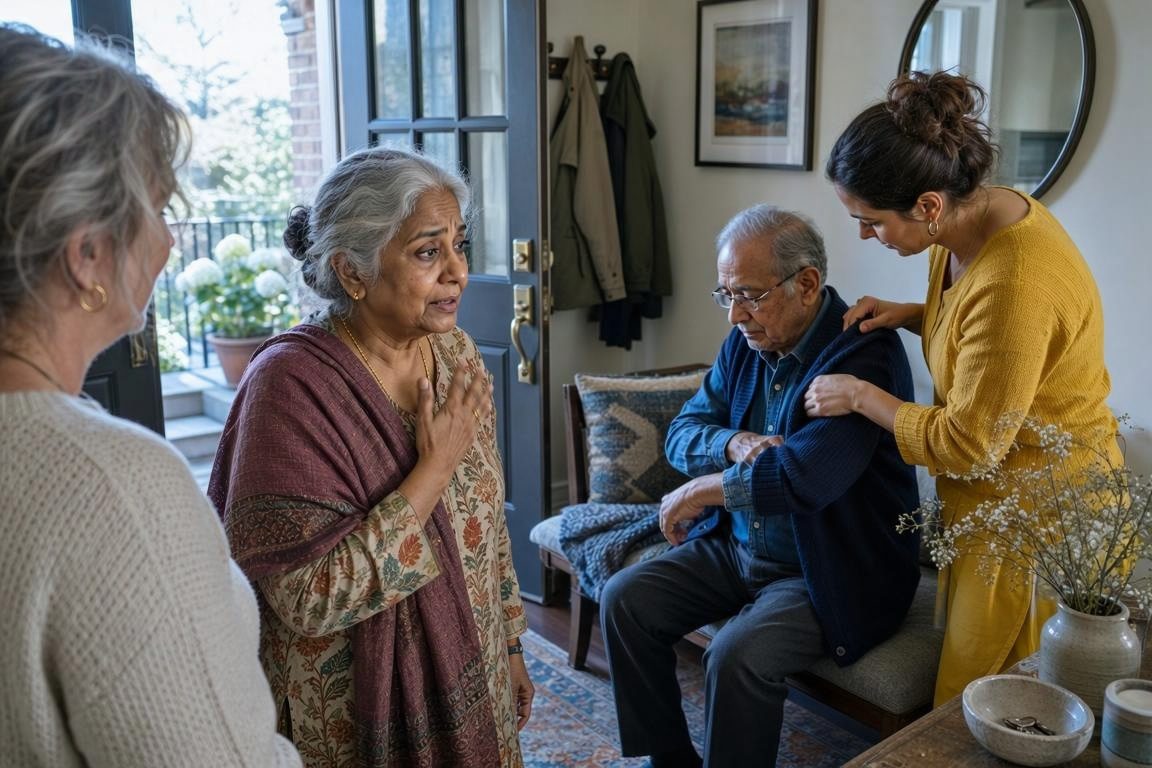
What not to do
- Do not announce the diagnosis in a group message or public setting.
- Do not explain every symptom or history, only the behavior relevant to the helper.
- Do not share with anyone who has shown disbelief or minimization of prior health issues.
- Do not share without first having a specific, immediate request for that person.
Key points
- Sharing the diagnosis is a personal decision, there is no one-size-fits-all approach. Weigh the pros and cons for your unique situation.
- Start with a small circle of trusted people before telling others. Be clear about what you need from them.
- Use simple, honest language to explain dementia and correct common myths. This helps others understand and support you.
- Protect your spouse’s dignity by not oversharing embarrassing details. Focus on the diagnosis and how it affects daily life.
- As the disease progresses, revisit the conversation with those you’ve told. Your needs will change, and it’s okay to ask for more help.
- You are not alone. Many caregivers find relief and support after sharing. It’s a step toward building a village around you and your loved one.
Videos
 Should You Share a Dementia Diagnosis? What You Need to Know!This video directly addresses the pros and cons of sharing the diagnosis, with practical tips on how to tell others and what to say. It’s a perfect starting point for this topic.
 Should you tell a dementia patient that they are being moved to a Memory Care Facility?This video helps you think through how to handle disclosure when a move to a facility is involved, which is common in middle to late stages.
 TELLING A PARENT WITH DEMENTIA ABOUT A DEATHWhile focused on death, this video offers insights on therapeutic fibbing and when to tell the truth, useful for understanding how to handle sensitive disclosures.
 Caregiver Support Session: Caregiving Throughout the Stages of DementiaThis session covers the emotional journey of caregiving and offers support strategies that can help you feel more confident in sharing the diagnosis.
2 more videos
 Dementia Demystified with Tim EnglandTim England shares personal and professional advice on living with dementia, including how to accept the diagnosis and move forward, helpful for both you and your spouse.
 Curious Conversations About Brain Change: Living on the Edge of Your PossibilitiesThis video explores acceptance and finding purpose after a diagnosis, which can guide how you frame the conversation with others.
Background
Why This Decision Feels So Heavy
When you first learn your spouse has dementia, the instinct to protect their privacy, and your own, is natural. Many families worry about stigma, about people treating their loved one differently, or about losing the normalcy of relationships. In early stages, some couples choose not to share the diagnosis at all, and that can work for a time. But as dementia moves into middle and late stages, the situation changes. Your spouse may need more help with daily tasks, and you as the caregiver may need more support from family, friends, or community resources. Keeping the diagnosis a secret can become isolating and exhausting, and it may prevent others from understanding why your spouse behaves differently or why you seem so stressed. The decision to share is not about betrayal, it’s about finding a balance between privacy and the practical need for a village.
What Happens When You Don’t Share
When you keep the diagnosis hidden, you may find yourself making excuses for your spouse’s behavior, saying they’re tired, or having a bad day, or that you’re just busy. Over time, friends and extended family may notice changes anyway, and without context, they may misinterpret your spouse’s actions as rudeness or confusion. This can lead to awkwardness, strained relationships, and even fewer invitations or offers of help. Meanwhile, you carry the burden alone. One caregiver described how she initially respected her husband’s wish for privacy, but as his needs grew, she realized she couldn’t get the help she needed without letting trusted people in. When she finally did share, she found relief and support. The key is to share thoughtfully, not impulsively, and to choose whom to tell and how.
The Pros and Cons at a Glance
Sharing can bring understanding, practical help, and emotional support. It can educate others and reduce stigma. But it can also change relationships, some people may pull away, become uncomfortable, or treat your spouse differently. You might face denial or misconceptions from others. The decision depends on your spouse’s stage, their personality, your relationships, and your own need for support. There is no right or wrong, only what fits your unique situation. The goal is to make an informed choice that protects your loved one’s dignity while also allowing you to get the help you need.
Practical tools
2
Behavior-Log Card
A 3x5 card where you write the date, time, and triggering behavior (e.g., '3pm, tried to leave house'). Keep it in your pocket. Use it to identify which single behavior most urgently needs a helper's awareness.
One-Request Script
A prewritten sentence: 'I need your help with [one specific behavior]. If you see it, please [one concrete action].' Rehearse it aloud before the conversation.
Different situations
Lewy body dementia (LBD) – middle stage
People with LBD often have hallucinations, movement issues, and fluctuating alertness. When sharing the diagnosis, emphasize that hallucinations are a symptom of the disease, not psychosis. Say: 'My spouse has Lewy body dementia, which can cause visual hallucinations. Please don’t argue with them about what they see, just acknowledge it and change the subject.' Also, be aware that they may have good days and bad days, so explain that to others.
Late stage – non-verbal or bedridden
Your spouse may no longer recognize you or respond. When sharing the diagnosis, focus on their comfort and dignity. Tell family and staff: 'My spouse is in the late stage of dementia. They can’t communicate, but they can still feel emotions. Please speak to them kindly, hold their hand, and play their favorite music.' You may not need to explain the diagnosis to the person themselves, only to caregivers and visitors.
Spouse caregiver vs. adult child caregiver
As a spouse, you may feel a stronger need to protect your partner’s privacy and dignity. You might also worry about how the diagnosis affects your own social life. It’s okay to share selectively. Adult children may feel more comfortable being open with their own friends, but should still respect the parent’s wishes if possible. In either role, prioritize your own need for support, you can’t do it alone.
In a care facility vs. at home
If your spouse is in a facility, you need to share the diagnosis with all staff, nurses, aides, activities director, and even the front desk. They need to know to provide appropriate care. If your spouse is at home, you may only need to tell close family, neighbors, and medical providers. In both cases, be clear about what help you need: 'I need someone to sit with them while I shower' or 'Please call me if they seem agitated.'
Medicaid or financial planning context
If you are applying for Medicaid or other benefits, you may need to share the diagnosis with a social worker or financial planner. This is a different kind of disclosure, more clinical and focused on eligibility. You can say: 'My spouse has a diagnosis of dementia. Here are the medical records. I need help understanding what benefits we qualify for.' Keep this separate from personal sharing with friends.
Common questions
1
How should clinicians share the diagnosis and next steps with patients?
Start by telling one or two trusted family members or close friends about the diagnosis in a calm moment. Say something like, 'I wanted you to know that my spouse has dementia, and I'm learning how to support them day by day. Right now, I could really use a listening ear or help with groceries.'
For the doctor
5
- Ask your doctor: 'At what point should I consider moving my spouse to memory care, and how do I explain that to them?'
- Ask your clinician: 'Are there any medications or treatments that might help with my spouse’s anxiety or agitation when we tell others about the diagnosis?'
- Discuss with your doctor: 'My spouse is in late stage and can’t communicate. How do I know if they are in pain or uncomfortable?'
- Ask your physician: 'Should I involve a social worker or counselor to help me decide who to tell and how?'
- Discuss with a dementia care specialist: 'What local support groups or resources are available for spouse caregivers in my area?'