Step by step
What not to do
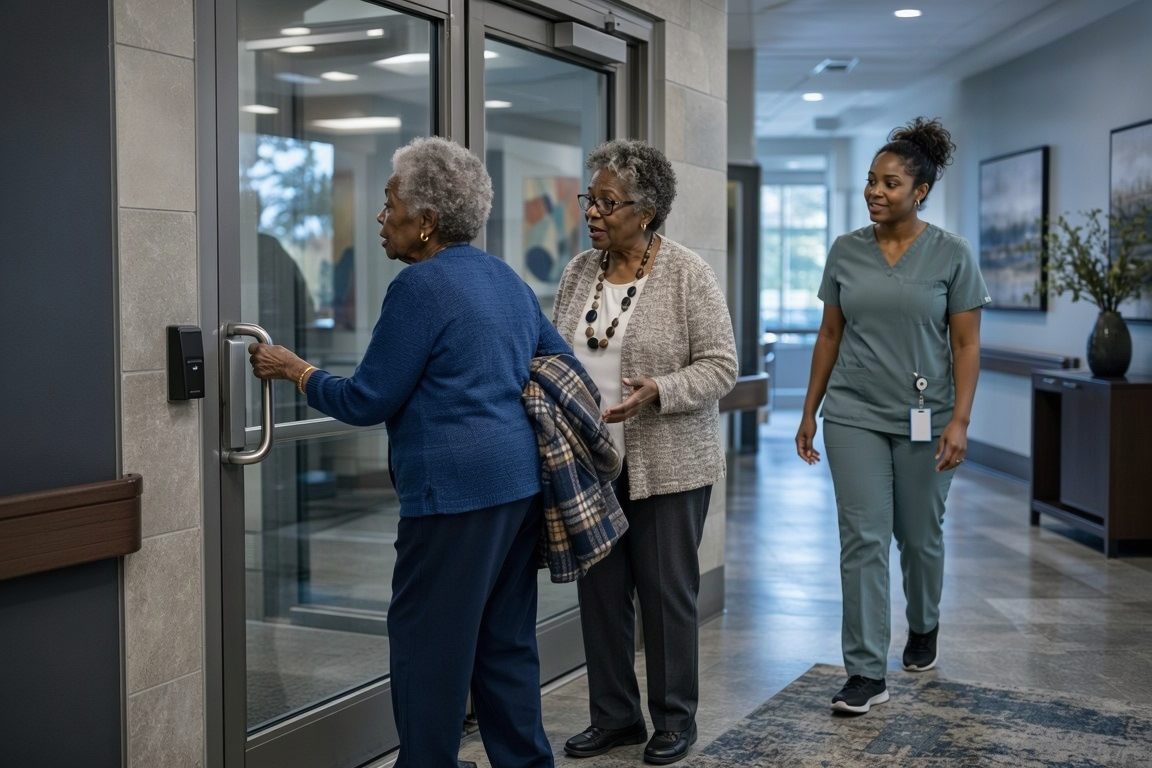
- Do not tell the resident 'You can't leave' or 'This is your home now.' This will likely increase their agitation because it contradicts their reality.Instead, validate their feeling and redirect to a safe activity.
- Do not physically block the door or restrain the resident. This can feel threatening and may escalate the behavior. Use environmental camouflage and gentle redirection instead.
- Do not remove their purse or coat without offering a replacement or a reason. If a woman always carries her purse, taking it away can cause panic that someone stole it. Offer a similar bag with a few safe items inside, or redirect her attention to something else before moving the purse.
- Do not argue or try to reason with them about why they cannot leave. The part of the brain that processes logic is damaged. A calm, warm distraction is far more effective than a logical explanation.
- Do not ignore the behavior hoping it will stop on its own. Exit-seeking can escalate, and the resident may become more distressed or find a way out. Address it early with the strategies above.
- Do not assume that because the unit is secured, the resident is completely safe. Elopement can still happen if a door is propped open or if the resident follows someone out. Always have a plan for what to do if they do get outside.
Key points
- Exit-seeking is driven by unmet needs, confusion, or a desire for safety, not by a wish to escape.
- Remove or camouflage triggers like purses, coats, and visible door handles near the exit.
- Use a calm, validating phrase like 'Tell me about your home' instead of arguing or correcting.
- Redirect with a simple, hands-on activity like folding cloths or looking at a photo album.
- Establish a consistent daily routine and plan calming activities before high-risk times.
- Work as a team with facility staff to share what works and ensure consistency.
Videos
 Why Do Dementia Patients Keep Saying They Want To Go Home?This video explains the emotional reasons behind the 'I want to go home' phrase and offers validation techniques that directly apply to exit-seeking.
 What Do You Do When A Dementia Patient Starts Wandering?Provides practical redirection and safety tips for wandering, which is closely related to exit-seeking in a secured unit.
 Why Does My Mom With Dementia Keep Asking To Go Home?Focuses on the specific scenario of a mother asking to go home, with strategies that work for family caregivers visiting a facility.
 How to Safely Secure Doors for Dementia Patients?Demonstrates door camouflage and environmental modifications that can be adapted for a memory care unit.
2 more videos
 Memory and dementia: Moving a mom with dementiaAddresses the emotional impact of a move to memory care, which can trigger exit-seeking, and offers support for family members.
 Ep. 161: How Can We Reduce Incidents of Wandering or Elopement?Covers system-level strategies for reducing elopement in care settings, including staff training and environmental audits.
Background
Why They Keep Trying to Leave
In middle to late stage dementia, the brain struggles to make sense of the present moment. A resident may feel an urgent need to 'go home' because home represents safety, comfort, and a time when they felt in control. They might believe they need to pick up children from school, go to work, or check on a loved one. This isn't willful behavior; it's a response to a deep, often unspoken need for security and purpose. The secured unit, while safe, can feel unfamiliar and even threatening, triggering a primal drive to find a place that feels right.
What Triggers the Exit-Seeking
Everyday items can become powerful cues to leave. A purse, a set of keys, a coat hanging by the door, or even a visible door handle can signal 'time to go.' People with dementia may also misinterpret their environment: a dark rug in front of a door can look like a black hole or an obstacle, but a shiny door handle can look like an invitation. Stress, boredom, pain, or the need to use the bathroom can also fuel restlessness. Recognizing these triggers is the first step to reducing them.
The Role of Routine and Activity
A predictable daily routine is a powerful anchor. When a resident knows what to expect and when, their anxiety drops. Structured activities that engage their hands and minds, like folding towels, sorting objects, or listening to familiar music, can fill the time that might otherwise be spent pacing toward the door. Activities are not just busywork; they meet the need for purpose and connection, which often lies beneath the exit-seeking.
Practical tools
6
Door Camouflage Decals or Posters
Place a large, realistic-looking poster of a bookshelf, a garden scene, or a window over the exit door. This can make the door 'disappear' to a person with dementia, reducing the urge to try it. You can find these online or create your own with a printed image and removable adhesive.
The 'Tell Me About Home' Script
When the resident says they want to go home, use this exact phrase: 'I'd love to hear about your home. What was your favorite room? What did you like to do there?' This validates their feeling and shifts the focus to a positive memory, often calming them down.
Activity Kit for Redirecting
Prepare a small basket or bag with simple, soothing items:
Keep it near the exit area so you can grab it quickly when the resident approaches the door.
Dark Colored Rug at the Threshold
Place a dark or black rug just in front of the door. For many people with dementia, this can look like a hole or an obstacle, making them hesitate or step back. This is a gentle, non-confrontational way to slow down exit attempts.
Pressure-Sensitive Mat or Door Alarm
Install a mat that alerts staff when someone steps on it near the exit, or a simple magnetic alarm that sounds when the door is opened. This gives you a few extra seconds to respond. Discuss with the facility's management to ensure it's allowed and properly installed.
Daily Routine Chart for Staff
Create a simple chart that lists the resident's preferred calming activities, best times for redirection, and any known triggers. Post it in a staff-only area so all caregivers can follow the same approach. Consistency reduces confusion for the resident.
Different situations
Lewy Body Dementia or Parkinson's Dementia
These conditions often involve visual hallucinations and fluctuating cognition. The resident may see people or animals near the door, prompting exit-seeking. Use a calm, reassuring voice and avoid arguing about what they see. Redirect to a different area of the unit. Also, be aware that they may have more difficulty with balance, so ensure the path away from the door is clear of tripping hazards.
Late Stage Dementia (Very Limited Verbal Ability)
When the resident can no longer speak clearly, exit-seeking may show up as persistent pacing or pulling at the door handle. Use non-verbal redirection: gently take their hand and guide them to a comfortable chair, offer a warm blanket, or play soft music. A hand massage or a gentle back rub can also soothe the urge to move. Watch for signs of pain or discomfort, which may be the root cause.
Spouse vs. Adult Child as Primary Contact
A spouse may feel more personally hurt by the exit-seeking, interpreting it as rejection. Remind them that the behavior is not personal. An adult child may be more focused on safety and logistics. Both need to practice patience and use the same redirection techniques. Encourage the spouse to take breaks and not take the behavior to heart.
Resident in a Facility vs. At Home
In a facility, you have the advantage of a team and a secured environment. Work closely with staff to share what works. At home, you may need to add locks, alarms, and camouflage yourself. The emotional weight is often heavier at home because you are the sole responder. In both settings, the core strategies, validate, redirect, remove triggers, apply.
Medicaid-Funded Unit with Limited Staff
If the unit is understaffed, exit-seeking may be harder to manage. Advocate for a consistent routine and ask the team to prioritize redirection over medication. You can also volunteer to visit during high-risk times to provide one-on-one attention. Bring simple activities that require no staff supervision, like a fidget blanket or a puzzle board.
For the doctor
4
- If the exit-seeking is accompanied by aggression or self-harm, ask the doctor about non-pharmacological interventions first, and only consider medication if these fail.
- If the resident has a history of falls, discuss whether a hip protector or a low bed is appropriate to reduce injury risk if they do wander.
- If the behavior suddenly worsens, rule out a urinary tract infection or other medical issue that can cause delirium and increased agitation.
- If the facility suggests transferring the resident due to exit-seeking, ask for a meeting to discuss a behavior plan and explore all options before making a move.