Step by step
What not to do
- Do not take the aggression personally or label the resident as 'bad' or intentionally violent, it is a symptom of brain disease.
- Do not use physical restraint or force; give space and use verbal redirection unless there is imminent harm.
- Do not argue or try to reason with logic; validate the emotion instead (e.g., 'You seem upset. Let me help you.').
- Do not ignore an incident or dismiss it as 'just part of dementia'; unaddressed aggression usually escalates, always analyze the trigger, document, and report.
- Do not assume it is sundowning before ruling out pain, hunger, a full bladder, or other physical causes.
- Do not abruptly change the resident's routine, environment, or caregiver without preparation.
- Do not place residents with known conflicting triggers (e.g., a wanderer next to someone sensitive to room entry, or two noise-sensitive residents together) in shared spaces.
Key points
- Resident-to-resident aggression is communication, not malice, the person is having a hard time, not giving you one.
- Your approach matters more than you think: calm, slow, frontal, and smiling prevents many incidents before they start, while a rushed, stressed caregiver is more likely to be assaulted.
- Always rule out physical causes first, pain, hunger, thirst, bathroom needs, using a validated pain tool before calling a behavior 'aggressive.'
- The fight/flight/freeze response stays intact while reasoning fails, which is why middle-stage residents may react to a roommate or even family as a threatening stranger.
- Environmental triggers (noise, clutter, harsh lighting, crowding) are common and fixable; familiar music and nature sounds create calm.
- Use the detective approach, log triggers for a few days to find patterns and adjust the plan, and offer two choices instead of commands.
- Continuous, meaningful activity is one of the most effective ways to reduce aggression.
- You are not alone, involve the whole care team, and know that severe aggression may require a higher level of care, which is okay.
Videos
 Time with Teepa - Resident - to - Resident AggressionTeepa Snow explains the 'why' behind resident-to-resident aggression and offers practical, compassionate strategies for de-escalation. Essential viewing for any staff member.
 Aggressive Behavior in People with Dementia | Linda Ercoli, PhD | UCLAMDChatA clinical psychologist breaks down the causes of aggression in dementia, including medical, environmental, and caregiver-related triggers. Great for understanding the big picture.
 Decisions About Putting A Parent Into a Nursing HomeHelps families navigate the emotional and practical decision of when a higher level of care is needed due to aggression or other challenging behaviors.
 How to reduce violence in dementiaA step-by-step guide on preventing violent outbursts, with specific techniques for approach, redirection, and environmental modification.
4 more videos
 Is it Time? 8 Key Warning Signs It Might Be Time for a Different Level of Care.Provides concrete warning signs, including aggression that endangers others, that indicate a move to a more secure or specialized setting may be necessary.
 Professional Alzheimer's And Dementia TrainingA comprehensive training video for staff covering positive approach techniques, communication strategies, and how to create a dementia-friendly environment.
 How to Manage Anger and Aggression in Alzheimer's DiseaseThis video offers step-by-step strategies for managing anger and aggression, including the importance of staying calm and using redirection techniques.
 What To Do With A Violent Dementia PatientThis video addresses the most challenging situations, offering concrete advice on how to protect yourself and the resident while de-escalating violence.
Background
Understanding the situation
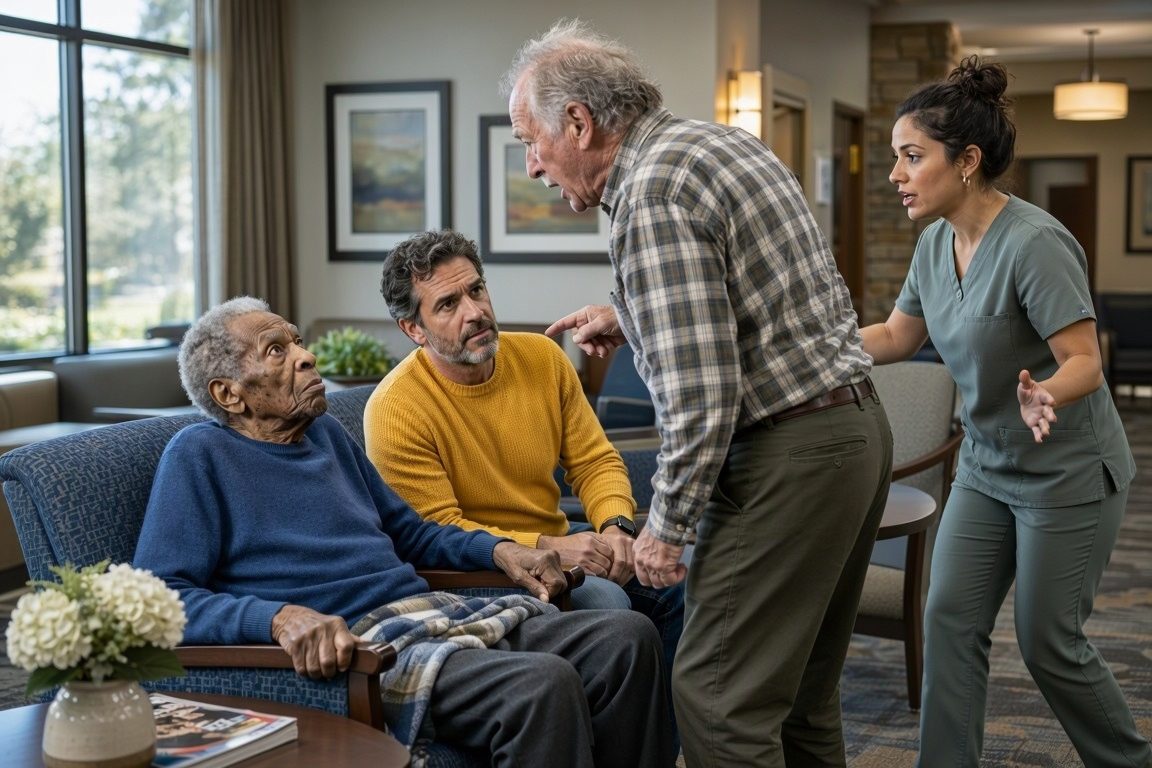
Resident-to-resident aggression spans verbal outbursts, physical acts like hitting or pushing, and social behaviors such as excluding or ignoring another person. It is rarely malicious; as the saying goes, the person is having a hard time, not giving you a hard time. Dementia is progressive brain failure that erodes language, reasoning, and impulse control while leaving the primitive 'fight, flight, or freeze' survival response fully intact. So when someone enters their room, touches their belongings, or a caregiver approaches too fast, the damaged brain cannot register the situation as safe and reacts defensively, often misreading a roommate, staff member, or even a family member as a stranger or intruder. This is most common in middle-stage dementia. Common facility triggers include a resident in a heightened-anxiety 'ruby state' wandering into another's room, loud noise, overcrowded common areas, changes in routine (a new roommate, a different caregiver, a family visit), delusions (believing a spouse is unfaithful or that someone is stealing), and staff turnover, since residents need a long time to learn and trust new faces. Two factors are especially preventable: the caregiver's own approach and hidden medical problems. Rushed, stressed staff who approach from behind or outside a resident's visual field provoke far more aggression, residents mirror tense shoulders and hurried voices, while a relaxed, smiling, frontal approach lowers it. And undiagnosed pain from a urinary tract infection, constipation, arthritis, hunger, or thirst is a frequent hidden cause, because a person with dementia may hit, bite, or scream instead of saying 'my stomach hurts.'
Practical tools
7
Checklist for Environmental Triggers (downloadable sheet)
Print this sheet listing common environmental stressors
and walk the resident's space with it to spot and remove triggers before an incident occurs. Re-check after any change in roommate, room, or routine.
Individualized Behavior Log
Keep a structured daily log for each resident recording time, location, possible triggers, and interventions used. Review across several days to recognize patterns and proactively update the care plan; bring it to team huddles and clinician meetings.
ABC Behavior Tracking Log
Use a one-page form after every episode: Antecedent (what happened just before), Behavior (the exact action), Consequence (your response and the outcome), plus time, location, and people present. This pinpoints patterns for prevention and team discussions.
PAINAD Pain Assessment Tool
A validated 5-item scale for non-verbal residents: Breathing, Negative vocalization, Facial expression, Body language, and Consolability (each scored 0–2; a total of about 4 or higher suggests pain). Keep printed copies in each room and use it before or during every aggressive episode. Confirm scoring and next steps with the clinician.
Three-Step Redirect Script
When aggression is directed at another resident, use it in order until it becomes automatic: Step 1: 'I see you are upset.' Step 2: 'Let's take a walk together.' Step 3: 'I could really use your help with something.'
Calming Environmental Kit
Stock a basket in each common area with
Offer one item without requiring a verbal response.
Offer-Two-Choices Technique
Instead of commands or 'no,' give the resident a sense of control by presenting two acceptable options (e.g., 'Would you like to sit here or by the window?'). This reduces power struggles, especially with residents who react strongly to feeling controlled.
Different situations
Lewy body or Parkinson's disease dementia: These residents are extremely sensitive to medications and prone to visual hallucinations and delusions that can directly trigger aggression. Avoid antipsychotics unless absolutely necessary (severe side-effect risk) and prioritize environmental fixes: soft, low lighting, minimal visual clutter, no busy patterns, and avoid mirrors that can cause frightening reflections. Approach even more slowly and from the front, since they may have visual field deficits, and rule out a UTI or medication reaction first. Consult a geriatric psychiatrist familiar with LBD.
Late-stage / bedbound dementia: Aggression is almost always a response to physical pain or discomfort the person can no longer voice. Use the PAINAD scale every time and check for constipation, urinary retention, skin breakdown, or ill-fitting dentures. Move slowly with warm hands, use predictable touch (e.g., hand-holding before a bath), minimize stimulation (soft music, dim lights, one caregiver at a time), speak in a soft rhythmic voice even if the resident seems unresponsive, and avoid moving them to a new room or floor.
Vascular dementia: Onset can be more sudden with pronounced mood swings; preserved insight at times can lead to frustration and lashing out. Use validation and empathy ('I know this is hard for you'), keep routines consistent, and monitor for signs of stroke or TIA, which can cause sudden behavioral changes.
History of aggression, reactive personality, or substance abuse: Frontal-lobe damage lowers impulse control, and someone who was always 'a bit of a hothead' is more likely to react. Be extra vigilant about triggers like feeling controlled or being told 'no,' avoid power struggles, keep a consistent routine and the same caregiver, and remove potential weapons (heavy or sharp objects). Consider a geropsychologist referral and ensure staff are trained in de-escalation.
Staff in a facility vs. family caregiver at home: Staff have a team and structure: use team huddles to share trigger logs and coordinate approaches, implement consistent caregiver assignment so the same staff work with the same residents to build trust, and use environmental supports like unlocked doors (when safe) and easy outdoor access, since movement restrictions are a known trigger. Always follow facility protocols for documenting and reporting.
Spouse vs. adult child of the resident: Spouses may feel guilty or defensive and minimize the behavior or blame staff; validate their love and reassure them it is not their fault. Adult children are often more open to a higher level of care; give them concrete data such as incident logs to support placement or medication decisions.
Medicaid vs. private-pay facility: Medicaid facilities may have higher turnover and fewer activity resources, raising aggression risk. Advocate for consistent staffing and a daily activity schedule, bring in volunteers or family for activities, and ask about the pain-assessment protocol, if leadership cannot answer quickly, escalate to the ombudsman or state survey agency.
Common questions
6
Become a detective: track triggers in a simple log for a few days before assuming you know the cause.
Approach is everything, if you are rushed or tense, pause and reset before entering the resident's space.
Keep a calming kit and printed PAINAD copies within reach so you can respond in seconds, not minutes.
If a facility cannot quickly name the pain-assessment model it uses, treat that as a major red flag.
Protect both residents: separate calmly and move the potential target to safety rather than confronting the aggressor.
Schedule meaningful activities during the resident's known peak-agitation times to prevent buildup.
For the doctor
1
- Tell the clinician if aggression is new, sudden, or out of character and ask whether an underlying medical cause: UTI, pain, constipation, or a medication side effect, could be responsible, and whether a medication reconciliation or tests are needed. Ask the pharmacist whether any current medications could be driving agitation. Ask the geriatric psychiatrist what non-drug interventions to try first, and, if the resident has delusions and harm continues despite those approaches, what the specific risks and benefits of any medication would be (antipsychotics carry significant risks and should be used cautiously). Ask the doctor which medications to avoid if the resident has Lewy body dementia. Ask the facility director which validated pain-assessment tool they use for non-verbal residents and to demonstrate it. Discuss any history of alcohol or substance use (possible withdrawal or interactions) and any psychiatric diagnosis like intermittent explosive disorder so it can be integrated into the care plan. If the resident is at risk of harming themselves or others, ask about a psychiatric evaluation or a temporary change to a secure level of care, never try to manage severe violence alone. Always confirm any medical or medication decision with the treating clinician.