Step by step
What not to do
- Do not try to force them to eat or drink. This can cause choking or aspiration pneumonia.Instead, offer small amounts if safe, and focus on comfort measures like lip balm and mouth care.
- Do not use loud voices or sudden movements. These can startle or agitate a person who is already confused and fearful. Approach slowly, speak softly, and give them time to register your presence.
- Do not argue or correct them if they seem confused or say things that are not real. In this stage, reality orientation is not helpful.Instead, validate their feelings and redirect gently. For example, if they call you by a different name, simply respond with warmth.
- Do not isolate yourself. Many caregivers feel they must handle everything alone, but this leads to burnout and depression. Reach out to family, friends, or a support group. Even a short break can restore your energy.
- Do not neglect your own health. Skipping meals, losing sleep, and ignoring your own medical needs will make it harder to care for your loved one. Set aside time each day for a walk, a nap, or a call with a friend.
Key points
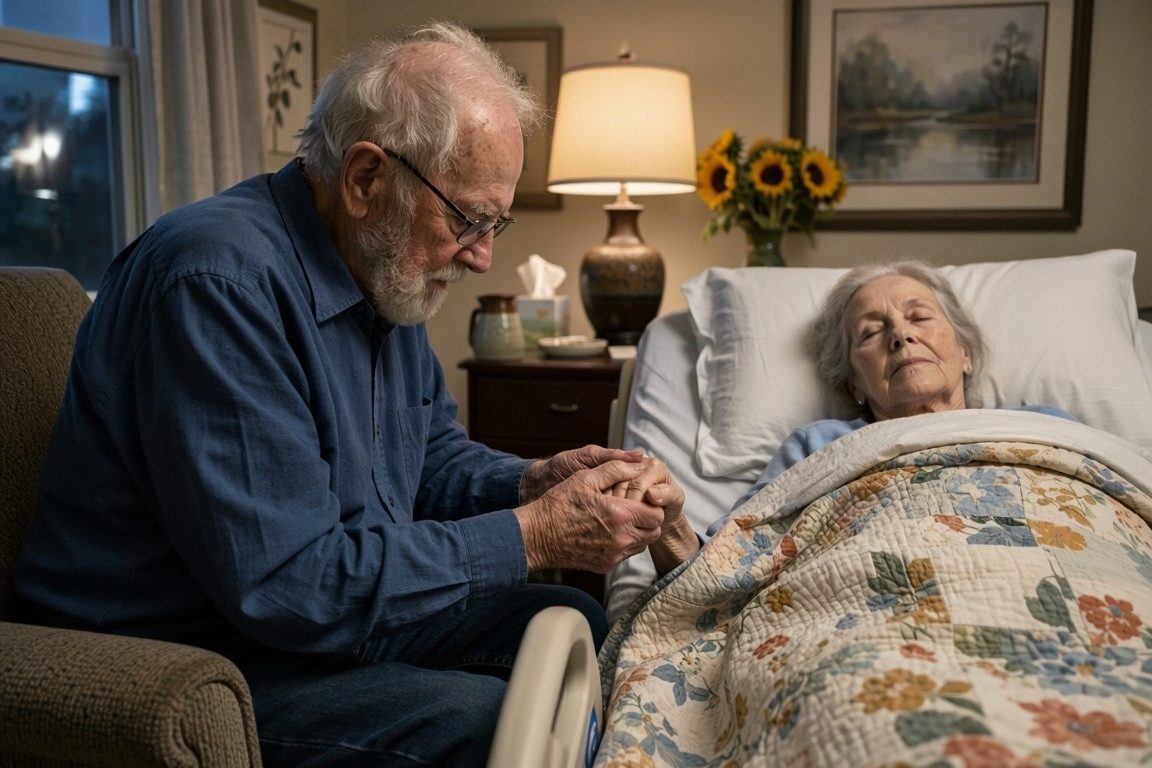
- Your role in late-stage Alzheimer's is to provide comfort and dignity through sensory connection, touch, sound, and presence.
- Hospice care is a valuable resource that focuses on quality of life and supports the whole family, including grief counseling after death.
- Do not force food or drink; focus on mouth care and small sips if safe. Pain and discomfort can be managed with medications from the hospice team.
- Create a calm environment with familiar objects, soft music, and gentle lighting to reduce agitation.
- Take care of yourself, accept help, join a support group, and allow yourself to grieve. Your well-being matters.
- It is never too late to create an end-of-life plan, even if your loved one cannot participate. Work with family and the care team.
Videos
 Alzheimer's Disease - The End Stage (Mini-Series Part 3)This video walks through the physical and emotional changes in the final stage, helping you know what to expect and how to respond.
 #10.5 Dealing with Alzheimer's: Caregiver Stress (5 of 6)Caregiver stress peaks in late-stage care. This video offers practical coping strategies and validation for your feelings.
 Caregivers Are Stressed - WATCH OUT for these 10 signs!Learn to recognize burnout warning signs early so you can take action and continue providing compassionate care.
 Professional Alzheimer's & Dementia Training & TipsProfessional-level tips on communication and comfort techniques that are directly applicable to end-of-life care.
2 more videos
 How to Support an Alzheimer's-Dementia Caregiver: Time, Money, RespitePractical advice for family and friends on how to help you during this intense period, including respite and financial support.
 What to Expect with Late Stage Dementia Symptoms (My Experience)A caregiver shares a personal story of late-stage dementia, offering hope and a real-world perspective on what the journey looks like.
Background
What Is Happening in the Body and Mind
In late-stage Alzheimer's, the brain has lost its ability to coordinate basic bodily functions. Your loved one may become bedbound, lose the ability to speak, and have difficulty swallowing or eating. The world is now experienced almost entirely through the senses, touch, sound, sight, taste, and smell. Research suggests that a core of the person's self may remain, even when they cannot express it. This means you can still connect with them, but you must do so through gentle, sensory-based interactions rather than words.
Why Comfort Care Becomes the Priority
The goal of care in this stage is no longer to slow the disease or maintain abilities. Instead, it is to preserve quality of life and dignity. Hospice care, which focuses on comfort of body, mind, and spirit, is often appropriate. Medicare requires a physician to certify that the person has less than six months to live to qualify for hospice benefits. Even if you did not create an end-of-life plan earlier, you can still work with family and the care team to honor your loved one's wishes. Many families feel relief when death finally comes, for themselves and for the person who died, because the suffering of the disease has ended.
How the Body Shuts Down
People with Alzheimer's do not die from the disease itself but from complications, most commonly infections like pneumonia. As the body slows, your loved one may sleep more, eat and drink less, and become less responsive. Breathing may become irregular, with pauses or shallow breaths. These are natural signs that the body is preparing to let go. Your role is to stay calm, provide comfort, and let the hospice team guide you through each stage.
Practical tools
6
Sensory Comfort Kit
A small basket with items that engage the senses:
Rotate items to keep the experience fresh.
Pain Observation Tool
Use the PAINAD scale (Pain Assessment in Advanced Dementia) to check for non-verbal signs of pain. Look for
Share your observations with the hospice nurse.
End-of-Life Planning Checklist
Even if you cannot include your loved one, sit with family and the care team to document:
Keep a copy with hospice and in an easily accessible place.
Respite Care Voucher or Volunteer Program
Many hospice programs offer volunteer respite, someone to sit with your loved one for a few hours so you can rest. Ask your hospice social worker about this. Also check local Alzheimer's Association chapters for grants or vouchers for temporary professional care.
Mouth Care Kit for Swallowing Difficulty
Include
Gently clean the mouth after meals and apply lip balm to prevent cracking. This prevents infection and adds comfort.
Grief Journal for Caregivers
A simple notebook to write down memories, feelings, or things you wish you had said. This can be a private outlet during the dying process and after. Some hospice programs provide guided grief journals.
Different situations
If your loved one has Lewy body dementia (LBD) with Parkinsonism
Be extra cautious with touch and movement, as they may have rigidity or sensitivity to touch. Use very light, slow strokes. Avoid sudden changes in position. Also, be aware that LBD patients often have visual hallucinations, do not argue, but gently redirect or acknowledge their experience.
If you are an adult child caring for a parent
You may feel guilt or a sense of role reversal. It is common to struggle with decisions about feeding tubes or hospital transfers. Discuss these with the hospice team and lean on siblings or other family for shared decision-making. You are not betraying your parent by choosing comfort over aggressive treatment.
If care is provided in a nursing home or facility
Visit often and at different times of day to ensure consistent care. Bring familiar items from home. Communicate regularly with the nursing staff about your loved one's preferences and comfort needs. You can still be the primary advocate for their dignity.
If your loved one has no advance directives
It is not too late. Work with the hospice social worker or a palliative care specialist to create a plan based on what you believe your loved one would have wanted. Focus on comfort, avoiding unnecessary hospitalizations, and honoring their values as you know them.
If you are a spouse or partner
This stage can feel like a second loss, the person you shared your life with is physically present but unreachable. Allow yourself to grieve while still providing care. Seek a support group specifically for spousal caregivers. It is okay to feel both love and exhaustion.
For the doctor
5
- Ask the hospice doctor or nurse: 'What medications are available to manage pain, anxiety, or breathing difficulties in the final days? How do I know when to use them?'
- Discuss: 'Should we consider a feeding tube or IV fluids? What are the risks and benefits at this stage?' (Most experts recommend against them in late-stage Alzheimer's, but your clinician can explain why.)
- Ask: 'What are the signs that death is imminent, hours to days away? What should I do when I see those signs?'
- Inquire: 'How can we manage secretions or gurgling sounds without suctioning? Are there medications to dry secretions?'
- Discuss: 'If my loved one develops a fever or infection, should we treat with antibiotics or focus on comfort measures only?'