Step by step
What not to do
- Do not correct their memories or argue about facts. If they say something that isn't true, like 'I just saw my mother,' resist the urge to correct them. Arguing damages the emotional connection and makes them feel unsafe.Instead, validate the feeling: 'It sounds like you're thinking of your mom. She was so kind, wasn't she?' This preserves the relationship by prioritizing their emotional reality over factual accuracy.
- Do not let caregiving tasks completely replace your original interactions. If every conversation becomes about medications, toileting, or appointments, your relationship shrinks to a clinical exchange. Make a conscious effort to have at least one interaction daily that has no agenda, just being together. Even a silent moment of holding hands counts.
- Do not pretend you don't feel grief or loss. Suppressing your sadness about the changing relationship can lead to burnout and resentment. It's okay to feel sad that your spouse no longer recognizes you or that your parent can't share memories with you. Acknowledge the grief to yourself or a trusted friend. As one expert said, 'allow the grief to guide your boundaries.' Feeling the loss doesn't mean you love them less; it means you're human.
- Do not isolate yourself from others who knew your loved one 'before.' Staying connected with friends or family who remember your loved one as they were can help you hold onto your own identity. These people can remind you of the person you were before caregiving took over. Share a memory or a laugh about the old days, it nourishes the part of you that is more than a caregiver.
Key points
- Your original relationship (spouse, child, friend) is still real and valuable, even when dementia changes how it looks.
- Emotional memory outlasts factual memory; your loved one will remember how you make them feel.
- Small daily rituals (2-5 minutes) of pure connection protect your relationship from being consumed by care tasks.
- Reframing your language, 'I am her granddaughter who also helps with care', reinforces your identity.
- Grief over the changing relationship is normal and should be acknowledged, not suppressed.
- Preserving your relationship identity actually makes caregiving easier by reducing resistance and building trust.
Videos
 How Can Dementia Caregivers Maintain Their Personal Identity?This video directly addresses the challenge of maintaining your own identity while caregiving, which is the foundation for preserving your relationship with your loved one.
 The Question Every Dementia Caregiver Should AskThis video teaches the 'mirror question' technique, asking yourself what kind of caregiver you would want, which is a powerful tool for staying connected to your original relationship role.
 How to not argue with someone with dementiaArguing damages the emotional bond. This video shows how to avoid confrontation and preserve the relationship, which is essential for maintaining a positive identity as a loving partner or child.
- Quick Tips: The Value of the Bond between Caregivers and SeniorsThis short video reinforces why the caregiver-senior bond is mutually beneficial and how it can teach you important lessons, helping you see your relationship as more than just a duty.

Background
The Quiet Loss of 'Us'
One of the hardest parts of dementia caregiving is the gradual fading of the relationship you once had. Your loved one may no longer be the person you leaned on for comfort, shared inside jokes with, or turned to for advice. That loss, called ambiguous loss, is real and painful. As one caregiver described, 'the intimacy of the relationship has changed because it's now more like a caregiver-caregiving role rather than a spousal relationship.' Both of you end up more isolated, but separately. This is not a failure on your part; it is a natural consequence of a disease that attacks memory and personality.
Why Your Relationship Identity Matters for Care
Preserving your original relationship isn't just about sentiment, it's practical. Research shows that caregivers who had a positive relationship before the diagnosis experience less strain and are better able to find meaning in caregiving. When you focus only on tasks (bathing, feeding, medications), you risk turning your loved one into a 'care recipient' and yourself into a 'task manager.' This actually makes care harder, because your loved one may resist or become agitated when they feel only the clinical side of you. As one expert put it, 'by turning full-fledged into a caregiver, you're setting yourself up to make it harder for you to actually deliver care.' The goal is to stay connected as a person, not just as a helper.
The Emotion Memory That Outlasts Words
Even when your loved one can't remember your name or the details of your shared history, they will remember how you make them feel. The emotional memory, the warmth of your voice, the gentleness of your touch, the safety of your presence, remains long after cognitive abilities fade. This is why it's so important to prioritize positive emotions in your interactions. When the primary emotion they feel around you is negative (frustration, impatience, sadness), they are more likely to resist care and become withdrawn. Your relationship identity is the foundation for those positive feelings. By showing up as their spouse, child, or friend first, even for a few minutes a day, you create a reservoir of trust and safety that makes every care task easier.
Practical tools
4
The 'Before and Now' Photo Ritual
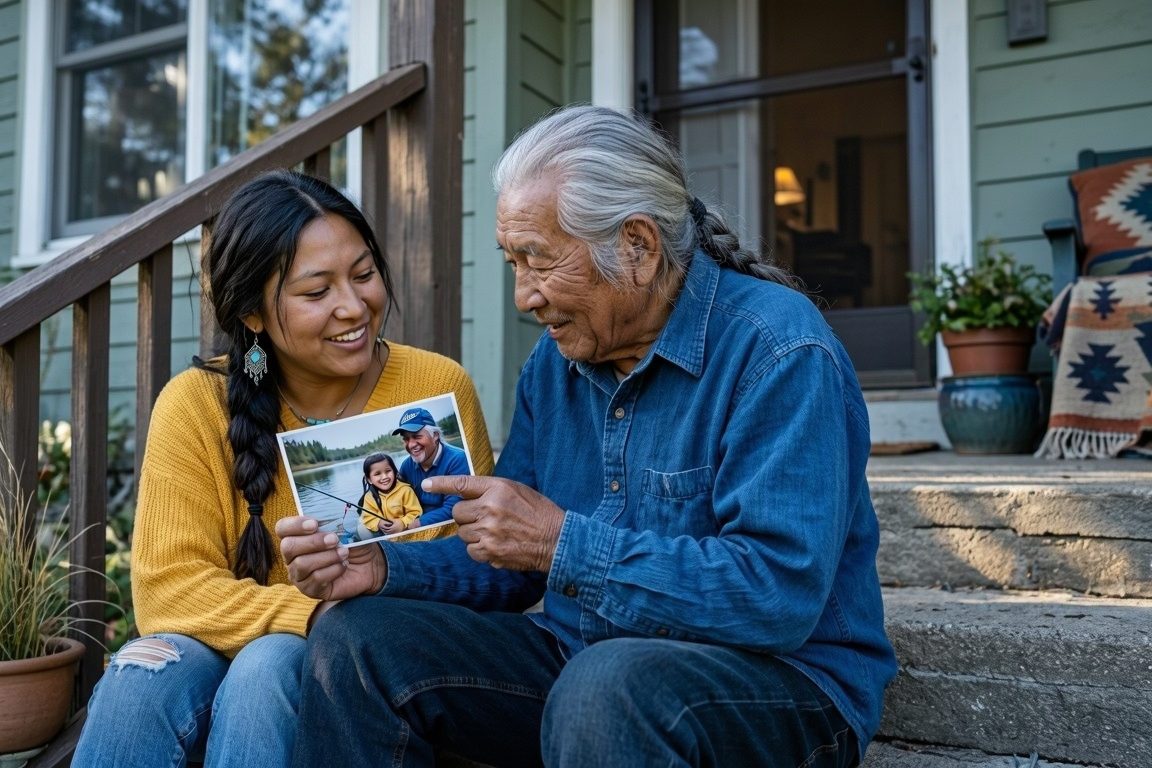
Choose 3-5 photos from your life together before dementia, a wedding photo, a vacation, a holiday. Place them in a small album or on a phone album. Once a day, sit with your loved one and look at one photo. Say something like, 'Look at us on that beach. You were so happy that day.' Don't quiz them or expect recognition. Just let the image and your warm tone create a bridge to the past. This tool works even in late stages because it relies on emotional memory, not factual recall.
The 'Two-Minute Love Note' Script
When you feel the relationship slipping, use this exact phrase: 'I just want you to know that I love you and I'm so grateful to be your [role]. Even when things are hard, you are still my [spouse/parent/friend].' Say it softly, with eye contact and a gentle touch. You don't need a response. This verbal anchor reinforces your identity and theirs, and it can be repeated daily without becoming stale.
The 'Caregiver Identity Journal' Prompt
Keep a small notebook. Each evening, write one sentence answering: 'Today, I was more than a caregiver when I...' (e.g., '...laughed with my mom about her old cat,' '...held my husband's hand and felt like his wife again'). This simple practice helps you see the relationship moments that still exist, and it trains your brain to notice them more often.
The 'Emotion Check-In' Card
Create a small index card with two columns: 'What I Did Today' and 'How It Felt.' Under 'How It Felt,' list emotions like 'connected,' 'frustrated,' 'loving,' 'tired.' At the end of the day, check off the emotions you felt during interactions with your loved one. If 'connected' or 'loving' are missing several days in a row, it's a signal to add one small relationship ritual back into your routine.
Different situations
Spouse caregiver (early to middle stages)
The loss of spousal intimacy can be especially painful. Focus on physical touch that is non-sexual and comforting, hand-holding, back rubs, sitting close. Use terms of endearment from your marriage. If your spouse no longer recognizes you as their partner, introduce yourself gently: 'I'm your wife, Sarah. I'm here to take care of you.' This honors the truth without causing distress. Consider couples counseling with a dementia-informed therapist to navigate the changing intimacy.
Adult child caregiver (middle to late stages)
You may feel the loss of a parent's guidance and protection. It's okay to grieve that. Lean into the role of 'child' in small ways, ask them a simple question like 'What was your favorite meal as a kid?' even if they can't answer. The act of asking honors your relationship. If role reversal feels overwhelming, remind yourself: 'I am their child who now helps them, not their parent.' This distinction protects your identity.
Lewy body dementia or frontotemporal dementia (with personality changes)
Personality changes can be drastic, making it feel like a stranger has taken over your loved one. In these cases, the relationship identity may need to be redefined around the present moment rather than the past. Focus on creating new, positive emotional memories, like a shared laugh over a silly video or a calm moment in nature. Let go of expecting them to be the person they were. Your relationship can still be loving, even if it looks very different.
Late-stage or non-verbal loved one
When your loved one can no longer speak or respond, your relationship identity is expressed entirely through presence and touch. Sit beside them, hold their hand, and speak softly about your shared history. Play music they loved. The goal is not conversation but connection. You are still their [role], you are just communicating through feeling rather than words. This is deeply meaningful, even if it feels one-sided.
For the doctor
3
- If you feel your grief over the changing relationship is leading to symptoms of depression (persistent sadness, loss of interest, changes in sleep or appetite), ask your doctor about counseling or support groups specifically for dementia caregivers.
- If your loved one's personality changes include aggression or inappropriate behavior that damages your relationship, discuss with a neurologist or geriatric psychiatrist whether medication adjustments or behavioral strategies could help.
- If you are struggling with feelings of resentment or anger toward your loved one that are affecting your ability to provide care, ask a social worker or therapist about caregiver burnout and strategies to protect your mental health.