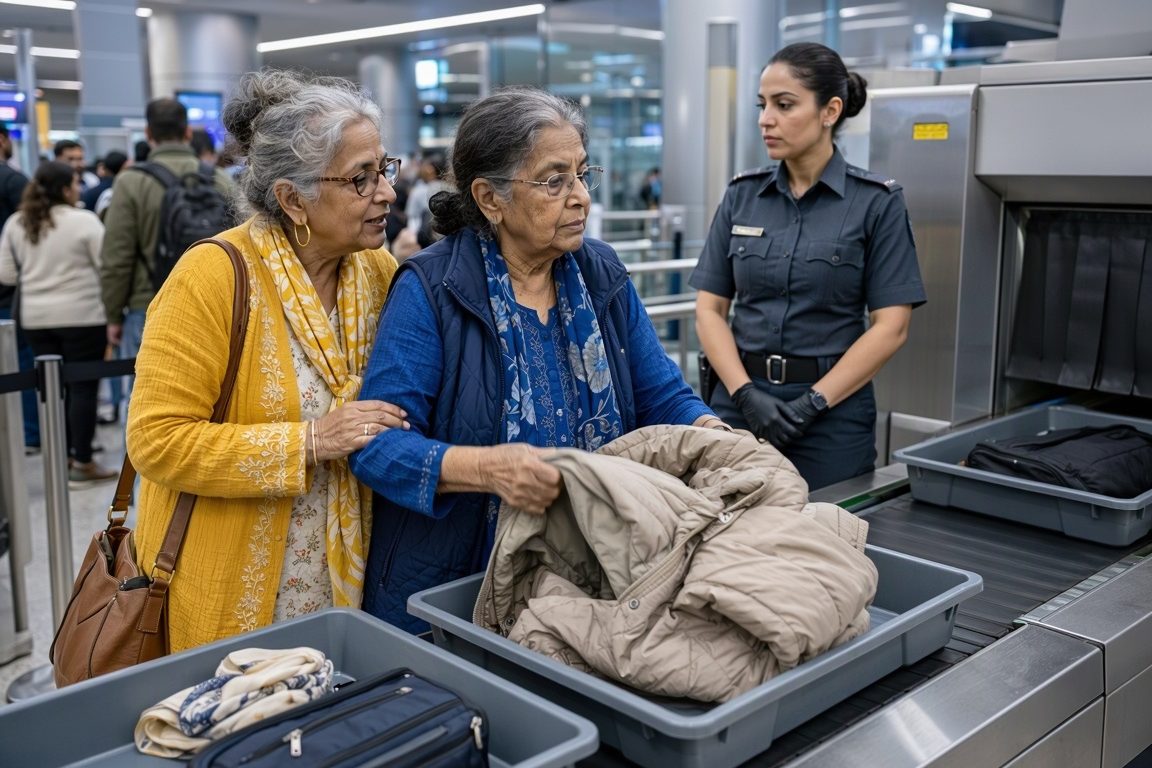
Step by step
What not to do
- Do not assume your loved one will be fine without preparation. The airport is a new environment, and their brain cannot adapt quickly.Instead, plan every step as if you were traveling with a toddler: expect the unexpected and pack for comfort.
- Do not rush through security or the terminal. Your anxiety will spike, and they will sense it.Instead, build in extra time and move at their pace. If they need to sit down, sit with them. If they need to use the restroom, go together.
- Do not argue with your loved one if they become confused about where they are or why they are traveling. Correcting them will only increase their distress.Instead, validate their feelings: 'I know this is strange. We are going on an adventure together, and I am right here with you.'
- Do not leave your loved alone in the terminal, even for a moment. A person with dementia can wander quickly and become lost.Instead, use the wheelchair assistance or hold their hand. If you must use the restroom, ask a flight attendant or a companion to watch them.
- Do not skip the call to TSA Cares. Many caregivers feel embarrassed or think they do not need help. But the TSA team is trained to support you, and their assistance can turn a stressful experience into a manageable one. Pride is not worth the risk of a meltdown.
- Do not forget to take care of yourself. If you are exhausted, hungry, or dehydrated, your patience will run thin. Pack a water bottle and a snack for yourself. Take a deep breath before you speak. Your calm is their calm.
Key points
- Call TSA Cares 72 hours ahead to arrange wheelchair assistance and a modified screening process.
- Pack a calm kit with noise-canceling headphones, sunglasses, a familiar object, and a laminated companion card.
- Use the 'one-hanger' outfit system to reduce morning confusion and decision-making stress.
- Arrive early, move slowly, and stay calm, your emotional state is contagious.
- Pre-board the plane and explain your needs to the flight attendant.
- If your loved one becomes agitated, redirect with a simple action, not a correction.
Videos
 Traveling with someone who has dementia- 5 tipsOffers five practical tips for travel, including realistic expectations and preparation, directly relevant to airport stress.
 How to Travel with Someone who had Dementia [5 tips]Focuses on safety and preparation, including a bonus tip for caregivers, which aligns with airport-specific planning.
 Ask Teepa Anything! February 2020Addresses travel anxiety and sensory overload, with advice on using earplugs and sunglasses at airports.
 Conscious Caregiving with L & L 'Seniors and Travel'Discusses TSA procedures, wheelchair use, and packing strategies from the perspective of a person living with dementia.
2 more videos


Background
Why airports are uniquely challenging for dementia
Airports are designed for efficiency, not comfort. For a person with dementia, the constant sensory overload, flashing lights, loud announcements, long lines, and a sea of strangers, can feel like an assault. Their brain is already struggling to process information, and the airport environment adds an impossible layer of complexity. They may feel lost, trapped, or frightened, even if they cannot express it. This is not a failure of your care; it is a predictable reaction to an overwhelming situation.
The role of your own stress
Your emotional state is contagious. If you are tense, rushed, or frustrated, your loved one will absorb that energy and likely become more agitated. The key is to manage your own anxiety first. Take a few deep breaths before entering the terminal. Remind yourself that the goal is not perfection, it is connection and safety. When you stay calm, you become an anchor for them in the storm.
The importance of preparation and routine
A predictable schedule is like a security blanket for a brain navigating dementia. It reduces the mental effort of decision-making and creates a sense of safety. By planning ahead, calling the airline, packing strategically, and rehearsing the journey, you remove surprises. Even small routines, like eating a familiar snack at the same time, can ground them in the present moment.
Practical tools
6
The 'One-Hanger' Outfit System
Before the trip, assemble a complete outfit on a single hanger:
Place it in the closet or suitcase where your loved one can see it. In the morning, they can grab the hanger and dress without decision fatigue. This works at home too for confusing mornings.
TSA Cares Helpline
Call 1-855-787-2227 at least 72 hours before your flight. Explain that you are traveling with a person with dementia. They will arrange for a passenger support specialist to meet you at the checkpoint, provide a modified screening process, and offer wheelchair assistance. This service is free and confidential.
Laminated Companion Card
Create a small card (business card size) that says: 'My travel companion has dementia. They may become confused or anxious. Please speak slowly and calmly. If we become separated, please call [your phone number]. Thank you for your patience.' Keep it in your pocket or your loved one's pocket. Show it to TSA officers, flight attendants, or gate agents as needed.
Sensory Calming Kit
Pack a small bag with:
Use these items proactively, offer headphones before the boarding call, sunglasses before entering a bright terminal. This reduces sensory overload before it starts.
Pre-Boarding Request
At the gate, approach the agent and say: 'My travel companion has dementia. Can we pre-board to get settled?' Most airlines will accommodate. Use this time to find your seats, stow bags, and orient your loved one to the space. Explain to the flight attendant that you may need extra assistance during the flight.
Simple Redirecting Phrases
When your loved one becomes confused or agitated, use these phrases: 'Let's look out the window together.' 'I have a snack for us.' 'Can you help me hold this?' 'We are almost there.' Avoid asking 'Do you remember?' or 'Why are you upset?' Instead, offer a concrete, calming action.
Different situations
Lewy body dementia or Parkinson's disease dementia
These individuals are often highly sensitive to visual and auditory stimuli. The flashing lights and loud announcements in airports can trigger visual hallucinations or severe anxiety. Use sunglasses and noise-canceling headphones from the moment you enter the terminal. Avoid crowded areas. If they become rigid or have trouble walking, request wheelchair assistance without hesitation. Their balance may be compromised, so a wheelchair is a safety measure, not a sign of failure.
Late-stage dementia (unable to communicate verbally)
Your loved one may not understand where they are or why they are traveling. Focus entirely on comfort and safety. Use a wheelchair, pre-board, and keep the trip as short as possible. Bring a familiar blanket or pillow. Speak in a soft, rhythmic voice. If they become agitated, stop moving, sit down, and hold their hand. The goal is not the destination, it is minimizing distress. Consider whether travel is truly necessary at this stage; a video call may be a kinder alternative.
Spouse vs. adult child caregiver
If you are the spouse, your loved one may still see you as their partner and may resist being 'managed.' Frame assistance as teamwork: 'Let's do this together.' If you are an adult child, your parent may feel infantilized. Use respectful language: 'I am here to help you through this.' In both cases, avoid power struggles. If they refuse the wheelchair, say 'It is for me: I am tired' and then sit in it yourself. They may then agree to join you.
Traveling with a group or to a conference
If you are part of a tour group, inform the tour leader in advance about your loved one's needs. Ask for a quiet seat on the bus, a room on the ground floor, and a schedule that allows for rest breaks. At the airport, stay with the group but position yourself at the back or front to avoid being jostled. Use the group's momentum to navigate, but do not be afraid to break away if your loved one becomes overwhelmed.
Financial constraints (Medicaid, limited budget)
You do not need to pay for premium services. TSA Cares and wheelchair assistance are free. Many airlines offer pre-boarding without extra cost. Pack your own snacks and water to avoid expensive airport food. If you cannot afford a direct flight, choose a layover that is at least two hours long to allow for a calm transition. Call the airline's disability desk to ask about discounts or support programs.
For the doctor
4
- Ask your doctor if a short-acting anti-anxiety medication (like lorazepam) is appropriate for your loved one to use only during travel, and how to test it beforehand.
- If your loved one has a history of falls or balance issues, ask about the safest way to use a wheelchair or walker in the airport environment.
- If your loved one has a feeding tube or requires medical equipment, ask for a letter from the doctor explaining the condition and the need for assistance at security.
- If your loved one has a history of wandering, ask about GPS tracking devices or medical alert bracelets that can be worn during travel.