Step by step
What not to do
- Do not try to hide your stress by forcing a big, fake smile. A tense smile with tight lips and crinkled eyes can look like a grimace or a threat.Instead, take a moment to genuinely calm yourself before engaging. Your loved one will sense the mismatch.
- Do not approach from the side or behind while speaking. This can startle them, and your face will not be visible as a safety cue. Always approach from the front, at eye level, so they can see your expression before you speak.
- Do not use your face to 'diagnose' or judge their condition. Some caregivers worry that a flat or blank expression means dementia is worsening, but this can be a normal part of some conditions (like Parkinson's) or just a moment of fatigue. Focus on what your face can offer, not what theirs is 'missing.'
- Do not mirror their agitation with your own tense face. If they are angry, a tight jaw and narrowed eyes will escalate the situation.Instead, consciously soften your face to de-escalate. You are the anchor; your calm face can help them find their way back.
- Do not avoid eye contact because you feel guilty or frustrated. Looking away can feel like rejection or disinterest. If eye contact feels too intense, look at their nose or forehead, but keep your face turned toward them and your expression soft.
- Do not neglect your own emotional state before caregiving. If you are exhausted, angry, or grieving, your face will show it no matter how hard you try to hide it. Take a break, ask for help, or reschedule a non-urgent task. Your face is honest; let it be rested.
Key points
- Your face is a powerful communication tool; your loved one reads it before they hear your words.
- A tense face can trigger agitation even if your words are kind; a soft face can soothe even if you say little.
- Before entering their space, pause, breathe, and consciously soften your jaw, eyes, and brow.
- Approach from the front, at eye level, with a gentle smile to signal safety.
- If you feel frustrated, step back and reset your face rather than forcing a fake smile.
- For loved ones with facial masking (Parkinson's, Lewy body), exaggerate your own expressions to compensate.
- Your calm face is a gift you can give in every interaction, and it costs nothing but a moment of awareness.
Videos
 Can Facial Changes Be An Early Sign of Dementia?Explains how facial expressions (or lack thereof) can be early signs of dementia, helping caregivers understand what they might observe in their loved one, and why their own expressions matter as a response.
 What is Flat Affect?Describes flat affect (reduced emotional expression) common in Parkinson's and other dementias, and why caregivers need to use exaggerated warm expressions to connect.
 Oral Hygiene Concerns and Options for GEMS States | Teepa's ClipsDemonstrates how to use gentle, calm facial expressions during intimate care tasks like mouth care, which is a high-stress moment for both caregiver and person.
 Supporting a Loved One with DementiaCovers the emotional impact of caregiving and the importance of managing your own non-verbal cues, including facial expressions, to reduce distress.
2 more videos
 How Can Dementia Caregivers Maintain Their Personal Identity? - Dementia Help HubReminds caregivers to care for themselves so they can show up with a calm, present face, not a stressed, depleted one.
 Assisting with Activities of Daily Living in Dementia CareShows step-by-step how to use your face and body language to make daily care tasks feel safe and cooperative, not confrontational.
Background
Why Your Face Matters More Than Your Words
For a person living with dementia, the ability to process spoken language often declines faster than the ability to read faces. Their brain is wired to scan your face for safety, threat, or connection, even when they cannot name what they see. As one expert puts it, 'your loved one is paying attention to the tension in your face, not the loving words coming out of your mouth' (source 10). This is not a choice; it is a neurological reality. The person may mirror back whatever emotion they see on your face, whether it is calm or panic, because their own emotional regulation is compromised (source 6).
This phenomenon is especially powerful during intimate care tasks, bathing, dressing, feeding, or toileting, where the person is already vulnerable. If you are rushing, stressed, or frustrated, your face will show it, and they will feel unsafe, even if you say 'I love you' (source 9). The mismatch between your kind words and your tense expression creates confusion and can trigger agitation, resistance, or withdrawal. Understanding this helps you see that your face is not just a reflection of your mood; it is a tool for connection or a trigger for distress.
The Science of Mirroring and Emotional Contagion
Humans are wired to mirror each other's facial expressions unconsciously. In dementia, this mirroring can become even more pronounced because the person's ability to filter or regulate their own emotional responses is diminished (source 18). If you smile, they may smile back. If you frown, they may become anxious or angry without knowing why. This is called emotional contagion, and it works both ways: your calm face can soothe their agitation, but your stressed face can escalate their distress.
Additionally, some conditions like Parkinson's disease cause 'facial masking', a loss of facial muscle movement that makes the person appear flat or unemotional (source 2). In these cases, your own exaggerated, warm expressions become even more critical because they must compensate for the lack of feedback from your loved one. You cannot rely on their face to tell you how they feel; you must intentionally project safety and warmth through your own.
Your Face as a 'Good Cue' or a 'Bad Cue'
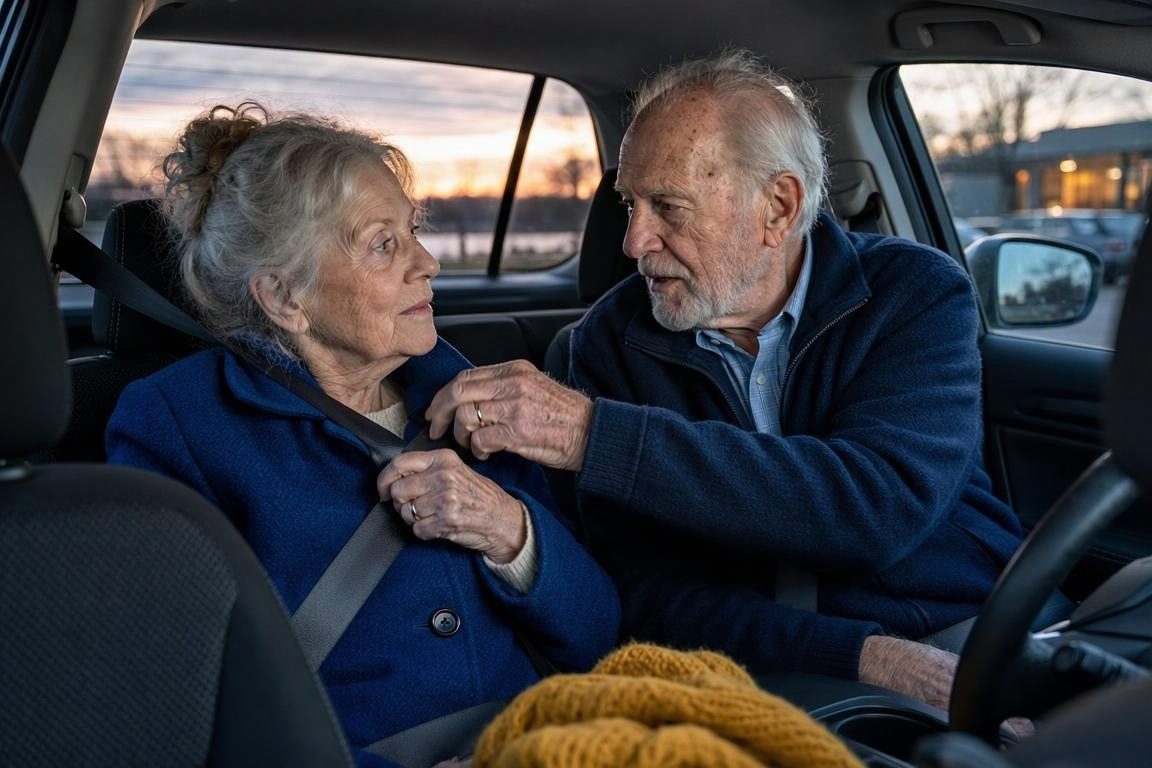
In dementia care, the concept of 'giving cues' is essential. When you assist with a task, your facial expression is a cue that tells the person whether this is safe or scary. A relaxed, open face with soft eye contact from the front and at eye level creates a positive impression and builds trust (source 24). Conversely, a tense face, averted eyes, or approaching from the side can feel threatening and provoke a negative reaction (source 24).
Think of your face as a silent signal that says, 'I am here with you, not against you.' This is especially important when the person cannot understand your words. They will read your face before they hear your voice. By managing your own expressions, you are not hiding your feelings, you are choosing to project the one emotion that will help them feel safe: calm, steady presence.
Practical tools
6
The 'Soft Face' Reset
A 10-second practice: Close your eyes, take a slow breath in, and as you exhale, say silently to yourself, 'soft eyes, soft jaw, soft heart.' Open your eyes and imagine you are looking at a sleeping baby or a peaceful landscape. This primes your face for calm connection.
The 'Mirror Check'
Place a small mirror near the entrance to your loved one's room or in the bathroom. Before going in, glance at your own face. Ask yourself: 'If I were them, would I feel safe looking at this face?' Adjust your expression until the answer is yes.
The 'Warm Greeting Script'
When you enter the room, say their name with a smile and a slow nod. For example: 'Good morning, Margaret. It's me, your son. I'm here to help you get ready for the day.' Use a warm, slightly higher pitch. Your face and voice together create a safe arrival.
The 'Emotional Weather Report'
Before caregiving, check in with yourself: 'What is my emotional weather today? Sunny, cloudy, stormy?' If it is stormy, take 5 minutes to do something calming, sip tea, listen to a song, or call a friend. Do not bring a storm face into their room.
The 'Gentle Touch Cue'
When your words need to be firm (e.g., 'It's time to take your medicine'), pair them with a gentle touch on the arm or shoulder and a soft, steady face. This softens the message and prevents it from feeling like a command or a threat (source 19).
The 'Pause and Breathe' Card
Write on a small card: 'Pause. Breathe. Soften.' Keep it in your pocket or on the fridge. When you feel tension rising, touch the card as a reminder to reset your face before speaking.
Different situations
Lewy body dementia or Parkinson's disease dementia
Your loved one may have facial masking (reduced facial movement) and may not smile back or show emotion. Do not interpret this as rejection or lack of feeling. Exaggerate your own warm expressions, open your eyes wider, nod more, smile bigger, to compensate. They still feel your emotion, even if they cannot show theirs.
Late-stage dementia (non-verbal or minimal communication)
Your face becomes the primary language. Use very slow, exaggerated expressions. Hold a soft smile for several seconds before speaking. Avoid any sudden changes in expression. Your calm face can reduce agitation even when words are not understood.
Spouse vs. adult child caregiver
As a spouse, you may have a lifetime of shared expressions and inside jokes. This can be a gift, but also a source of pain when they do not recognize your face. Use your familiar smile, but pair it with your name: 'It's me, your husband, John.' As an adult child, you may feel you are 'parenting' your parent. Avoid a scolding or worried expression. Use a respectful, warm face that honors their adulthood, even when they are vulnerable.
In a facility or with hired caregivers
You cannot control every caregiver's face, but you can model calm expressions when you visit. Your loved one will mirror your calm. Also, share this article with staff or ask them to be mindful of their own expressions during care. A simple request: 'Could you please smile and make eye contact before helping her?' can make a big difference.
Frontotemporal dementia (behavioral variant)
Your loved one may have inappropriate affect (laughing at sad things or being flat when others are happy). Do not try to 'correct' their expression. Instead, keep your own face steady and warm. Do not laugh with them if the situation is serious; do not frown at them if they are laughing. Your steady face provides a grounding anchor.
For the doctor
3
- If your loved one has a sudden change in facial expression (e.g., from expressive to completely flat), discuss this with their doctor to rule out stroke, medication side effects, or depression.
- If you find yourself unable to control your own facial expressions due to stress, anxiety, or depression, talk to your own healthcare provider. Caregiver burnout is real and treatable.
- If your loved one's facial expressions seem to indicate pain (e.g., grimacing, wincing) but they cannot tell you, discuss pain assessment tools with their clinician.