Step by step
What not to do
- Do not delay preparation until the move is imminent; start as early as possible.
- Do not use complex explanations or arguments when they are distressed, they cannot process logic in that state.
- Do not visit during busy mealtimes or when your loved one is exhausted.
- Do not resist accepting help or wait until you feel overwhelmed.
Key points
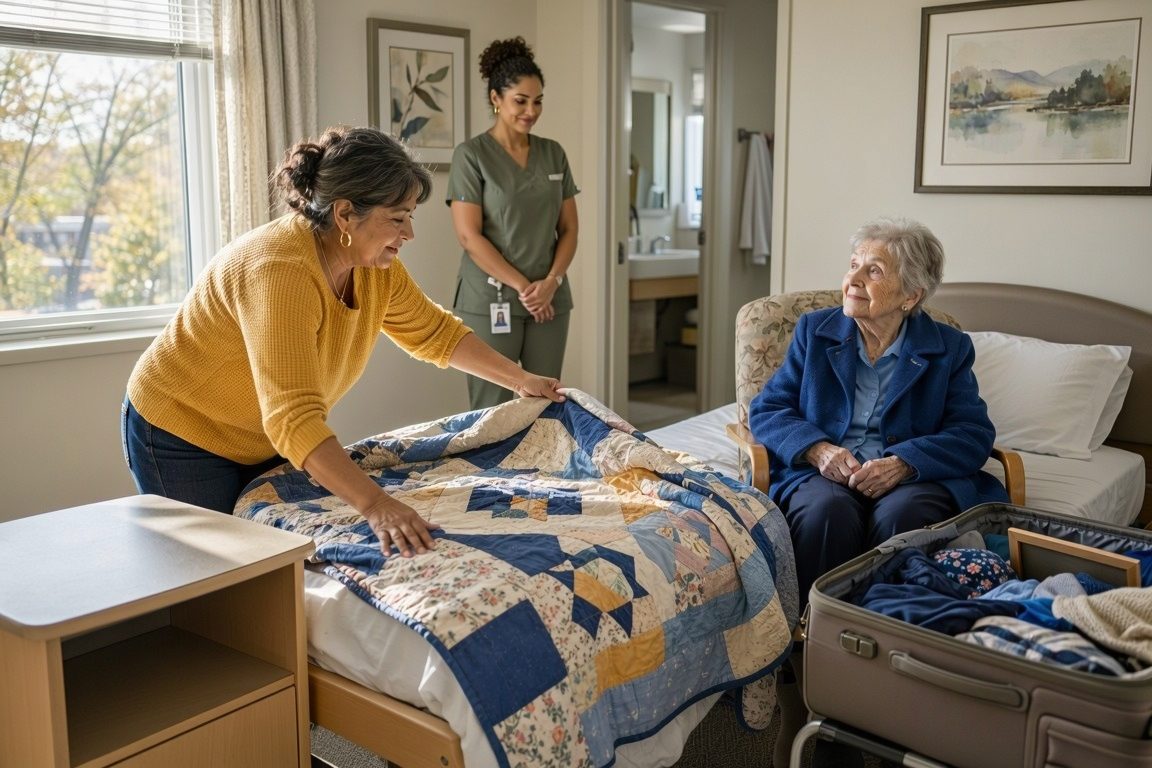
- Start preparing early: visit facilities together, bring familiar objects, and recreate their home layout in the new room.
- Use a consistent daily routine from day one to reduce confusion and create a sense of safety.
- Communicate openly with facility staff about your loved one's preferences, triggers, and calming strategies.
- Stay calm and use simple, reassuring phrases. Your stress is contagious, manage it for their sake and yours.
- Accept help from others and join a support group. You do not have to do this alone.
- Be patient: adjustment can take weeks. Give yourself credit for making a difficult but loving decision.
Videos
 DEMENTIA NURSING HOME TRANSITIONThis video offers three practical tips to make the move into a nursing home more comfortable and successful, directly addressing the stress of moving for someone with dementia.
 How to cope with dementia caregiver stress: 4 ideasThis video provides four concrete strategies for managing caregiver stress, which is essential because your stress directly affects your loved one's transition experience.
 How Does Dementia Assistance Help Relieve Caregiver Stress? | TestThis video explains how structured care plans and emotional support from dementia assistance programs can reduce caregiver stress, helping you stay calm during the move.
 What's Wrong with Grandpa? (Talking with Kids about Dementia and Alzheimer's Disease)If you have children or grandchildren visiting the facility, this video helps you explain dementia in a way they can understand, reducing their confusion and making visits smoother.
2 more videos
 Tips For Moving Someone With DementiaThis video offers 10 practical tips for moving someone with dementia or Alzheimer's, including how to set up the room and handle the emotional challenges of transfer trauma.
 How and when to move someone with dementia to a nursing homeThis video discusses the timing and emotional aspects of moving a loved one to a nursing home, including how to coordinate care with the facility and manage your own feelings.
Background
Why the Transition Is So Stressful for Someone with Dementia
Think back to any time you moved to a new home. Even under the best circumstances, moving is chaotic, boxes everywhere, things missing, a strange layout, unfamiliar sounds and smells. Now imagine going through that while also living with dementia. Your loved one cannot rely on memory to orient themselves. They may not understand why they are leaving their home, where they are going, or who the new people are. This confusion can quickly turn into fear, agitation, or even aggression. Experts call this 'transfer trauma,' and it is very real. The person with dementia is not being difficult on purpose; their brain is overwhelmed by the loss of every familiar anchor, their favorite chair, the kitchen where they made coffee, the hallway they walked a thousand times. Their ability to reason is compromised, so they cannot talk themselves through the change. They feel lost, scared, and sometimes abandoned. Recognizing this from their perspective is the first step to helping them through it.
How Your Stress Affects Them
Your own stress is contagious. People with dementia are often incredibly sensitive to non-verbal cues, your tense shoulders, your hurried voice, your worried expression. When you are frazzled, exhausted, or guilty about the move, your loved one picks up on that energy, and it can increase their agitation. This does not mean you need to be perfect; it means that taking care of your own stress is part of taking care of them. Simple two-minute breaks to breathe before you enter the room, or stepping outside for a moment of quiet, can make a real difference. Also, remember that the staff at memory care facilities are trained to handle difficult behaviors and provide comfort. Letting go of the belief that you must manage everything alone is a gift to both of you. As one expert put it, 'Your stress is contagious', so managing your own emotional state is a practical caregiving strategy.
Practical tools
3
Simple Positive Language Script
Prepared short phrases like 'This is a safe place,' 'I am here,' 'You are okay,' to use when your loved one is confused or agitated, no explanations, just reassurance.
Care Team Preference Sheet
A one-page document listing specific routines (wake-up, meals, sleep), favorite music, triggers, and calming techniques, shared with all staff to ensure consistent care.
Familiar Sensory Kit
A collection of items with their usual scent (lotion), texture (worn blanket), sound (favorite music playlist), and sight (family photos in same frames) to anchor the new room.
Different situations
For a person with Lewy body dementia
Lewy body dementia often involves visual hallucinations, fluctuating cognition, and sensitivity to medications. When moving to a facility, ensure the staff are trained in Lewy body-specific care. Avoid moving them during a period of confusion or after a medication change. Use soft, non-glare lighting and avoid busy patterns on walls or bedding, which can worsen hallucinations. Keep a nightlight on to reduce disorientation at night. Discuss any antipsychotic medications with the doctor, as people with Lewy body dementia can have severe reactions to them.
For a late-stage dementia patient
In late-stage dementia, the person may be bedridden, non-verbal, or unable to recognize anyone. Focus on sensory comfort: soft music, gentle touch, familiar scents, and a calm environment. The move itself should be as quick and quiet as possible. Do not expect them to understand or participate. Your role is to advocate for pain management, hydration, and skin care. Visit often but keep interactions gentle, hold their hand, speak softly, play their favorite songs. The goal is comfort, not orientation.
For an adult child caregiver vs. a spouse caregiver
Adult children often feel guilt about 'putting Mom or Dad in a home,' while spouses may feel they are abandoning their life partner. Adult children should involve siblings in decision-making and share caregiving tasks to reduce burnout. Spouses may need extra emotional support and permission to grieve the loss of their previous relationship. Both should communicate openly with the facility about their loved one's history and preferences. Spouses might benefit from couples counseling or a support group specifically for spousal caregivers.
If the facility is a Medicaid-only or low-resource setting
In facilities with fewer resources, you may need to be more proactive. Bring extra familiar items, advocate for your loved one's needs, and visit frequently to monitor care. Build relationships with the staff, bring them coffee or thank-you notes. If activities are limited, create your own: bring a book to read aloud, a puzzle, or a simple craft. You may also need to coordinate with a social worker or ombudsman if concerns arise. Your involvement can significantly improve the quality of care.
For a person with frontotemporal dementia (FTD)
FTD often affects behavior and personality more than memory. Your loved one may be impulsive, disinhibited, or apathetic. When moving, expect less anxiety about the unfamiliar but more resistance to routine or authority. Use simple, direct language and avoid power struggles. The facility should have staff trained in behavioral management. Bring items that appeal to their current interests (e.g., a favorite music genre, a simple game, or a tactile object). Be prepared for the move to feel less emotionally charged but still logistically challenging.
For the doctor
5
- Ask your loved one's doctor if any current medications could be causing agitation or confusion that might worsen during the move. Medication side effects are a common cause of distress.
- Discuss whether a short-term prescription for a calming medication (e.g., a low-dose anti-anxiety drug) might be appropriate for the first few days of the transition. This should only be done under medical supervision.
- If your loved one has a history of falls or wandering, ask the facility staff about their fall prevention protocols and how they handle elopement risks. Ensure a safety plan is in place before the move.
- If your loved one is on antipsychotic or sedative medications, ask about the risks and benefits, especially for Lewy body dementia, where these drugs can cause severe side effects.
- Ask the facility's nursing director about their protocol for pain assessment in non-verbal residents. Pain is often missed and can cause agitation that looks like distress about the move.