
Step by step
What not to do
- Don't assume you can manage finances or make medical decisions without legal authority; banks and hospitals won't honor verbal understandings.
- Don't name an agent who is financially irresponsible or might misuse funds; if splitting roles among children, ensure they communicate well.
- Don't rely on generic online legal forms without attorney review; they may not meet state requirements and can be challenged.
- Don't transfer or hide assets for Medicaid eligibility without professional guidance; the five-year look-back can trigger penalty periods.
Key points
- Act immediately after a dementia diagnosis, while the person can still participate and sign documents legally.
- The three essential documents are: durable power of attorney for finances, advance healthcare directive (including healthcare proxy and living will), and a will.
- Without these documents, family may be forced into a costly, public conservatorship process.
- Choose agents who are trustworthy, organized, and willing to keep records. Consider splitting financial and healthcare roles.
- Work with an elder law attorney who understands dementia, Medicaid, and incapacity planning.
- Store documents safely, share copies with agents and doctors, and review them every few years.
Videos
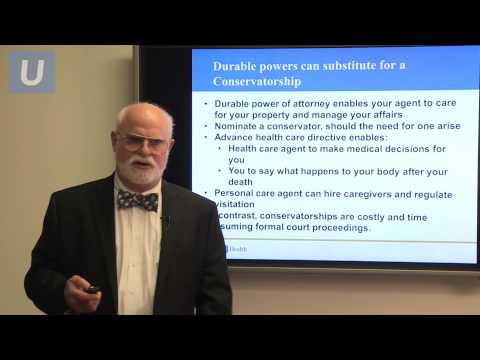 Elder Law: Protecting & Caring for Patients with Dementia | Marc B. Hankin | UCLAMDChatThis video from UCLA Health provides expert legal advice on powers of attorney, conservatorships, and Medicaid planning specifically for dementia patients. It explains the legal process and common pitfalls.
 Dementia & Power Of AttorneyA focused video that explains what a power of attorney is, how it works for someone with dementia, and why it's critical to set it up early.
 Does your loved one with dementia resent you? Try this!This video addresses the emotional challenge of a loved one who resists help, which is common when trying to discuss legal planning. It offers communication strategies to reduce conflict.
 The Baffled Brain: Demystifying Dementia Episode 18This episode covers legal and financial planning topics in a conversational, easy-to-understand format, including real-life caregiver stories.
2 more videos
 The Baffled Brain Demystifying Dementia Episode 30Another episode that dives into the practical steps of getting legal documents in order, with tips for talking to family members.
 Early Onset Dementia and Alzheimer's DiseaseThis video addresses the unique challenges of early-onset dementia, including the need for aggressive legal planning while the person is still working and managing a family.
Background
Why Legal Planning Matters Now, Not Later
When a person is diagnosed with dementia, their ability to make sound decisions, called 'legal capacity', will gradually decline. Legal capacity is the mental ability to understand information, weigh choices, and communicate a decision. Once capacity is lost, the person can no longer legally sign contracts, manage bank accounts, or consent to medical treatment. If no legal documents are in place before that point, family members cannot automatically step in to make decisions. Instead, they may have to go to court to seek a conservatorship (also called guardianship), which is expensive, time-consuming, and emotionally draining. The sooner these plans are put in place, the more likely it is that the person living with dementia will be able to participate in the process and express their own wishes.
The Core Legal Documents You Need
The Alzheimer's Association and elder law experts agree that every adult, especially someone with a dementia diagnosis, needs three key documents: a durable power of attorney for finances, an advance healthcare directive (which includes a healthcare power of attorney and a living will), and a will. A durable financial power of attorney names someone you trust to manage bank accounts, pay bills, file taxes, and handle property if you become incapacitated. An advance healthcare directive names a healthcare proxy to make medical decisions and spells out your wishes for end-of-life care, such as whether you want life-sustaining treatment. A will directs how your assets are distributed after death. Without these documents, your family may face legal battles, delays, and unnecessary suffering.
What Happens If You Don't Plan? The Risk of Conservatorship
If a person with dementia loses capacity without having signed a durable power of attorney or healthcare directive, family members cannot legally manage their affairs. In that situation, a concerned relative must petition a court to be appointed as conservator (or guardian). This is a public legal process that requires medical evaluations, court hearings, and ongoing supervision. It can cost thousands of dollars in legal fees and take months. Worse, the court may appoint a stranger, a professional conservator, if no family member is deemed suitable. Planning ahead avoids this entirely. As one elder law attorney explains, a properly drafted power of attorney can be activated when a doctor certifies the person has lost capacity, allowing a smooth transition without court involvement.
Practical tools
2
Alzheimer's Association Dementia Conversations Course
Free online course with scripts and tips for talking about legal/financial planning; complete it before the conversation.
NAELA Elder Law Attorney Directory
Searchable directory for attorneys with dementia/Medicaid experience; ask about fees and initial consultations.
Different situations
Early-stage patient (still has capacity)
This is the ideal time to act. The person can still participate in the lawyer meeting, express their wishes, and sign documents. Encourage them to be involved in choosing their agents. Use the 'Dementia Conversations' course to help them understand why planning is important. If they are resistant, frame it as 'planning for everyone' and involve a trusted third party (e.g., a doctor or clergy) to help.
Spouse vs. adult child caregiver
Spouses often have joint accounts and may assume they can manage everything, but they still need a durable power of attorney to handle accounts that are only in the patient's name or to make healthcare decisions if the patient is incapacitated. Adult children should be aware that if the spouse is still alive, the spouse usually has priority as agent unless the documents state otherwise. If the adult child is the agent, they must keep meticulous records to avoid accusations of financial abuse.
Lewy body dementia or frontotemporal dementia
These types often cause early and significant changes in judgment, impulse control, and personality. Legal planning should happen even sooner, because the window of capacity may be shorter. The person may be more resistant or suspicious, so involve a neutral third party (e.g., a social worker or elder law attorney) to help with the conversation. Also, because these types can cause hallucinations or paranoia, the healthcare directive should address how to handle psychiatric symptoms and medications.
Low-income or Medicaid-eligible
If the person has few assets, you may not need a trust, but you still need a durable power of attorney and healthcare directive. Medicaid planning is critical if nursing home care is likely. An elder law attorney can help you structure assets to qualify for Medicaid without spending down everything. Be aware of the five-year look-back rule for gifts. Do not try to transfer assets without professional advice.
Person already lacks capacity (no documents in place)
This is a crisis. You cannot get a valid power of attorney or healthcare directive now. You must consult an elder law attorney about a conservatorship. In the meantime, you may be able to use a representative payee for Social Security benefits or a VA fiduciary for veterans benefits. For healthcare, you may need to seek emergency guardianship if the person is in danger. This is expensive and stressful, which is why planning early is so important.
For the doctor
5
- Ask your doctor: 'At what point in my loved one's dementia will they lose legal capacity to sign legal documents? Can you help us assess capacity before we go to the lawyer?'
- Ask your doctor: 'What specific medical situations should we address in the advance healthcare directive? For example, should we include preferences about feeding tubes, antibiotics, or hospitalization for infections?'
- Ask your doctor: 'Can you provide a letter or declaration stating that my loved one has capacity to sign legal documents? This may be needed to activate a springing power of attorney.'
- Ask your doctor: 'If my loved one is already showing signs of poor judgment, is it still safe for them to sign a power of attorney? What are the risks of undue influence?'
- Ask your doctor: 'Are there any medications or treatments that could temporarily improve decision-making capacity, allowing us to complete legal documents?'