Step by step
What not to do
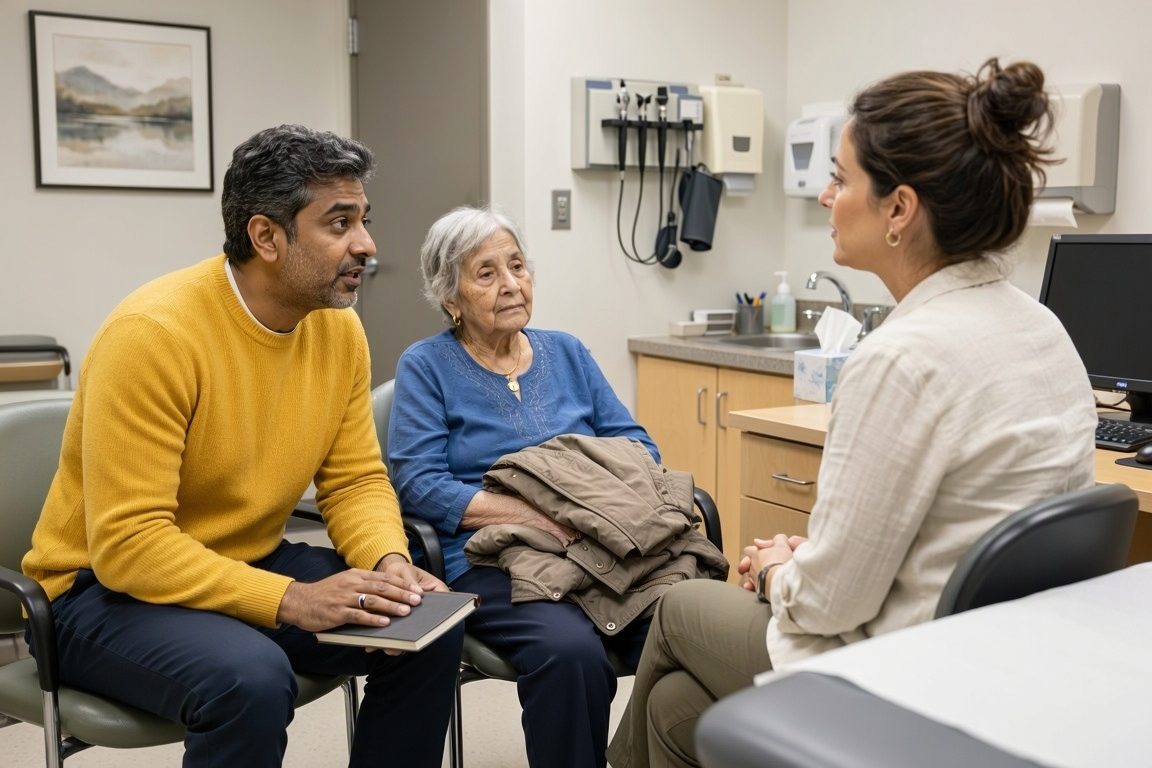
- Do not wait for the doctor to bring up hospice first. Many doctors will never mention it because they feel uncomfortable or because they are focused on treatment. You must be the one to start the conversation.Instead, prepare your points and bring it up yourself.
- Do not assume that hospice means you are giving up. This is a common fear, but hospice is about quality of life, not about stopping care. It provides more support, not less.Instead, think of it as bringing in a team to help you care for your loved one in the best way possible.
- Do not wait until a crisis, like a hospitalization or a severe infection, to start the conversation. By then, your loved one may be too sick to benefit fully from hospice.Instead, start talking about it when you notice gradual decline: weight loss, repeated infections, difficulty swallowing, or increased sleeping.
- Do not try to have this conversation in front of your loved one if they are still able to understand. It can cause distress or confusion.Instead, call ahead to the doctor's office and ask for a private moment to discuss care goals.
- Do not accept a doctor's 'not yet' without asking for specific criteria. Ask: 'What signs should I look for that would tell us it is time?' This gives you a roadmap and helps you feel more in control.
Key points
- You do not need to wait for the doctor to bring up hospice. You can start the conversation yourself.
- Frame the conversation around your goal: comfort and avoiding hospitalizations.
- Bring concrete observations: weight loss, infections, difficulty swallowing, increased sleeping.
- Ask for a hospice evaluation, not a decision. The evaluation will determine eligibility.
- If the doctor says 'not yet,' ask for specific signs to watch for.
- Hospice provides a full team: nurse, aide, social worker, chaplain, and supplies. It is not about giving up.
Videos
 An Interview with Hospice Nurse and Author Beth Cavenaugh R.N.Hear from a hospice nurse about the real benefits of hospice and how to overcome the fear of starting the conversation.
 The Lewy Body Dementia Association with Julia Wood Director of Professional & Community EducationLearn why hospice timing is especially tricky for Lewy body dementia and how to advocate for an evaluation.
 Hospice 101:Everything You Ever Wanted to Know, but Were Afraid to AskA comprehensive overview of what hospice covers, how to choose a program, and what to expect.
 29. When To Call In Hospice: Four Essential Tips / Alzheimer’s and Other DementiasFour practical tips for knowing when to call hospice, including how to talk to the doctor.
2 more videos
 Dementia and Hospice: The Who, What, When, Where, and How of hospiceA detailed guide to the hospice process for dementia, including how to get a referral and what to ask.
 Parkinson's Disease Caregivers: You're Not AloneFor caregivers of someone with Parkinson's or Lewy body dementia, this video offers support and advice on end-of-life planning.
Background
Why Doctors Are Hesitant to Bring Up Hospice
Doctors are trained to heal and cure, so suggesting hospice can feel like admitting failure. Many clinicians are reluctant to recommend hospice because they know what the word means to families, and they worry about causing distress. As a result, patients who could have benefited from hospice for months often only receive it in their final two weeks. This means families miss out on the full support hospice offers: a nurse, a social worker, a chaplain, a home health aide, and supplies like incontinence products, hospital beds, and walkers. You are the one who sees the daily decline, the weight loss, the repeated infections, the difficulty swallowing. You do not have to wait for the doctor to start the conversation. You can bring it up yourself.
What Hospice Actually Provides for Dementia Patients
Hospice is not about giving up. It is about shifting the goal from curing to comfort. For a person with late-stage dementia, this means no more painful trips to the hospital, no more blood draws for minor infections, no more treatments that cause more suffering than relief. The hospice team works alongside your loved one's primary doctor, not instead of them. They provide a nurse who visits regularly, a home health aide to help with bathing, a social worker to support the family, and a chaplain for spiritual care. They also provide medical equipment and supplies. Many families who use hospice say afterward that they wish they had started sooner. The care is better, the family feels supported, and the person with dementia can die with dignity in a familiar place.
Practical tools
5
The 'My Goal Is Comfort' Script
Write down and practice this phrase: 'My goal for my loved one is to keep them comfortable and out of the hospital. I am worried that the current treatments are causing more suffering than benefit. Can we get a hospice evaluation to see if they qualify?' Use this at the start of the conversation to set the tone.
The Daily Observation Log
Keep a simple notebook where you write down one or two observations each day. For example: 'Today Mom ate only three bites of oatmeal. She slept 16 hours. She seemed to wince when I moved her arm.' Bring this log to the doctor's appointment. It provides the concrete evidence doctors need to make a referral.
The Hospice Agency Comparison Checklist
Before choosing a hospice program, ask these questions:
Write down the answers for each agency you consider.
The 'What If' Conversation Starter
If you are nervous about bringing up hospice directly, use this softer approach: 'I have been reading about palliative care and hospice for people with dementia. I want to be prepared for the future. Can we talk about what signs would tell us it is time to consider hospice?' This frames it as planning, not crisis.
The Hospital Avoidance Goal
When talking to the doctor, emphasize: 'I want to avoid sending my loved one to the hospital. It is very distressing for them and often makes things worse. Can hospice help us manage their care at home?' This aligns with the doctor's goal of avoiding unnecessary harm.
Different situations
Lewy body dementia (LBD) / late stage
For LBD, it can be especially hard to tell when hospice is appropriate because symptoms fluctuate. The person may have good days and bad days. Focus on the bad days: severe rigidity, hallucinations, falls, difficulty swallowing, and repeated infections. Ask the doctor: 'Given the fluctuations, how do we know when hospice is right?' The hospice evaluation will consider the overall trajectory, not just a single good day.
Late-stage Alzheimer's / spouse caregiver
As a spouse, you may feel guilt or a sense of betrayal when considering hospice. You might think you are giving up on your partner. Remind yourself that hospice is about honoring their wishes and providing comfort. You can say to the doctor: 'My husband always said he did not want to suffer. I think hospice would honor that wish.' Spouses often need extra emotional support from the hospice social worker or chaplain.
Adult child caregiver / parent in a facility
If your parent is in a nursing home or assisted living, the facility may have its own hospice provider. You can ask the facility's social worker or director of nursing: 'Can we get a hospice evaluation for my mom?' The facility staff can also help you coordinate the conversation with the doctor. You do not have to do this alone.
Medicaid or limited finances
Hospice is often offered based on need, not ability to pay. Medicare covers hospice for those who qualify, and many states have Medicaid hospice benefits. Ask the hospice agency: 'Do you accept Medicare/Medicaid? Are there any out-of-pocket costs?' The hospice social worker can help you navigate financial concerns. Do not let cost stop you from asking.
For the doctor
4
- Ask your doctor: 'What specific clinical signs would indicate that my loved one's life expectancy is six months or less?' This helps you understand the medical criteria.
- Ask: 'Is there a palliative care specialist or geriatrician you can refer me to for a second opinion on hospice timing?'
- Ask: 'If my loved one has a feeding tube or is on medications for other conditions, how does hospice affect those treatments?'
- Ask: 'Can you explain the difference between palliative care and hospice, and which one might be appropriate now?'