Step by step
What not to do
- Don't wait until the final days or weeks to call hospice, you can revoke the benefit if the condition improves.
- Don't assume hospice is only for cancer or bedridden patients; it serves any terminal illness, and many remain mobile.
- Don't handle everything alone or expect the team to take over completely, clarify roles and use volunteers and respite care.
- Don't avoid hospice due to cost; Medicare Part A, Medicaid, and most insurance cover it with little to no out-of-pocket expense.
- Don't ignore your own needs, accept counseling, support groups, and respite early.
Key points
- Hospice is for anyone with a terminal illness and a prognosis of six months or less, not just cancer.
- The hospice team includes a doctor, nurse, social worker, chaplain, aide, and volunteers, all working together for comfort and support.
- Hospice can be provided at home, in a facility, or in a dedicated hospice center.
- Family caregivers are part of the team and receive training, education, and emotional support.
- Bereavement services continue for up to a year after the patient’s death.
- Do not wait until the very end, early hospice involvement improves quality of life for everyone.
Videos
 palliative care and hospice care for dementiaThis video explains the difference between palliative and hospice care specifically for dementia, which is helpful for understanding when to transition.
 How Hospice Helps Families with End of Life CareThis video gives a family-centered view of what hospice does, including emotional and practical support for caregivers.
 Does Alzheimer's Qualify For Hospice?This video addresses a common question about eligibility for Alzheimer’s patients, clarifying the criteria and process.
 What Type of Caregiver are You?This video helps you identify your role as a caregiver and how hospice can support you in that role.
2 more videos
 What Does It Mean When Someone Is Hospice?This video breaks down the basics of hospice care in simple terms, perfect for someone new to the concept.
 Hospice 101:Everything You Ever Wanted to Know, but Were Afraid to AskThis comprehensive video covers common myths, team roles, and what to expect, answering many of the questions families hesitate to ask.
Background
What Is Hospice Care?
Hospice is a specialized form of palliative care for people who have a terminal illness and are expected to have six months or less to live. Unlike palliative care, which can be provided alongside curative treatments at any stage of a serious illness, hospice is specifically for when a cure is no longer possible. The goal is not to hasten death but to provide comfort, manage symptoms, and support the patient and family through the end-of-life journey. Hospice addresses physical, emotional, social, and spiritual needs, and it can be provided at home, in a nursing home, assisted living facility, memory care, hospital, or a dedicated hospice facility.
Who Makes Up the Hospice Team?
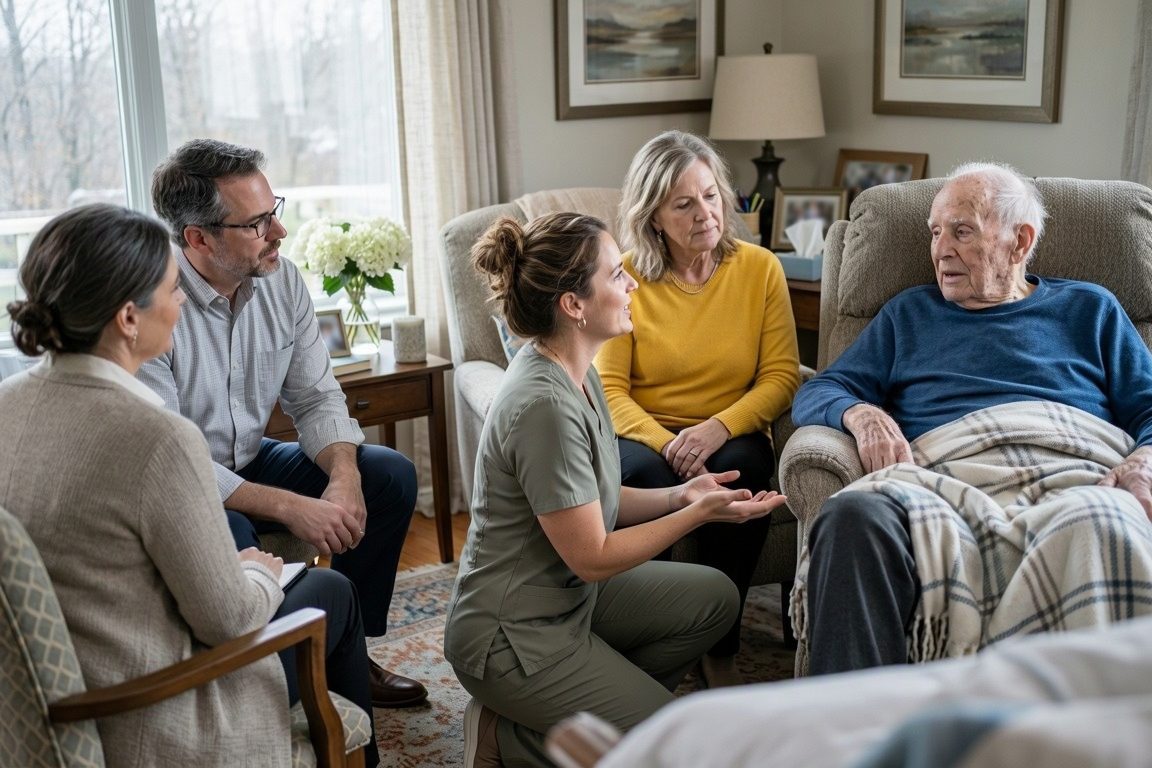
A hospice team is an interdisciplinary group of professionals who collaborate to meet the patient’s and family’s needs. The core team typically includes a hospice medical director (who oversees the management of the terminal illness), the patient’s primary care physician (who can remain involved), registered nurses (who visit regularly and are on call 24/7), a social worker (who provides emotional support, helps with financial evaluations, and coordinates resources), a chaplain or spiritual care coordinator (who offers spiritual support and can connect with the patient’s own faith community), and a hospice aide (who helps with activities of daily living like bathing, dressing, and light housekeeping). Many hospices also include trained volunteers who provide companionship and respite, and some may offer physical therapists, occupational therapists, pharmacists, and nutritionists depending on the patient’s needs.
How Does Hospice Care Work in Different Settings?
If care is provided at home, the family member typically serves as the primary caregiver, with the hospice team making regular visits, usually two to five times per week, and being available by phone around the clock. In a nursing home or assisted living facility, the hospice team works alongside the facility’s staff, adding an extra layer of support. The hospice team does not replace the facility’s caregivers; instead, they collaborate to ensure the patient’s comfort. In a dedicated hospice facility, the entire team is on-site. Regardless of the setting, the hospice team provides education to the family on how to manage pain, administer medications, and recognize signs of decline. They also offer crisis care, round-the-clock nursing, if the patient’s symptoms become severe or the family needs a break.
Practical tools
4
Hospice Team Contact Card
Card listing names and 24/7 phone numbers of your nurse, social worker, chaplain, and on-call line.
Daily Care Log
Tracks symptoms (pain 0–10, breathing, agitation, bowel movements) and medications given (what, when, for what symptom) for nurse visits.
Respite Care Request Script
Say to the social worker: 'I need rest, can you arrange a volunteer to sit for a few hours or is crisis care available?'
When to Call the On-Call Nurse Guide
List of symptoms warranting an after-hours call:
Different situations
Dementia (Alzheimer’s or other) in late stage
Hospice for dementia often requires documentation of significant decline, such as loss of ability to walk, speak, or eat. The team will focus on comfort measures like managing pain, agitation, and difficulty swallowing. The social worker can help with placement if the patient needs a memory care facility. Bereavement services are especially important for families who have been caregiving for years.
COPD or heart disease in end stage
The hospice team will emphasize symptom management for breathlessness, anxiety, and fluid retention. The nurse may visit more frequently to adjust oxygen or medications. The social worker can help with equipment like hospital beds or wheelchairs. The chaplain can address fear of suffocation or panic.
Caregiver is an adult child vs. spouse
Adult children may need more help navigating insurance and legal issues, so lean on the social worker. Spouses may need more emotional and spiritual support, so connect with the chaplain early. Both should use volunteer respite to prevent burnout.
Care is provided in a nursing home or assisted living facility
The hospice team works alongside facility staff. You do not need to be the primary caregiver, but you should attend care plan meetings. The hospice team will educate facility staff on comfort measures. The social worker can help with Medicaid if needed. Bereavement services are also available for facility staff and other residents who become attached to the patient.
Payer is Medicare, Medicaid, or VA
Medicare Part A covers hospice with no copay for most services, including medications for symptom control. Medicaid covers hospice similarly. The VA may provide hospice through its own programs. In all cases, the hospice provider will handle billing. Ask the social worker to verify coverage before starting.
For the doctor
5
- Ask the hospice medical director or your primary care doctor: 'What specific medications will be used for pain, anxiety, and breathing difficulties, and how do I administer them safely?'
- Discuss with the hospice nurse: 'What are the signs that my loved one is actively dying, and when should I call the on-call nurse versus 911?'
- If the patient has dementia, ask the doctor: 'How do we manage swallowing difficulties and prevent aspiration without using a feeding tube?'
- If the patient is on blood thinners or other high-risk medications, ask: 'Which medications should be stopped or continued during hospice?'
- Ask the social worker: 'Are there any financial assistance programs I should apply for to cover costs not included in hospice?'