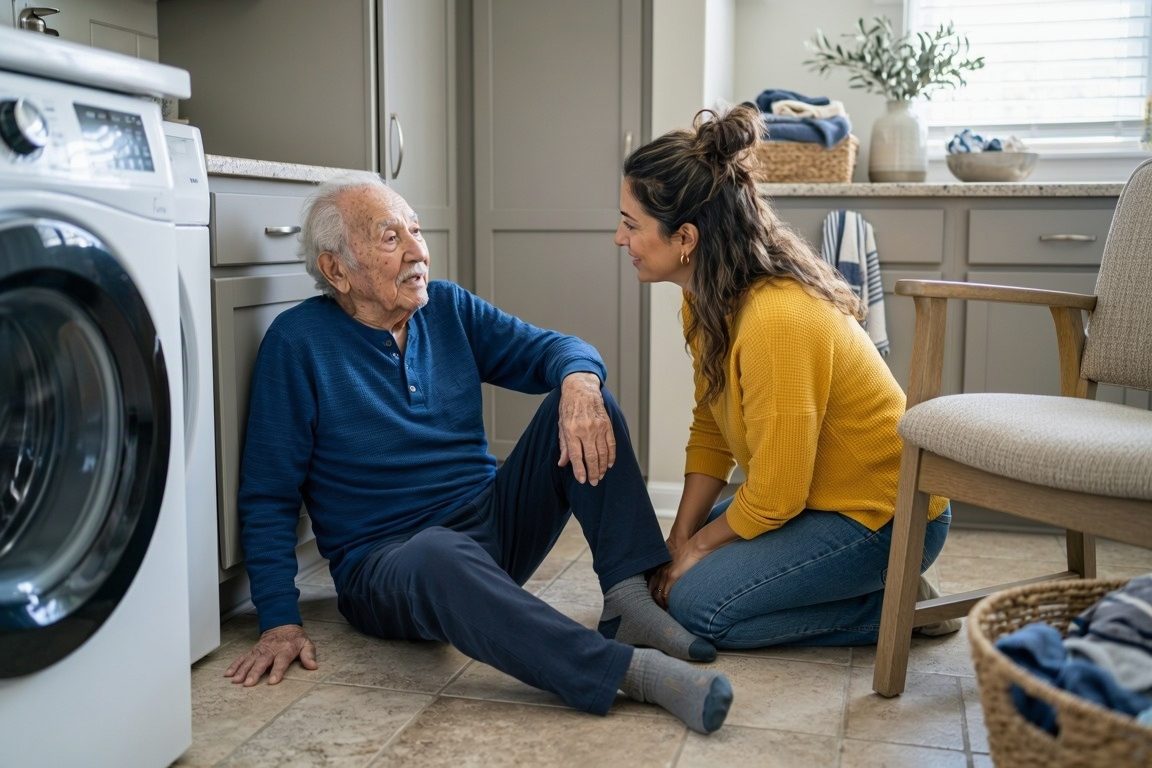
Step by step
What not to do
- Do NOT grab their arm and yank them up. This can dislocate a shoulder or tear a muscle.Instead, guide them to use their own strength with a stable object like a chair.
- Do NOT try to lift them alone if they are heavy or you are not strong. You can hurt your back or fall yourself.Instead, use a transfer lift or call for help.
- Do NOT rush them or shout commands. Their brain needs time to process. Rushing causes panic and resistance.Instead, speak slowly and calmly, and wait for them to respond.
- Do NOT force them to stand if they are in pain or confused. They may have a hidden injury.Instead, keep them comfortable on the floor, cover them with a blanket, and call 911.
- Do NOT leave them on the floor alone while you go get help, unless you have no other choice. If you must leave, say, 'I'll be right back. I'm getting help.' Keep them warm and safe.
- Do NOT assume they can get up the same way they did last time. Dementia changes abilities over time. What worked last month may not work today. Always assess first.
Key points
- Stay calm and assess for injury before moving the person.
- Never yank someone up by the arms; use a chair or transfer lift.
- Your safety matters, do not try to lift someone heavier than you alone.
- Use grab bars, non-slip mats, and bed rails to prevent falls.
- Consider a medical alert device for yourself if you are also at risk of falling.
- After a fall, check for head injury and call a doctor if anything seems off.
Videos
 Home Safety: Three Essential Tips / Alzheimer's and Other DementiasThis video covers simple home modifications that prevent falls, like grab bars and non-slip mats. Watch this to reduce the chance of falls happening in the first place.
 Time with Teepa - When Does Uncaring Care Become MoreTeepa Snow shows how rushing and grabbing a person after a fall can feel scary and disrespectful. This video helps you understand the person's perspective and learn a gentler approach.
 The Do's and Don'ts of being a caregiver (yes, it's hard!)This video offers practical do's and don'ts for caregiving, including how to handle falls without hurting yourself or your loved one.
 Manage dementia caregiver stress: 4 tips to cope with difficult dementia behaviorsAfter a fall, you may feel stressed or scared. This video gives coping strategies like deep breathing and stepping away for a moment, which help you stay calm and effective.
2 more videos
 Quick Tips: Fall Prevention Tips for SeniorsA short, actionable video on preventing falls with simple changes like wearing shoes with good traction and removing loose rugs.
 The Caregiver's Journal with Lance A. Slatton with Cindy-PT & Christina-ST 'Caregiving Love'This video discusses bed rails and other tools that help a person get in and out of bed safely, which can prevent falls at night.
Background
Why Falls Are Different with Dementia
Falls happen more often as dementia progresses because the brain loses its ability to maintain postural stability, the sense of being stable in space. A person with dementia may not know how to coordinate their limbs to get up, even if they could do it easily before. They may panic, grab at you, or resist help because they don't understand what's happening. This is not stubbornness; it's a physical change in the brain. As one expert explains, children learning to stand hold onto furniture because they lack postural stability, and people with dementia go through a similar phase in reverse. So when your loved one falls, they are not being difficult , their brain is literally unable to figure out how to get their body upright.
The Risk of Rushing or Forcing
Forcing someone up after a fall can lead to serious injury, for both of you. A caregiver who tries to yank a person up by the arm can dislocate a shoulder or pull a muscle. The person with dementia may resist, stiffen, or fall back down, making the situation worse. One hospice nurse warns that falls are one of the top reasons elderly or ill people decline rapidly, especially if they break a hip. Once a bone breaks, recovery is very hard. That's why it's critical to assess first, move slowly, and use proper technique. The goal is not speed; it's safety and dignity.
Your Safety Matters Too
Many caregivers are smaller or less strong than the person they care for. If you try to lift someone who is 6'2' and all legs, as one caregiver described, you can hurt your back or get pulled down. You are not failing if you cannot lift them alone. The right tools and techniques exist to help. As one expert says, 'If you can't do it for yourself, you can't do it for someone else.' So take a breath, assess the situation, and follow the steps below. Your safety is part of the plan.
Practical tools
6
Transfer Lift (e.g., Indie Lift)
A device that looks like a dolly. You scoot it behind the person, secure a belt around them, and press a button to lift them to chair height. This is a game-changer for caregivers who cannot lift their loved one. It keeps you from having to call 911 for every fall. Discuss with your clinician or occupational therapist whether this is right for your situation.
Sturdy Chair or Low Stool
Keep a sturdy, armless chair or a low stool in every room where falls are likely. Place it near the person after a fall so they can use it to push themselves up. Make sure it has no wheels and is placed against a wall for stability.
Grab Bars and Non-Slip Mats
Install grab bars near the toilet, shower, and bed. Use non-slip mats in the bathroom and kitchen. These prevent falls before they happen. One expert says grab bars by the toilet can help a person sit and stand without falling. Have a handyman install them to ensure safety.
Bed Rail or Bed Bar
A bed rail helps a person roll to their side and push themselves up from bed. This can prevent falls when getting up at night. One caregiver recommends a bed bar that the person can grab overhand to help themselves sit up.
Life Alert or Medical Alert Device
If you are worried about falling yourself while caring for someone, wear a medical alert device around your neck. If you fall and cannot get up, you can press the button to call for help without relying on your loved one. This is especially important if your loved one has dementia and may not know to call 911.
Comfort Kit for After a Fall
Keep a small bag near the person's bed or favorite chair with:
This helps you stay calm and prepared.
Different situations
Early-stage dementia (still able to follow instructions)
You can use more verbal guidance. Say, 'Put your hands on the chair. Push up with your legs.' They may be able to stand with minimal help. Still, use a chair or transfer lift to avoid injury. Encourage them to practice getting up from the floor when they are well, so they remember the steps.
Late-stage dementia (unable to follow instructions or weak)
Do not expect them to help. They may not understand what you are saying. Use a transfer lift if you have one. If not, call 911. Keep them warm and comfortable on the floor. Do not try to lift them alone. Your safety is paramount.
Lewy body dementia or Parkinson's dementia
These conditions cause stiffness and balance problems. The person may freeze or be unable to move their legs. Do not force them to stand. Use a transfer lift or call for help. Be extra gentle, as they may have rigidity that makes lifting painful.
Spouse caregiver vs. adult child caregiver
Spouse caregivers often try to lift their partner because they have done it for years. But as the disease progresses, the person's weight and lack of coordination make this dangerous. Adult children may be more willing to call for help. Both should use tools like a transfer lift. If you are a spouse, accept that you cannot do everything alone.
If the person has had multiple falls without injury
Do not become complacent. Each fall carries risk. One caregiver said her wife fell over 50 times without breaking anything, but that is luck, not a pattern. Use prevention tools like grab bars and non-slip mats. Consider a transfer lift before the next fall.
For the doctor
5
- Ask your doctor or physical therapist if a transfer lift is appropriate for your loved one's weight and mobility level.
- Ask about a home safety evaluation by an occupational therapist to identify fall risks and recommend equipment.
- If your loved one has fallen and hit their head, ask the doctor about signs of a brain bleed and when to go to the ER.
- Ask about medications that may increase fall risk, such as blood pressure meds or sedatives. The doctor may adjust the dose or timing.
- Ask about balance exercises or physical therapy to improve strength and reduce future falls.