Step by step
What not to do
- Do not assume that hospice means 'giving up' or that all treatment stops. Hospice focuses on comfort, not cure, but your loved one can still receive treatments that improve quality of life, such as physical therapy to help with mobility or medications to control pain. Discuss with the hospice team what treatments are appropriate.
- Do not wait until the very last days to call hospice. Many families wait too long, hoping for a miracle or fearing that hospice means death is imminent. In reality, hospice is most helpful when started early, it can provide months of support and improve quality of life. If your loved one has a life-limiting illness and you are unsure, ask the doctor: 'Would hospice be appropriate now?'
- Do not assume that the nursing home staff will handle everything related to the terminal illness. The nursing home provides daily care, but the hospice team is the expert in end-of-life symptom management. If you see that your loved one is in pain or uncomfortable, tell the hospice nurse directly, not just the nursing home aide.
- Do not forget that you can change hospice providers if you are unhappy. If the team is not communicating well, not visiting often enough, or not meeting your loved one's needs, you have the right to switch to a different Medicare-certified hospice agency. Talk to the nursing home social worker for help finding another option.
- Do not ignore your own emotional needs. Caregivers often feel guilty, exhausted, or overwhelmed. The hospice team includes a social worker and chaplain who are there to support you. You do not have to be strong all the time. Let them help you.
Key points
- Hospice care can come to your loved one in the nursing home, they do not have to move.
- Medicare Part A covers 100% of hospice services, with no co-pay, as long as the person meets eligibility (life expectancy of 6 months or less).
- The hospice team works alongside nursing home staff; they do not replace them.
- Hospice focuses on comfort, dignity, and quality of life, not on curing the illness.
- You can switch hospice providers if you are not satisfied.
- Bereavement services for family are included for up to a year after the death, use them.
Videos
 Dementia and Hospice: The Who, What, When, Where, and How of hospiceThis video explains how hospice works specifically for people with dementia, including eligibility and what to expect.
 Hospice 101:Everything You Ever Wanted to Know, but Were Afraid to AskA comprehensive overview of hospice care that answers common questions and dispels myths.
 Does Alzheimer's Qualify For Hospice?Focuses on the specific criteria for hospice eligibility in Alzheimer's disease.
 8 Ways That Hospice Can Help Caregivers of Seniors And Elderly ParentsHighlights the practical and emotional support hospice provides to family caregivers.


Background
What Hospice Care Looks Like in a Nursing Home
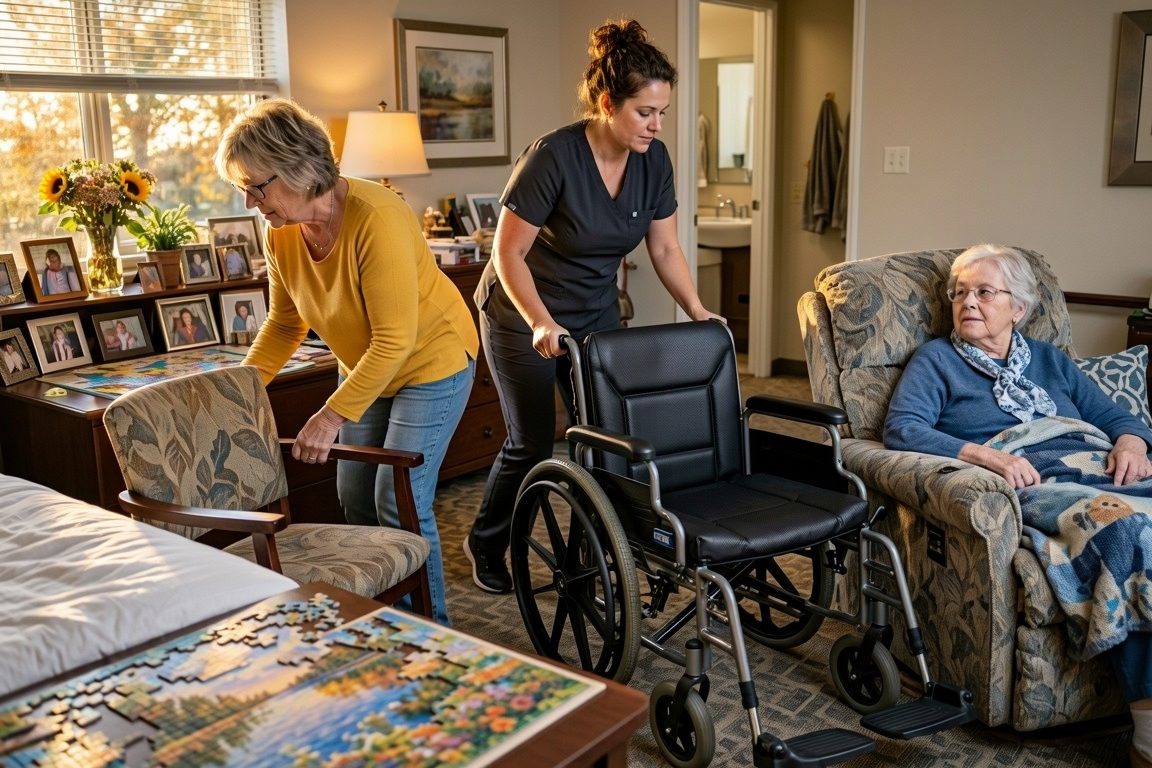
Hospice care in a nursing home is a special type of end-of-life care that focuses on comfort, dignity, and quality of life rather than curing the underlying illness. If your loved one is already living in a nursing home, the hospice team comes to them there, they do not have to move. The hospice team works alongside the nursing home staff to provide extra layers of support, including pain and symptom management, emotional and spiritual care, and help for the family. This is different from routine nursing home care because hospice brings in a dedicated team of professionals, a doctor, nurse, social worker, chaplain, and trained volunteers, who are experts in end-of-life care and are available 24 hours a day, 7 days a week.
How the Hospice Team and Nursing Home Staff Work Together
In a nursing home, the hospice team does not replace the regular staff. Instead, they add to the care. The nursing home continues to provide room, board, and daily personal care (like bathing and meals), while the hospice team manages the medical and emotional aspects of the terminal illness. The hospice nurse typically visits two to five times per week, and more often if needed, to check on symptoms, adjust medications, and support the family. The hospice social worker helps with advance care planning, funeral planning, and connecting you to community resources. The chaplain or spiritual counselor offers emotional and spiritual support to both the patient and the family. The nursing home staff and the hospice team communicate regularly to make sure the plan of care is consistent and that nothing falls through the cracks.
What Medicare Covers for Hospice in a Nursing Home
For people with Medicare Part A, hospice care is covered 100% with no co-pay or deductible, as long as the person meets the eligibility criteria. To qualify, two doctors (usually the patient's primary care doctor and the hospice medical director) must certify that the patient has a life expectancy of six months or less if the illness runs its normal course. Medicare covers all hospice-related services: nursing visits, doctor visits, medications for symptom control (like pain, nausea, or shortness of breath), medical equipment (like a hospital bed or oxygen), supplies (like adult briefs or wound care supplies), short-term inpatient care for symptom management (called respite care or crisis care), and grief counseling for the family for up to a year after the patient's death. Importantly, Medicare does NOT cover room and board in the nursing home, that is still paid separately, usually by the patient's own funds, Medicaid, or other insurance.
Practical tools
6
The 'Hospice in Nursing Home' Checklist
Print this checklist and keep it with you:
Exact Phrases to Say to the Nursing Home Staff
When you first bring up hospice, say: 'I think my loved one might benefit from hospice care. Can you tell me how hospice works in this facility? Who do I talk to next?' If you feel the nursing home is resistant, say: 'I understand you have your own policies, but hospice is a Medicare benefit and I would like to explore it. Can you help me get started?'
Exact Phrases to Say to the Hospice Team
During the first meeting, say: 'I want to understand exactly what you will do and how often you will visit. Can you walk me through a typical week?' If you are worried about pain, say: 'My loved one has been in pain. How will you manage that? What medications are available? How quickly can you respond if I call?'
The 'Medicare Hospice Benefit' Summary Sheet
Create a one-page summary of what Medicare covers: (1) All hospice-related doctor and nurse visits. (2) Medications for symptom control. (3) Medical equipment (hospital bed, wheelchair, oxygen). (4) Medical supplies (adult briefs, wound care). (5) Short-term inpatient care for symptom management (up to 5 days of respite care). (6) Grief counseling for family for up to 1 year after death. (7) NOT covered: room and board in the nursing home.
The 'Who Does What' Communication Board
In your loved one's room, post a simple whiteboard with columns: 'Nursing Home Staff' and 'Hospice Team.' Under each, list the names and phone numbers of the key people (e.g., nursing home charge nurse, hospice nurse, hospice social worker). This prevents confusion and helps everyone know who to call for what.
The 'Symptom Log' Notebook
Keep a small notebook by the bedside. Each day, write down: (1) Date and time. (2) Any new or worsening symptoms (pain, nausea, agitation, breathing trouble). (3) What was done (medication given, call to hospice). (4) How the patient responded. This log helps the hospice team adjust the plan of care quickly and accurately.
Different situations
For a person with advanced dementia (e.g., Alzheimer's or Lewy body dementia)
Hospice eligibility for dementia requires that the person has lost the ability to walk, speak, or eat independently, and has had significant weight loss or recurrent infections. The hospice team will focus on comfort measures like pain management, preventing pressure sores, and helping with eating and drinking. The nursing home staff will continue to provide daily personal care, but the hospice nurse can help with specialized dementia-related symptoms like agitation or restlessness. The social worker can help the family with advance care planning and funeral planning.
For a spouse who is the primary family caregiver (even though the person is in a nursing home)
As a spouse, you may feel guilty or torn about having your partner in a nursing home. The hospice team can help you process these feelings. You are still the primary emotional support, and the hospice social worker can connect you with support groups for spouses of nursing home residents. The bereavement services are especially important for spouses, do not hesitate to use them before and after the death.
For an adult child who lives far away
If you are a long-distance caregiver, the hospice team can be your eyes and ears. Ask the hospice nurse to call you after each visit and give you a brief update. You can also request that the social worker send you a weekly email summary. If you cannot visit often, consider hiring a private geriatric care manager to check in on your loved one and report back to you.
For a person who also has Medicaid (dual eligible)
If your loved one has both Medicare and Medicaid (called 'dual eligible'), Medicare still covers hospice 100%. Medicaid may also cover some additional services, such as the nursing home room and board costs if the person qualifies for Medicaid nursing home coverage. Ask the nursing home social worker or a benefits counselor to help you understand what Medicaid covers in your state.
For a person under age 65 who is on Medicare due to disability
People under 65 with Medicare Part A are also eligible for the hospice benefit. The same rules apply: two doctors must certify a life expectancy of six months or less. If the person does not have Medicare, private insurance may cover hospice, or some hospice agencies offer free or reduced-cost care. Ask the hospice agency about their charity care policy.
For the doctor
5
- Ask the hospice doctor: 'What medications will be used to manage pain, anxiety, or shortness of breath? Are there any side effects I should watch for?'
- Ask the nursing home doctor: 'How will my loved one's regular medications be adjusted now that they are on hospice? Are there any medications that should be stopped?'
- Ask the hospice nurse: 'What are the signs that my loved one is actively dying? What should I do if I think they are in pain but cannot tell me?'
- Ask the social worker: 'What are the legal documents I need to have in place (like a living will or health care power of attorney) to make sure my loved one's wishes are followed?'
- Ask the hospice team: 'If my loved one needs to go to the hospital for a symptom crisis, how does that work? Is it covered by Medicare?'