
Step by step
What not to do
- Do not stand directly in front of the person, facing them squarely. This blocks their view and can make them feel trapped, escalating their distress.Instead, stand at a 45-degree angle with one shoulder back so they can see past you.
- Do not pull your hand away or flinch when they reach for you. This can feel like rejection and may increase their seeking behavior.Instead, slide your hand under theirs to receive the touch and redirect it.
- Do not grab their wrist or arm to stop them. This can feel like restraint and trigger a fight-or-flight response. Hand-under-hand is a gentle alternative that uses their own motion to create a boundary.
- Do not use a loud or sharp voice to say 'stop' or 'no.' This can startle them and increase anxiety. Use a calm, low tone and simple phrases like 'Let's sit down together.'
- Do not try to reason with them or explain why they should not touch you. In Amber state, the brain cannot process complex logic. Focus on redirection and meeting the underlying need instead.
- Do not ignore the behavior or hope it will stop on its own. The seeking will likely continue or escalate. Use hand-under-hand proactively to set a gentle boundary before the situation becomes overwhelming.
Key points
- Hand-under-hand uses the person's own reaching motion to create a gentle boundary without pulling away or invading their space.
- Position your body at a 45-degree angle with one shoulder back so the person can see past you and does not feel trapped.
- Slide your hand under theirs, palm up, and guide their hand to a neutral place like their lap or a safe object.
- Use a calm, low voice and simple phrases like 'I've got you' to provide reassurance.
- Address the underlying need (hunger, thirst, pain, boredom) to reduce future seeking behaviors.
- Practice the technique in advance so it becomes automatic in stressful moments.
Videos
 Time with Teepa: How to Use Hand-under-Hand to Establish and Maintain BoundariesThis video directly demonstrates the hand-under-hand technique for setting boundaries in Amber state, including body positioning and the exact hand movements to use.
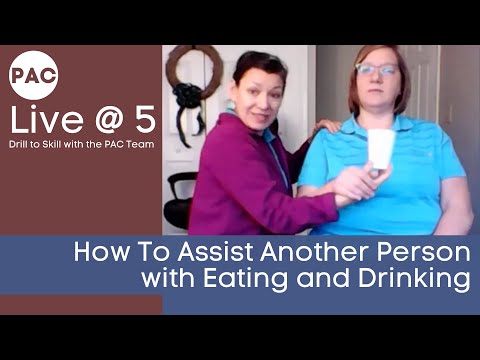 How To Assist Another Person with Eating and DrinkingShows how hand-under-hand can be used to initiate eating and drinking, which is a common need in Amber state that can reduce seeking behavior.
 Coping with Amber Distress | Teepa's ClipsExplains the Amber state in detail and offers strategies for coping with distress, including the importance of body positioning and redirection.
 Self Care For Caregivers - StressReminds caregivers to manage their own stress before using hand-under-hand, as a calm caregiver is essential for the technique to work.

Background
What Is Happening in Amber State
In an Amber state, the person with dementia is highly activated, often driven by an unmet need such as hunger, thirst, pain, boredom, or the need to move. Their brain is in a seeking mode, and their eyes may lock onto something or someone. Once eye contact is made, the next almost universal behavior is reaching out and touching. This is not aggression, it is a desperate attempt to connect, to get a need met, or to make sense of a confusing world. The person may touch your face, your clothes, your hands, or even grab at you. For caregivers, this can feel startling, invasive, or even frightening, especially if the person is larger or stronger than you. But understanding that this is a symptom of their brain state, not a personal attack, is the first step to responding effectively.
Why Hand-Under-Hand Works for Boundaries
Hand-under-hand is a technique developed by Teepa Snow that uses the person's own reaching motion to create a safe, connected boundary. Instead of pulling away or blocking their hand (which can escalate distress), you slide your hand under theirs, palm up, and gently guide their hand to a neutral or purposeful place, like their own lap, a table, or an object they can hold. This meets their need for touch and connection while preventing them from grabbing your face, hair, or sensitive areas. The key is that you are not invading their space; you are receiving their touch and redirecting it. This works because the person's brain still recognizes the familiar sensation of a hand under theirs, which can trigger calming muscle memory and reduce the urge to seek further.
The Critical Role of Body Positioning
Your body position is just as important as your hands. If you stand directly in front of the person, facing them squarely, you block their view and their path, which can increase their frustration and make them feel trapped. Instead, you need to stand at a slight angle, with one shoulder back, so that they can see past you. This communicates that you are not a barrier but a helper. Your stance should be supportive, feet shoulder-width apart, knees slightly bent, weight balanced, so you are stable if they pull or lean. Your face should be calm and neutral, not tense or frightened. The goal is to be present but not confrontational. This positioning allows you to use hand-under-hand without escalating the situation.
Practical tools
6
The 'I've Got You' Phrase
When you slide your hand under theirs, say softly, 'I've got you,' or 'Let's just rest here.' This simple phrase provides reassurance and lets the person know they are safe. Practice saying it in a calm, low tone before you need it.
A Neutral Object for Redirection
Keep a small, soft object nearby, like a stress ball, a piece of fabric, or a smooth stone. When the person reaches for you, use hand-under-hand to guide their hand to the object and say, 'Here, hold this for me.' This gives their hands something safe to do.
The 45-Degree Stance Checklist
Before you approach, mentally check:
This stance keeps you stable and non-threatening. Practice it in front of a mirror so it becomes automatic.
The 'Pause and Breathe' Pause Button
When you see the person start to reach, take one slow breath in and out before you move. This 2-second pause lowers your own stress and gives you a moment to choose hand-under-hand instead of reacting. It is a small tool with big impact.
A Fidget Blanket or Apron
For a person who frequently seeks touch, a fidget blanket or apron with zippers, buttons, and soft textures can be placed on their lap. When they reach for you, guide their hand to the blanket using hand-under-hand. This meets their sensory need safely.
The 'Let's Walk' Redirect
If the person is in Amber state and seeking touch, they may also need to move. After using hand-under-hand to set a boundary, say, 'Let's walk together,' and offer your arm (bent at the elbow) for them to hold. This channels their energy into a purposeful activity.
Different situations
Lewy body dementia
In Lewy body dementia, the person may have visual hallucinations or fluctuating attention. When they reach for you, they may be reacting to something they see that is not there. Use hand-under-hand gently, but also verbally acknowledge their experience: 'I see you are reaching for something. Let's touch this soft cloth instead.' Be prepared for sudden shifts in their state.
Late-stage dementia (Pearl state)
In late-stage dementia, the person may not have the strength or coordination to reach out forcefully, but they may still seek touch. Hand-under-hand becomes a way to provide comfort and connection without overstimulating them. Use very light pressure and keep your movements slow. You may need to hold their hand under yours for longer periods to help them feel secure.
Spouse vs. adult child caregiver
A spouse may have a long history of intimate touch with the person, which can make boundary-setting feel more emotionally charged. It is okay to use hand-under-hand to redirect touch to a neutral place like their lap or a pillow. An adult child may feel more awkward; practice the technique in advance and remind yourself that this is a clinical skill, not a rejection of your parent.
In a facility setting
In a facility, the person may reach out to other residents or staff. Train all staff on hand-under-hand so responses are consistent. If the person is reaching for another resident, use hand-under-hand to guide their hand to a safe object and then redirect them to a different area. Document the behavior and any unmet needs (hunger, pain, boredom) to address the root cause.
Medicaid or limited resources
If you have limited access to specialized products, use everyday items: a clean sock filled with rice (as a weighted object), a washcloth, or a magazine. The key is the hand-under-hand technique itself, not the tool. Practice with a willing friend or family member to build confidence before you need it in a real situation.
For the doctor
4
- If the person's reaching and grabbing behavior is new or suddenly worsening, discuss with their doctor to rule out pain, infection, or medication side effects.
- If the person becomes aggressive (hitting, pinching, or biting) despite hand-under-hand, ask the clinician about non-pharmacological approaches or a referral to a dementia behavioral specialist.
- If you are using hand-under-hand frequently and feel it is not working, ask the clinician for a functional assessment to identify unmet needs (e.g., hunger, thirst, constipation, or sensory issues).
- If the person has a history of falls, discuss with the clinician how to use hand-under-hand safely without losing your own balance or putting the person at risk of falling.