Step by step
What not to do
- Do not assume TMS is a cure or that it will reverse memory loss; set realistic goals like slower decline rather than expecting full recovery.
- Do not pursue TMS without a formal Alzheimer's diagnosis from a neurologist, since reversible conditions (thyroid, vitamin deficiency, medication side effects) can mimic dementia.
- Do not stop current Alzheimer's medications (e.g., donepezil, memantine) without consulting the prescribing doctor; abrupt discontinuation can cause rapid decline.
- Do not rely on social media or forums for TMS information; use reputable sources like the Alzheimer's Association, Mayo Clinic, or PubMed.
- Do not assume insurance will cover off-label TMS; call your insurer to confirm benefits and ask about payment plans or sliding-scale fees before committing.
Key points
- TMS is a non-invasive, low-risk treatment that uses magnetic pulses to stimulate brain networks; it is not a cure but may help slow memory decline in early Alzheimer's.
- The most common side effects are mild headache and scalp discomfort; serious risks like seizure are very rare (1 in 30,000).
- TMS is not yet FDA-approved for Alzheimer's, so the best access is through clinical trials, use TrialMatch and ClinicalTrials.gov to find them.
- Always get a formal diagnosis from a specialist before pursuing TMS, as other reversible causes of memory loss may be present.
- Involve the patient in every decision, use simple language, and set realistic expectations: TMS may help, but it won't reverse the disease.
- Coordinate with the patient's entire healthcare team, including the primary care doctor, neurologist, and any specialists managing other conditions.
Videos
 Can TMS help with memory loss? Interview with Dr. Michael LeuchterThis video directly answers your question about TMS for Alzheimer's. Dr. Leuchter explains how TMS works, its safety profile, and the encouraging results from early studies. It's a great starting point for understanding the science in plain language.
 How Memory Medications Like Donepezil & Memantine WorkUnderstanding how current Alzheimer's medications work helps you compare them to TMS. This video explains the mechanisms, so you can have a more informed conversation with your doctor about combining treatments.
 10 Warning Signs of Early Alzheimer's Disease – HOP ML PodcastRecognizing early signs is the first step to getting a diagnosis and accessing trials. This video helps you identify symptoms that warrant a doctor's visit, which is essential before considering TMS.
 Early Onset Dementia and Alzheimer's DiseaseIf your loved one is younger (under 65), this video covers unique challenges and treatment options, including clinical trials. It provides context for how TMS might fit into a broader care plan.

Background
What Is TMS and How Might It Help with Memory?
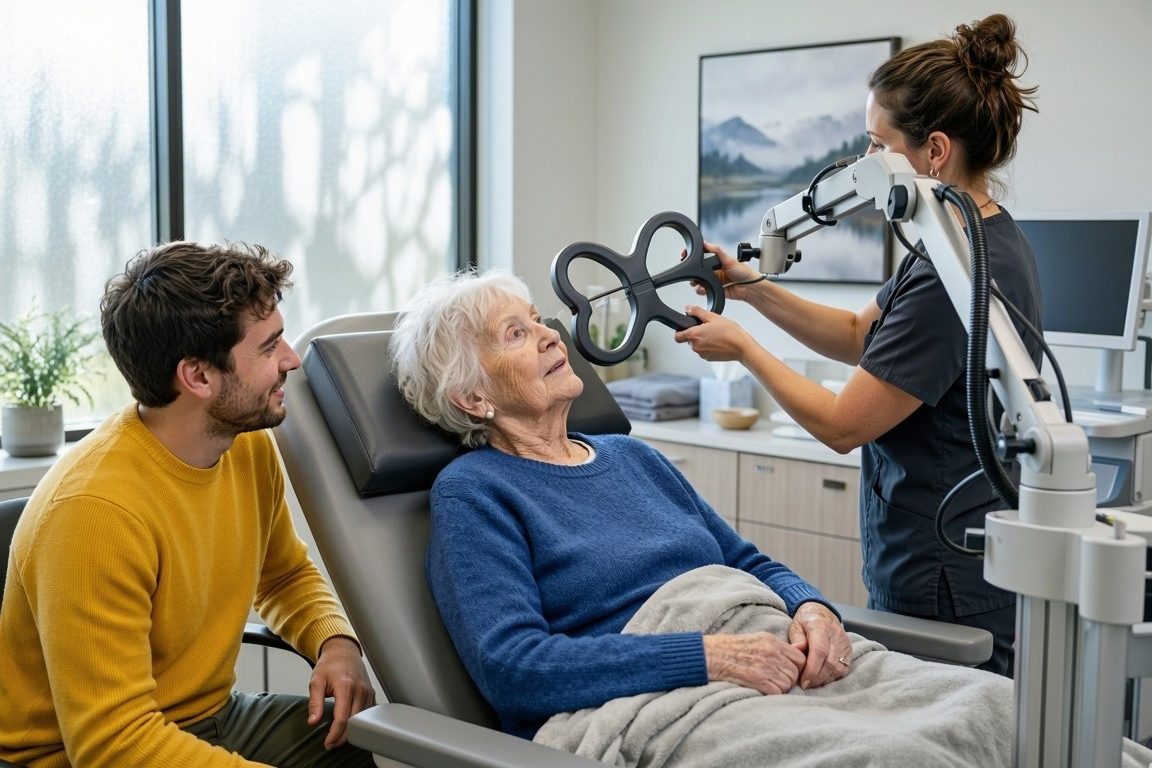
Transcranial magnetic stimulation (TMS) is a form of non-invasive brain stimulation that uses a magnetic field to communicate with the brain in its own language. Think of it like a gentle, targeted conversation with specific brain regions, the magnet creates a small electrical current that can help rewire neural networks that are underperforming due to Alzheimer's disease. This is not a shock or a surgery; the patient sits in a chair while a coil is placed against the scalp, and the magnetic pulses pass through the skull without pain or sedation.
In Alzheimer's, the brain's memory and thinking networks become damaged and less efficient. TMS aims to 'wake up' those networks, potentially improving memory, attention, and daily function. Early research, including phase 2 trials, has shown encouraging results for Alzheimer's and other dementias. However, it's important to understand that TMS is not a cure , it is a treatment that may help slow decline or improve symptoms, much like how medications such as donepezil or memantine work. The key difference is that TMS targets brain activity directly rather than through chemical pathways.
Because TMS is still being studied for Alzheimer's, it is not yet widely available in clinics for this purpose. Some clinics may offer it 'off-label' for memory issues, but the strongest evidence comes from clinical trials. For early-stage patients, the goal is to catch the disease early enough that brain networks are still somewhat intact, giving TMS the best chance to make a difference. This is why early diagnosis , through blood tests, imaging, or cognitive assessments , is so critical.
Is TMS Safe? What Are the Side Effects?
TMS is generally considered safe, especially when compared to many medications used for Alzheimer's. The most common side effects are mild and temporary: some people feel a bit of discomfort under the magnet during the treatment, and others may have a headache that lingers for a couple of hours after a session. These usually go away on their own or with over-the-counter pain relief. Because TMS is often given as a prolonged course of treatment (daily sessions over several weeks), these minor effects can add up, but they rarely cause people to stop.
The most serious but very rare side effect is a seizure, which occurs in about 1 in 30,000 treatments. To put that in perspective, many common medications have a higher risk of serious side effects. The TMS device is carefully calibrated, and the clinician monitors the patient throughout each session. Before starting, the care team will review the patient's medical history to rule out any conditions that might increase risk, such as a history of seizures or certain metal implants in the head.
For caregivers, the main takeaway is that TMS is a low-risk procedure when performed by a qualified provider. The discomfort is manageable, and the serious risks are extremely uncommon. That said, you should always discuss any concerns with your clinician, especially if the patient has other health issues or takes medications that could lower the seizure threshold.
How Do I Find a Clinical Trial for TMS?
Clinical trials are the best way to access TMS for Alzheimer's right now, because they offer the treatment under careful supervision and often at no cost. The Alzheimer's Association provides a free, easy-to-use tool called TrialMatch that connects you with studies in your area. You can visit their website and fill out a short questionnaire about the patient's diagnosis, stage, and location. The system then matches you with trials that are actively recruiting. This is a powerful way to find not only TMS studies but also other promising treatments.
Another excellent resource is ClinicalTrials.gov, a database run by the U.S. National Institutes of Health. You can search for 'transcranial magnetic stimulation Alzheimer's' and filter by location, status (e.g., 'recruiting'), and age group. Many major academic medical centers and university hospitals run TMS trials, so it's worth checking with nearby institutions like Mayo Clinic, Johns Hopkins, or your local Alzheimer's Disease Research Center.
When you find a trial, contact the study coordinator directly. They will explain the purpose, duration, and what is required of participants. Usually, you'll need to travel to the study site for screening and treatment sessions. Be prepared to provide medical records and a recent diagnosis. The coordinator can also answer questions about whether the treatment is placebo-controlled (some trials use a sham coil) and what follow-up care is provided. Remember, participating in a trial is a personal decision, discuss it with your doctor to make sure it's a good fit.
Practical tools
3
Trial coordinator call script
Open with: 'Hi, I'm calling about the TMS study for Alzheimer's. My [relationship] has early-stage Alzheimer's and we're interested in learning more.' Ask:
Write down answers for comparison.
Daily symptom and mood tracker
Use a notebook or free app like Daylio with columns: Date, Headache (0–10), Discomfort at stimulation site (0–10), Mood (1–5), Memory today (better/same/worse), Notes. Fill out each evening and bring to every visit so the team can adjust treatment.
Off-label clinic verification checklist
Before booking, confirm:
Write down answers.
Different situations
Early-stage patient who is still independent
The patient can be more involved in decision-making. Use the conversation script to explain TMS in simple terms: 'This is like a gentle magnet that talks to your brain. It might help you remember things better. Would you like to try it?' Let them lead the conversation with the doctor. Also, consider trials that require fewer visits or offer remote monitoring to minimize disruption to their routine.
Caregiver is an adult child (not spouse)
Adult children often face resistance from parents who don't want to 'be a burden.' Frame TMS as a proactive step: 'Mom, this could help you stay sharp longer so you can keep doing the things you love. I'll go with you to every appointment.' Be prepared for the parent to feel defensive about memory loss, validate their feelings first: 'I know it's hard to talk about, but I'm here for you.'
Patient has other health conditions (e.g., heart disease, diabetes)
TMS is generally safe with chronic conditions, but the clinician needs a full picture. Before the trial, ensure the patient has had a recent checkup and that all medications are reviewed. The Mayo Clinic warns that some medications can worsen memory, so ask the doctor if any current meds should be adjusted. Also, discuss whether the patient's condition might affect their ability to travel to daily sessions.
Patient lives in a rural area far from trial sites
Travel can be a barrier. Look for trials that offer travel reimbursement or remote screening. Some academic centers provide lodging for out-of-town participants. Alternatively, ask the local neurologist if they know of any TMS studies in nearby cities. If no trial is feasible, consider off-label TMS at a clinic that offers telemedicine follow-ups. The Alzheimer's Association helpline can also help locate resources.
Patient is in a nursing home or assisted living
TMS may still be possible if the facility can accommodate daily visits. Talk to the facility's medical director first to ensure they support the treatment. The patient may need assistance with transportation and scheduling. Also, check if the trial or clinic has experience working with institutionalized patients. The goal is to improve quality of life, so weigh the benefits against the disruption to the patient's routine.
For the doctor
6
- Ask your doctor: 'Given my loved one's specific health history (e.g., seizures, stroke, metal implants), is TMS safe for them?'
- Ask the trial coordinator: 'What is the exact protocol for managing a seizure if it occurs during treatment?'
- Ask the neurologist: 'Should we continue current Alzheimer's medications during TMS, or is there a risk of interaction?'
- Ask the primary care doctor: 'Are there any underlying conditions (like vitamin B12 deficiency or thyroid issues) that we should treat before considering TMS?'
- Ask the clinic: 'What is your experience treating Alzheimer's patients with TMS? Can you provide references or outcome data?'
- Ask your insurance: 'Does my plan cover TMS for off-label use? If not, what are the out-of-pocket costs?'