Step by step
What not to do
- Don't rely solely on a scheduled tour. Facilities often put on their best face during tours.Instead, visit unannounced at least twice, including once during a meal or in the evening when staffing may be lower and residents may be more tired or agitated.
- Don't ignore your gut feeling about staff attitudes. If you sense that staff are dismissive, rushed, or cold, trust that instinct. One expert says that if a resident looks at you with expectation or curiosity, it can indicate they are used to kind attention. If they seem withdrawn or fearful, that's a red flag.
- Don't assume a locked unit is automatically safe. While memory care units are locked to prevent wandering, safety also depends on how staff monitor residents and respond to emergencies. Ask about their protocol for elopement (a resident leaving the unit) and how they handle medical emergencies. A locked door is not a substitute for attentive care.
- Don't overlook the importance of peer environment. Residents with dementia may struggle to fit in with those who are cognitively intact. One expert warns that people who are not their peers can be critical and cruel. Make sure the facility groups residents by cognitive ability, not just age, so your loved one is around others who are kind and accepting.
- Don't forget to ask about additional costs for services like bathing, transfers, or incontinence care. Some facilities offer a base rate but charge extra for these services. Ask upfront what is included and what costs extra, and get it in writing. This prevents surprises later and helps you compare facilities fairly.
- Don't assume that a nursing home and memory care are the same. Nursing homes are designed for all types of patients and may not have a locked unit or specialized dementia programming. Memory care units are specifically designed for people with memory issues, with structured routines, specialized activities, and staff trained in dementia care. Make sure you are comparing the right type of facility.
Key points
- Visit unannounced at different times to see real daily life, not just a polished tour.
- Watch how staff interact with residents when they think no one is watching, this reveals the true culture of care.
- Look for dementia-friendly design features like memory boxes, colored pathways, and clear signage.
- Ask specific 'what would you do?' questions about common challenges like accusations, sleep problems, or bathing refusal.
- Check inspection reports and talk to other families for honest feedback.
- Tailor your evaluation to your loved one's specific type and stage of dementia, and to your family's financial situation.
Videos
 Choosing the Right CareThis video provides a broad overview of care options and what to look for, helping you understand the landscape before you start evaluating specific facilities.
 MEMORY CARE ASSISTED LIVING FACILITY VS MEMORY CARE NURSING HOMEThis video clarifies the difference between memory care in assisted living vs. nursing homes, which is crucial for understanding what level of care your loved one needs and what to expect from each setting.
 Top 10 Things About Home Care You May Not KnowWhile focused on home care, this video offers insights into what quality care looks like in general, including tips on evaluating caregivers that can be applied to facility staff.
 How Do I Know if a Parent Needs Memory Care or Assisted LivingThis video helps you assess your loved one's needs and decide between assisted living and memory care, which is the first step in choosing the right facility.
2 more videos
 Is it Time? 8 Key Warning Signs It Might Be Time for a Different Level of Care.This video outlines warning signs that your loved one may need a higher level of care, helping you recognize when it's time to start evaluating memory care facilities.
 Is It Time For Memory Care? 9 Signs That It Is Time To Consider ItThis video provides specific signs that indicate memory care is needed, which can guide your evaluation of whether a facility can meet those needs.
Background
Why a Checklist Isn't Enough
Standard checklists cover basics like safety, meals, and medication management. But for a person living with dementia, the quality of care hinges on things that can't be captured on a form: the warmth of a caregiver's tone, the patience shown during a difficult moment, and the way the environment reduces anxiety. A facility may have all the right policies but still fail to provide truly person-centered care. As one expert notes, optimal care happens within a social environment that supports healthy relationships between staff, family, and residents. That means you need to observe how staff actually interact with residents, not just what they say they do.
What Real Quality Looks Like in Practice
Real quality care involves assessing each resident's unique abilities and changing needs over time. Staff should know each person's life story, preferences, and what brings them comfort. This isn't just nice to have, it's essential for managing behavioral changes and communication difficulties. For example, a caregiver who knows that a resident used to be a teacher might redirect agitation by asking them to 'help' with a simple task. The environment itself should be designed to support independence and reduce confusion. Look for colored carpets that lead to different areas like the dining room or activity room, and memory boxes outside doors with personal photos and items that help residents recognize their own room. These details show that the facility has thought deeply about how to make life easier for someone with memory loss.
The Staff-Resident Interaction Test
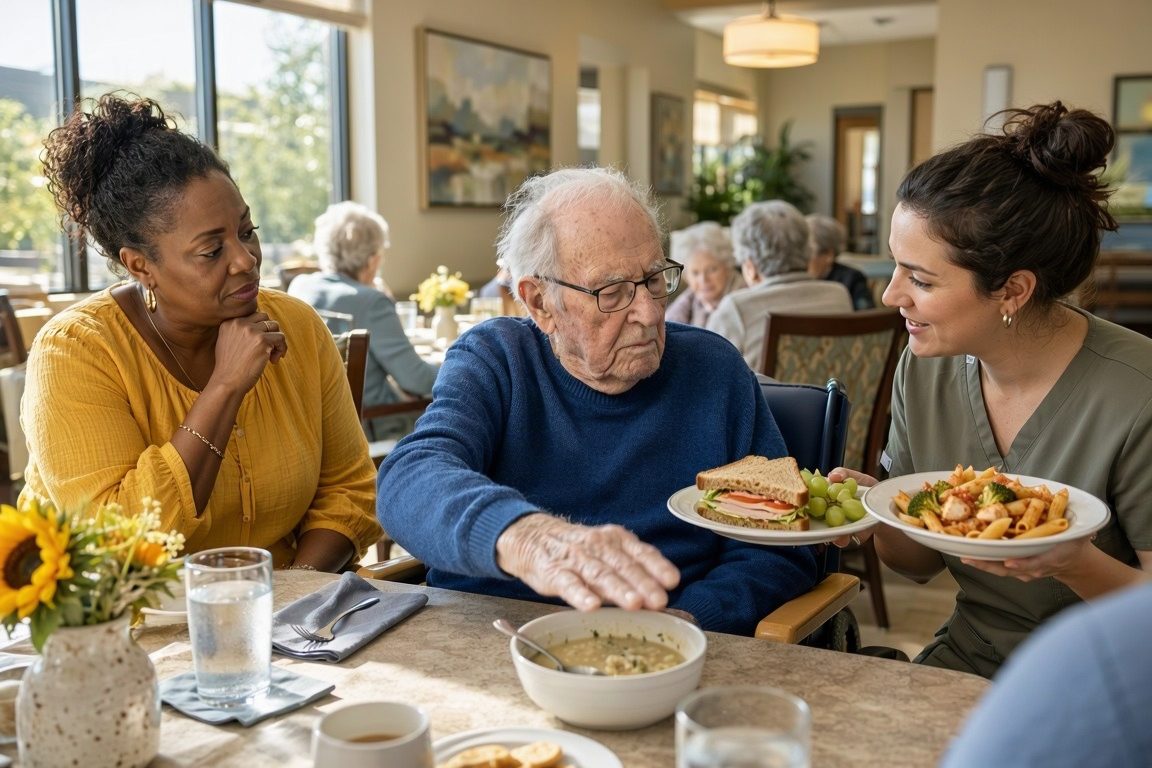
The single most telling indicator of quality is how staff interact with residents when they think no one is watching. Watch how a caregiver responds when a resident becomes upset or confused. Do they speak calmly, make eye contact, and offer reassurance? Or do they rush, use a harsh tone, or ignore the person? One experienced consultant says that watching staff interactions with residents tells you 90 percent of what you need to know. Also notice how residents react to staff, do they seem relaxed and trusting, or tense and withdrawn? A resident who looks at a visitor with expectation or curiosity may be used to kind attention, while one who avoids eye contact may have learned that interactions are unpleasant.
Practical tools
6
The Staff Interaction Observation Checklist
During your visit, note:
Rate each interaction as positive, neutral, or negative. This simple tool reveals the culture of care more than any policy manual.
The 'What Would You Do?' Question Set
Ask staff these specific questions:
Listen for answers that show creativity, patience, and a person-centered approach, not just 'we give them medication' or 'we call the doctor.'
The Environment Walk-Through Guide
Look for these features:
Also note if there are unpleasant odors, which can indicate poor hygiene or incontinence care.
The Inspection Report Check
Before your visit, look up the facility's inspection reports on your state's health department website or at Medicare.gov's Nursing Home Compare tool. Pay special attention to any citations for abuse, neglect, elopement, or medication errors. Also check for patterns of violations over time. One expert recommends using a website where you can look up inspection reports and violations against specific facilities.
The Family Feedback Script
When talking to other families, ask:
Honest answers can reveal issues that tours and marketing materials will never mention.
The 'Daily Life' Observation Log
During an unannounced visit, spend 30 minutes in a common area and note:
A quality facility will have staff who proactively engage residents, not just respond to requests.
Different situations
Late-stage dementia (e.g., Alzheimer's, vascular dementia)
Focus more on physical care quality: How do staff handle feeding, bathing, and toileting? Are residents repositioned regularly to prevent bedsores? Is there a system for monitoring pain and discomfort in residents who cannot communicate? Also ask about end-of-life care and whether the facility works with hospice. In late stages, the environment and activities matter less than skilled nursing and compassionate hands-on care.
Lewy body dementia (LBD)
LBD involves fluctuating cognition, visual hallucinations, and movement problems similar to Parkinson's. Ask if staff are trained to recognize and respond to hallucinations without arguing or medicating unnecessarily. Also ask about fall prevention strategies, as LBD increases fall risk. The facility should have a calm, low-stimulation environment, as overstimulation can worsen symptoms. Avoid facilities that rely heavily on antipsychotic medications, which can be dangerous for people with LBD.
Adult child vs. spouse caregiver
Adult children may feel guilt about placing a parent and may be more critical of care. Spouses may struggle with loneliness and may need more emotional support from the facility. Both should ask about family involvement policies: Can you visit anytime? Are there family support groups? How often will staff update you on changes? Spouses may also want to know if there are opportunities to participate in activities with their loved one.
Medicaid or limited budget
Not all memory care facilities accept Medicaid, and many are private pay only. Ask upfront about payment options and whether the facility has a Medicaid bed or a 'spend-down' program. If your loved one is a veteran, ask about the Aid and Attendance benefit, which can help cover costs. Also ask about sliding scale fees or financial assistance programs. Be aware that lower-cost facilities may have lower staff-to-resident ratios, so you need to be even more vigilant about observing care quality.
Frontotemporal dementia (FTD)
FTD often affects behavior and personality before memory. Residents may have disinhibition, apathy, or compulsive behaviors. Ask staff how they handle behavioral changes like inappropriate social behavior or loss of empathy. Look for a facility that has experience with FTD and uses positive behavioral support rather than punishment or medication. The environment should have structured routines and clear expectations to reduce anxiety.
For the doctor
3
- Ask your loved one's doctor: 'Given my loved one's specific type and stage of dementia, what level of care and supervision do they need? Are there any medical conditions that require a facility with on-site nursing or specialized equipment?'
- Discuss with the facility's nurse or medical director: 'How do you manage pain and discomfort in residents who cannot communicate? What is your protocol for falls, infections, or changes in condition? Do you have a relationship with a local hospice provider?'
- If your loved one has behavioral symptoms like aggression or hallucinations, ask: 'What is your approach to managing these symptoms without medication? Under what circumstances would you use antipsychotic medications, and how do you monitor for side effects?'